Iran Tensions Rise After Trump Threatens New Attacks and Oil Infrastructure Takeover
Rising Iran tensions have intensified after US President Donald Trump vowed fresh strikes and expressed interest in seizing key oil infrastructure.
Trump's Vow of New Strikes on Iran
US President Donald Trump vowed on Thursday to strike Iran very hard that night and expressed interest in seizing the country's key oil terminal at Kharg Island to control its oil and gas markets. [1] Trump posted on Truth Social that the US will hit Iran very hard tonight and will take Kharg Island and other oil infrastructure points in the not-too-distant future, assuming total control of their oil and gas markets similar to Venezuela. [1] The announcement came amid the US-Israeli war on Iran that was launched on 28 February. [1]
Interest in Seizing Kharg Island
In a Fox News interview, Trump said his preference has always been to take Kharg Island but questioned whether America has the stomach for it, noting any such operation would likely require US ground troops. [1] Trump stated he would like to take over the country's oil infrastructure hub, Kharg Island, but he isn't sure Americans have the appetite for it. [1] "My preference has always been—take Kharg Island ... my preference would be that. I don't know that America has the stomach for it," he said in an interview on Fox News' "Fox and Friends." [1] Kharg Island sits off Iran's Gulf coast, hundreds of kilometres northwest of the narrow, strategic Strait of Hormuz, and is at the heart of Iran's oil export industry. [1] Trump gave no details of how the United States would seize Iran's oil terminals. [1]
Stance on Civilian Infrastructure
Trump stated he would rather not hit Iran's civilian infrastructure such as power plants and bridges because it causes people to suffer, though intentionally targeting such sites is considered a war crime. [1] "Yeah, but I'd rather not do it, because once you do that, the people suffer," Trump said when asked if the United States would start attacking power plants and bridges as he has previously threatened. [1] It should be noted that intentionally hitting civilian infrastructure is considered a war crime. [1]
African Union Calls for Restraint
The African Union Commission expressed deep concern over escalating US-Iran tensions, called for maximum restraint and a return to dialogue and diplomacy, and warned of potential disruptions to global energy markets affecting African economies. [3] In a statement issued on Thursday, June 11, the Commission voiced alarm over the deterioration of relations between the United States of America and the Islamic Republic of Iran despite ongoing diplomatic efforts aimed at easing tensions and achieving a peaceful resolution to longstanding disputes. [3] "The Commission believes that these developments risk further destabilising an already fragile situation and threaten international peace and security," the statement noted. [3] The AU Commission cautioned that the latest developments risk further destabilising an already fragile geopolitical environment and could undermine efforts to preserve stability in one of the world's most strategically important regions. [3] The continental body emphasised that dialogue and diplomacy remain the only viable and sustainable means of resolving disputes, urging both sides to recommit themselves to peaceful engagement rather than military confrontation. [3] "The Commission calls on all parties to exercise maximum restraint, refrain from actions that could lead to further escalation, and recommit to dialogue and diplomacy as the only sustainable path to resolving differences," the statement said. [3] The Commission stressed that a return to diplomatic negotiations is essential to preventing further instability and ensuring that disagreements are addressed through internationally recognised mechanisms. [3] While the conflict is centred outside the African continent, the AU warned that instability in the Gulf region carries significant implications for African nations, many of which remain vulnerable to global economic shocks. [3] According to the Commission, heightened tensions between Washington and Tehran could disrupt global energy markets, leading to fluctuations in oil and gas prices that would affect African economies already grappling with inflationary pressures and development challenges. [3] The organisation noted that any disruption to international shipping routes or energy supplies could trigger increased transportation costs and higher commodity prices, placing additional strain on governments, businesses and households across the continent. [3]
Claims of Oil Movement Through Hormuz
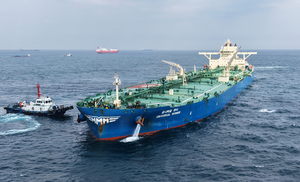
Trump claimed the US conducted a secret mission moving 100 million barrels of oil through the Strait of Hormuz, asserting US control over the waterway, but his Energy Secretary said he was unaware of such volumes and shipping data shows far lower transit numbers. [4] On Wednesday, at the White House, Trump said the US has “been taking out millions of barrels of oil. Nobody knows it”. [4] He added that Iran was blindsided by the US moves. “We took out the other night 22 ships late at night with no lights, because they don’t have any radar, because we blasted the crap out of it [Iran’s strategic infrastructure].” [4] Later, he repeated the claim on his Truth Social platform, saying he directed the US military last month to undertake the “secret mission to support Oil Tankers and other Commercial Ships through the Strait of Hormuz”. [4] He added that this effort has led to the movement of 100 million barrels of oil, transiting the strait. [4] “More than 200 Commercial Ships have safely traveled through the Strait. This wildly successful effort is because the UNITED STATES of AMERICA CONTROLS the Strait of Hormuz — NOT Iran,” Trump wrote. [4] Trump’s energy secretary, Chris Wright, told a congressional hearing the same day that he was not aware of the US taking millions of barrels of oil out through the Strait of Hormuz, though he added that the military helped to get some oil out of the narrow passage. [4] Wright clarified that the vessels making it through the strait were not Iranian. [4] Before the war broke out in the Gulf waters, about 140 vessels, including oil tankers, transited the chokepoint passage daily. [4] The passage hosted about 20 million barrels per day before tensions. [4] The president’s claim of 100 million barrels of oil is roughly equal to five days of pre-war output. [4] Shipping tracking and intelligence companies offer differing numbers of vessels that crossed the strait since tensions began. Windward recorded nearly 80 commercial ships leaving the Gulf in the last five weeks; Lloyd’s List estimates 142 vessels have left the waters since March; and Kpler puts that number at its highest, recording 264 ship transits. [4] Even Kpler’s figure falls well short of the level of maritime traffic that, before the war, would have amounted to 100 million barrels of oil passing through the Strait of Hormuz. [4]
Context of Ongoing US-Iran Conflict
Trump also said that the Kurds had let the US down by not distributing weaponry delivered to them by the US during the Iranian protests. [5] Trump told Fox that the Kurds had let the US down after weapons were delivered to be distributed to the Iranian people during the January protests that predated the war. [5] "We sent weapons and the Kurds let us down," Trump said, adding that he had initially been against the plan to send the weapons to the Kurds, believing they would keep them instead of distributing them. [5] Iran's enemies must accept ceasefire or face 'decisive' response, Defense Ministry spokesperson says. [5] Iranian Defense Ministry spokesperson Reza Taleinik said that Iran's armed forces were at the highest level of readiness, and that Iran's enemies must accept a ceasefire, on Thursday. [5] “Any crossing of the Islamic Republic’s red lines by the enemy will face a decisive, regret-inducing and harsh punitive response,” Taleinik said. [5]
What to watch next: The African Union Commission will continue urging all parties to exercise maximum restraint and recommit to dialogue and diplomacy while monitoring potential disruptions to global energy markets.