
Iran tensions close Strait of Hormuz to vessels after US strikes
Amid Iran tensions, Iran declared the Strait of Hormuz closed to all vessels and warned it would target any ships attempting to transit following fresh US airstrikes on Iranian targets, prompting oil prices to surge more than 2 percent.
Iran Closes Strait of Hormuz
Iran's Khatam al-Anbiya military command said any vessel attempting to transit the Strait of Hormuz would be targeted, according to Iranian media. [1] The command also declared the strategic waterway completely closed to all types of vessels following fresh US airstrikes against Iran. [1] Iranian state media, citing the country's navy, reported that two ships attempting what it described as an illegal passage through the strait had been struck. [1] The Islamic Revolutionary Guard Corps said the attacks were retaliation for what it called repeated US violations of an April ceasefire and declared the Strait of Hormuz closed until further notice, warning that all traffic through the waterway, including commercial vessels and oil tankers, would be subject to attack. [1] Iran's top joint military command declared the Strait of Hormuz closed to all maritime traffic, including oil tankers and commercial vessels. [4] Iran's Islamic Revolutionary Guard Corps also announced that the strategic waterway would remain shut following new US strikes on Iranian territory. [4] Effective immediately, due to insecurity in the region, the Strait of Hormuz is declared closed to all vessels, including oil tankers and commercial ships, the IRGC said in a post on its official Telegram, as cited by CNN. [4] Any vessel attempting to transit the strait will be targeted, the statement added. [4]
US Strikes on Iran Continue
The second day of US military strikes on multiple targets in Iran came in response to the downing of a US helicopter near the strait, which Iran denies involvement in. [2] US Central Command said it was striking multiple targets in Iran in response to Iran's unwarranted and continued aggression. [4] US President Donald Trump had earlier indicated that more attacks were imminent and warned that Tehran would pay the price as efforts to end the conflict remained stalled. [4] The latest US operation came a day after Washington launched strikes against Iran following the crash of an Army helicopter near the Strait of Hormuz, an incident Trump blamed on the Islamic Republic. [4] US Secretary of War Pete Hegseth insisted that the forces armadas would attack with force that night. [3] Hegseth said the Comando Central would be very busy that night because it would carry out an attack in response to the orders of Trump. [3] Trump stated that his country attacked with hardness yesterday and would attack with hardness again today. [3] This past night has been the worst, in terms of attacks, since the high the fire established on April 8. [3] US forces attacked several points in the south of the country as reprisal for the supposed downing of a helicopter in the strait of Ormuz. [3]
South Korean Vessels Navigate Strait
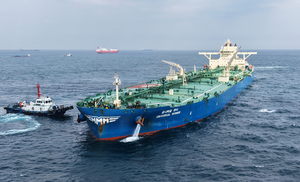
A second South Korean-operated LNG carrier safely exited the Strait of Hormuz with eight South Korean crew members aboard, reducing the number of stranded South Korean vessels to 24 and nationals in the area to 139. [1] The Ministry of Oceans and Fisheries said the vessel, a liquefied natural gas carrier operated by a South Korean company, had safely exited the strait and was continuing its voyage. [1] The ship is not bound for South Korea and has eight South Korean crew members on board, the Foreign Ministry said in a separate message to reporters. [1] The latest transit marks the second successful passage by a South Korean-operated vessel since the outbreak of the Middle East conflict, reducing the number of South Korean vessels still stranded in the Strait of Hormuz to 24. [1] The number of South Korean nationals remaining in the area, including those serving aboard foreign vessels, has also fallen to 139 from 147. [1] The transit came roughly 20 days after the Universal Winner became the first South Korean-operated vessel to exit the Strait of Hormuz. [1] The Panama-flagged tanker operated by Korean shipping company HMM and carrying 2 million barrels of crude oil arrived at Ulsan on Thursday. [1] The South Korean government continues to provide real-time monitoring and other support measures to ensure the safe navigation of South Korean vessels in the region. [1] South Korea's Foreign Ministry said it has continued to stress to Iranian authorities the importance of ensuring the swift and safe navigation of all vessels, including those connected to South Korea, through the Strait of Hormuz, adding that it remains in communication with relevant countries over the situation. [1]
Oil Prices Surge on Tensions
Brent crude rose above $95 per barrel and WTI approached $93 before paring gains after the US announced the end of its brief campaign. [2] Brent crude surged more than 2% to trade above $95 a barrel, while West Texas Intermediate advanced toward $93, before paring gains after the US military announced an end to the brief campaign. [2] Brent crude futures rose $2.30, or 2.47%, to $95.40 a barrel, while US West Texas Intermediate crude gained $2.60, or 2.89%, to $92.63. [4] US crude futures had earlier advanced by more than $3 during the trading session. [4] Brent crude rose 1.4% to around $95 a barrel after climbing above $95 at the start of Thursday’s trading. [5] The US military refuted Iran's claim that the strait is completely closed, stating commercial ships continue to transit. [2] The US military earlier refuted the Iranian claim that the strait has been completely closed, saying commercial ships are continuing to transit the waterway. [2]
Ceasefire Collapse and Diplomacy
US strikes marked the second consecutive day of attacks in response to the downing of a US helicopter near the strait, which Iran denies involvement in, and followed the collapse of an April ceasefire. [2] The attacks also reinforced the view that an April ceasefire has effectively collapsed, despite the absence of a return to the large-scale bombing campaign seen at the start of the conflict. [5] President Trump warned of further strikes if no interim peace deal is reached. [2] Trump has accused Tehran of dragging out talks on an interim peace deal, and he warned of more strikes in an interview with Fox News if an agreement isn’t signed. [2] Iran's United Nations envoy warned that threats would not force Tehran into negotiations. [4] Iran's United Nations envoy warned that threats would not force Tehran into negotiations, stating Iran has never negotiated under threats and pressure and will never submit to pressure or question. [4] South Korea's Foreign Ministry said it has continued to stress to Iranian authorities the importance of ensuring the swift and safe navigation of all vessels, including those connected to South Korea, through the Strait of Hormuz. [1]
What to watch next: President Trump warned of more strikes if an agreement isn’t signed, while South Korea remains in communication with relevant countries over the situation.