Iran Tensions Escalate as Trump Threatens to Declare Hormuz US Territory
Iran tensions have sharpened after US President Donald Trump threatened to declare the Strait of Hormuz US territory after vowing to “finish defeating” Iran.
Trump's Threat on Hormuz
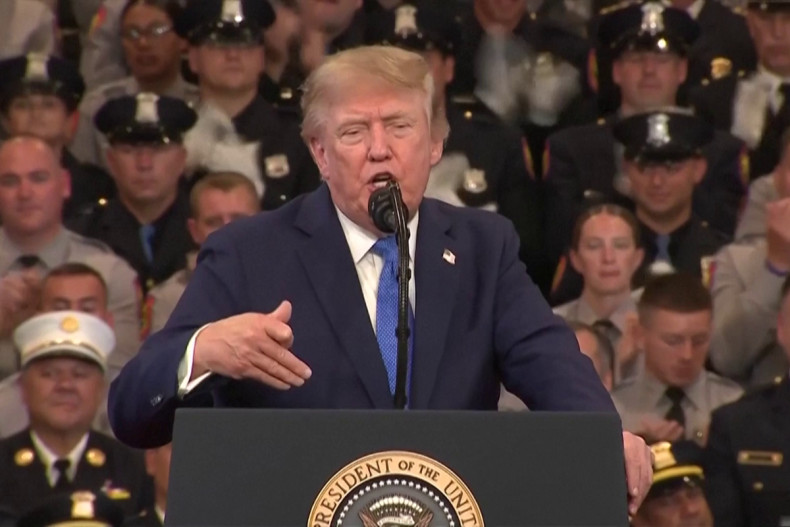
US President Donald Trump threatened to declare the Strait of Hormuz US territory after vowing to “finish defeating” Iran in a New York rally on Friday. [1] Tehran rejected the claim on Saturday. [1] Trump made the statements during the rally while asserting US control over the strategic waterway. [4] The remarks came amid ongoing pressure on the president at home to end an unpopular war. [3]
Iran's Rebuttal
Iranian Deputy Foreign Minister Kazem Gharibabadi responded to Trump’s comments later on Friday. [4] Gharibabadi said that “Iran neither fears threats nor cowers before displays of power.” [4] He stated the strategic waterway “will remain Iranian” and can be opened or closed only at Iran’s command. [1] Tehran rejected the claim that the strait could become US territory. [1] Iran has said it will not allow the waterway to reopen until its conditions are met. [3]
Stalled Maritime Traffic
Maritime traffic in the Strait of Hormuz has stalled near a standstill following attacks on commercial vessels. [3] Only two vessels passed through on Friday compared to a pre-war average of over 130 ships daily. [3] The United Arab Emirates' Abu Dhabi National Oil Company said two of its vessels were attacked transiting the strait on Thursday evening. [3] The UAE government blamed Iran. [3] Nine vessels passed through the strait on Thursday. [3] There were no crude oil shipments visible on Friday. [3] Since the ceasefire renewed in the June deal broke down, Iran has resumed attacks on ships it accuses of trying to transit the strait without its permission. [3]
US Blockade and Sanctions
US Defence Secretary Pete Hegseth told reporters the US military has the capability to maintain a naval presence in the region to enforce its retaliatory blockade of Iran. [3] Hegseth said the blockade can be maintained indefinitely through ship rotations. [3] Treasury Secretary Scott Bessent said the US planned to inflict more financial damage on Iran. [3] Bessent warned of unprecedented economic isolation measures. [3] The US has enforced a naval blockade against Iran. [3] The US lifted its blockade of Iran's shipping and ports for a month in mid-June but has since reimposed it. [3] Washington previously said it would lift the Iranian blockade once Iran and Oman reach an agreement to restore commercial shipping. [3]
Conditions on USS Abraham Lincoln
Supply issues on the USS Abraham Lincoln stem from Iranian drone and missile attacks on a naval base in Bahrain early in the US-Iran war. [2] The US Navy initially used the Bahrain base for supply operations but was forced to change strategies following the attacks. [2] The US Navy decided to move its supply operations to the UK naval base located on the island of Diego Garcia, which sits over 3,500 km from the two US carrier strike groups operating in the Gulf of Oman. [2] The base change contributed to shortages, water contamination, and hygiene problems aboard the carrier. [2] US Senator Richard Blumenthal sent a letter to Acting US Navy Secretary Hung Cao and US Defense Secretary Pete Hegseth demanding a formal inquiry into the conditions. [2] Concerns regard the ship's crew amid reports of deteriorating mental health. [2] US Central Command denied claims that several crew members attempted to jump off the aircraft carrier. [2] US President Donald Trump dismissed the concerns and said the ship's deployment length is "not nearly long enough." [2]
Broader Context and Demands
A senior Iranian source said there had been no progress in talks to build on a June agreement to end the war. [3] Iran has demanded removal of sanctions and release of frozen assets before reopening the waterway. [3] Reports that Yemen's Iran-backed Houthis had targeted a Saudi Aramco refinery with drones on Thursday renewed concerns about a widening regional war. [3] Trump has repeatedly asserted the US has "total control" over the strait. [3] Iran rejects that assertion. [3] The US has tightened economic sanctions against Iran and other individuals and entities that it says are helping it procure weapons. [3]
What to watch next: US officials have warned of indefinite blockade enforcement and additional economic isolation measures while Iran maintains its conditions for reopening the strait.