Iran Tensions Escalate as Delegation Exits US Talks Over Trump Strike Threat
Iran tensions escalated as Iran re-closed the Strait of Hormuz and its delegation walked out of US talks in Switzerland after President Trump threatened further strikes, even as mediators Pakistan and Qatar announced a 60-day roadmap toward a final peace deal that includes deconfliction mechanisms for Lebanon and safe passage through the strait. [2] [3]
Iran Re-closes Strait of Hormuz
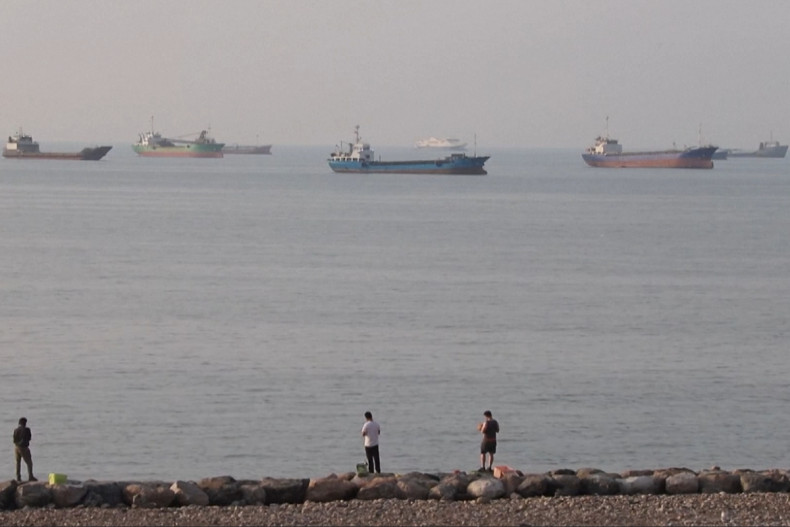
Ship traffic through the Strait of Hormuz plunged to five vessels on Sunday from 26 the previous day after Iran's Islamic Revolutionary Guard Corps declared the waterway closed again in response to Israeli strikes in Lebanon. [1] Five vessels passed the strait on Sunday, from 26 ships spotted a day earlier, data from analytics firm Kpler showed. [1] These included three Very Large Crude Carriers carrying 2 million barrels of Saudi crude and fuel oil each, one of which was heading to Japan. [1] Iran lifted its effective blockade of the strait last week after agreeing with the United States to extend an April ceasefire for 60 days to allow for peace negotiations, but Tehran's Islamic Revolutionary Guard Corps on Saturday declared the waterway shut once again in response to Israeli strikes in Lebanon. [1] The US military said commercial vessels were still operating. [1] Among the ships that exited the strait on Saturday, three of them were VLCCs carrying crude from the United Arab Emirates, Kuwait, and Iraq, while there were also three tankers carrying various oil products, the data showed. [1] A total of 13 ships entered the strait on Saturday, including two VLCCs, the data showed. [1] Gulf producers Abu Dhabi National Oil Co and Kuwait Petroleum Corp have issued tenders selling crude with the option of loading from inside and outside the Strait of Hormuz. [1]
Iranian Walkout at Switzerland Talks
The Iranian delegation left negotiations in Burgenstock, Switzerland, in protest of Trump's Truth Social post threatening to hit Iran harder if it does not stop its proxies in Lebanon from causing trouble. [2] The Iranian delegation left negotiations with the United States in Switzerland on Sunday in protest of U.S. President Donald Trump's threat to launch further strikes against Iran, Iran's semi-official Tasnim news agency reported. [2] Tasnim cited a source close to the delegation as saying that "the negotiations stopped minutes ago." [2] Meanwhile, Iran's state-run Press TV quoted a source as saying that the delegation raised objections directly with the U.S. side, and "is assessing the conditions to give a proper response" to Trump's threat. [2] Earlier in the day, Trump wrote on Truth Social: "Iran must immediately stop their highly paid PROXIES in Lebanon from causing trouble. If they don't, we'll hit Iran very hard again, just like we did last week, only harder!!!" [2] Iranian Parliament Speaker Mohammad Bagher Ghalibaf, who heads the delegation, dismissed the threat, saying Iran's armed forces are ready to respond. [2] "They are better be careful about their comments ... Whatever they say, we are the ones who act," he said. [2]
Mediators Announce 60-Day Roadmap
US and Iranian sides, mediated by Pakistan and Qatar, agreed on a high-level committee for political oversight, a roadmap to a final deal within 60 days, a communication line to ensure safe commercial vessel passage through the Strait of Hormuz, and a de-confliction cell for the Lebanon ceasefire. [3] [4] After hours-long negotiations in the Swiss resort of Burgenstock, the US and Iran agreed on a roadmap towards reaching a final peace deal in 60 days, a joint statement issued by mediators Pakistan and Qatar said on Monday. [3] The joint statement issued by Pakistan and Qatar after the second round of direct talks between the two sides said the first session of high level talks under the framework of the Islamabad MoU had concluded with the participation of representatives from Iran, the US and the mediators. [3] “The Lake Lucerne Summit was conducted in a positive and constructive atmosphere. Encouraging progress has been made including the creation of a mechanism for further technical talks,” the statement read. [3] It added that building on the Islamabad MoU, the two sides had agreed to the establishment of a high-level committee, “which will provide political oversight on the mediation”. [3] Chief negotiators will report regularly to the high-level committee and lead working groups focused on nuclear and sanctions issues, and a monitoring and dispute resolution group to ensure the effective implementation of the MoU, and on other matters. [3] According to the statement, the high level committee had agreed on a roadmap towards reaching a final deal within 60 days, laying the foundation for the immediate commencement of further technical talks. [3] In addition, a communication line between the US and Iran would be established for 60 days “to avoid incidents and miscommunication with the aim of safe passage for commercial vessels through the Strait of Hormuz”. [3] The joint statement said both sides had also agreed on the creation of a “de-confliction cell, between the parties, the Lebanese Republic and facilitated by the mediators, to ensure the adherence of the termination of military operations in Lebanon as per the MoU”. [3] “Technical talks will continue for the remainder of the week at the Burgenstock resort on all issues,” it added. [3]
Key Provisions of the Islamabad MoU
The agreement builds on an interim Islamabad Memorandum of Understanding that includes ending the war on all fronts including Lebanon, lifting the US naval blockade, reopening the Strait of Hormuz, issuing waivers for Iran's oil exports, and releasing frozen Iranian assets. [2] [3] The talks in Switzerland focus on implementing Paragraph 13 of the recently-signed Iran-U.S. memorandum of understanding (MoU), which sets conditions for launching final agreement negotiations, including ending the war on all fronts including Lebanon, lifting the U.S. naval blockade, reopening the Strait of Hormuz, issuing waivers for Iran's oil exports, and releasing frozen Iranian assets, Iran's semi-official Fars news agency reported Sunday, citing Hossein Ghorbanzadeh, a member of the delegation. [2] Other provisions in the MoU will not be implemented until the war in Lebanon ends, Ghorbanzadeh said. [2] A draft for temporary sanctions exemption covering Iran's exports of oil and derivatives has been finalized and will soon take effect, he added. [2] The MoU, signed digitally on Thursday, was followed by a ceasefire agreement between Lebanon and Israel that took effect on Friday afternoon. [2]
Ongoing Technical Negotiations
Technical talks on nuclear issues, sanctions, monitoring, and dispute resolution will continue for the remainder of the week at the Burgenstock resort. [3] [4] [5] The first round of high-level talks between the United States and Iran under the Islamabad Memorandum of Understanding concluded in Burgenstock, Switzerland, with mediators Qatar and Pakistan outlining a series of measures aimed at advancing negotiations and reducing regional tensions. [4] In a joint statement issued after the Lake Lucerne Summit, the two mediating countries said the discussions were held in a "positive and constructive atmosphere" and resulted in several decisions that will shape the next phase of the process. [4] Among the key outcomes was the establishment of a High Level Committee that will provide political oversight of the mediation effort. [4] Under the agreed framework, chief negotiators will report regularly to the committee and head working groups dealing with nuclear issues, sanctions, monitoring mechanisms and dispute resolution. [4] The committee has also approved a roadmap aimed at reaching a final agreement within 60 days. [4] The decision clears the way for immediate technical-level discussions, which are scheduled to continue throughout the week in Switzerland. [4] An American official said several key issues, including “all elements of the nuclear deal” with Iran, were discussed during the talks. [3] “We’ve had robust discussions on all elements of the nuclear deal,” the official said, speaking of a key sticking point between the two sides. [3] The official detailed that the discussion also covered “clarifying some of the confusing messaging from Iran on the Strait [of Hormuz] and building deconfliction mechanisms to ensure the strait will remain fully open. We have also worked through deconfliction mechanisms and enforcing the ceasefire in southern Lebanon”. [3] “We plan to continue working through each of these issues and using today’s work as a starting point for ongoing technical talks going forward,” the official said. [3]
Regional Context and Ceasefire Status
The MoU, signed digitally on Thursday, was followed by a ceasefire agreement between Lebanon and Israel that took effect on Friday afternoon. [2] On Saturday, Israel's Prime Minister Benjamin Netanyahu and Defense Minister Israel Katz reportedly ordered the army to cease fire in Lebanon. [2] But Katz said Sunday that the army will not withdraw from the "security zone" it holds in southern Lebanon. [2] Meanwhile, Lebanese sources have reported continued Israeli attacks on Lebanon over the past few days despite the ceasefire. [2] US Vice President JD Vance told the press that “peace requires give and take”. [3] “This is a historic meet. Never before have Iranian and American leadership met at such a high level outside of Islamabad,” he said. [3] Vance said Trump is committed to a “full regional ceasefire”, including Lebanon. [3] These kinds of ceasefires are always “a little bit messy”, but they had seen progress over the last few days, he added. [3]
What to watch next: Technical talks on nuclear issues, sanctions, monitoring, and dispute resolution will continue for the remainder of the week at the Burgenstock resort, with the high-level committee providing oversight and the de-confliction cell addressing adherence to the termination of military operations in Lebanon.