
Iran Tensions Ease as US Lifts Blockade and Sanctions in New Agreement
As Iran tensions ease, the United States and Iran signed a 14-point Memorandum of Understanding on June 17 to end their war on all fronts, including in Lebanon, and begin broader negotiations in Switzerland within 60 days. [1] The agreement, titled the Islamabad Memorandum of Understanding, declares an immediate and permanent termination of military operations, requires respect for each other's sovereignty, and commits both sides to a final deal within 60 days. [1] Initial talks are scheduled for Friday at the Buergenstock resort in Switzerland. [2]
Ceasefire Agreement Signed
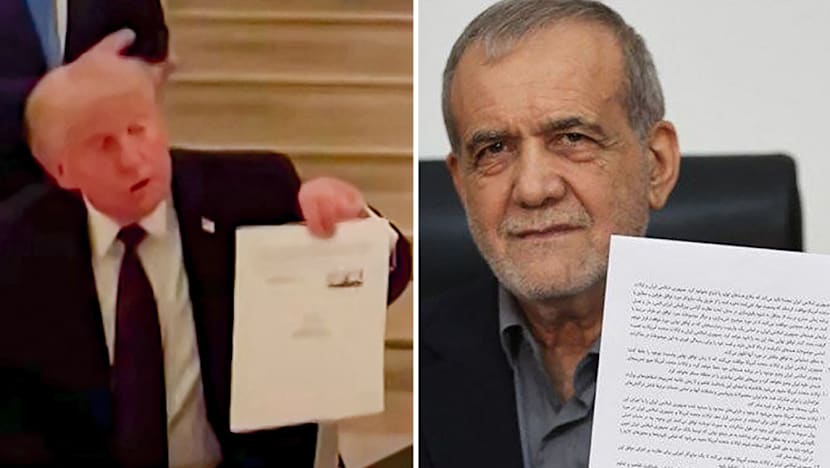
The United States and Iran signed the Islamabad Memorandum of Understanding on June 17 to end their war on all fronts, including in Lebanon, and begin broader negotiations in Switzerland within 60 days. [1] Donald Trump put his signature to the memorandum of understanding during a candlelit dinner at the Palace of Versailles following a G7 summit. [5] The agreement defers many of the most difficult issues, including how to wind down Iran's nuclear programme, until a final deal is reached. [1] The clock started ticking as soon as the ink dried, with both sides committing to negotiate and achieve the final deal within a maximum of 60 days. [1] This deadline is only extendable with mutual consent. [1]
Key Military and Sovereignty Provisions
The first point of the agreement states that the US, Iran and allies declare an immediate and permanent termination of military operations on all fronts, including in Lebanon. [1] It continues that from now on the parties will not initiate any military operation against each other, and they must refrain from the threat or use of force against each other. [1] The agreement also made mention that both sides would ensure the territorial integrity and sovereignty of Lebanon. [1] The second point of the agreement states that both nations are to undertake to respect each other's sovereignty and territorial integrity, and to refrain from interfering in each other's internal affairs. [1] Iran insisted the deal represented a US failure while US President Donald Trump said he was prepared to bomb the hell out of Iran if Tehran violated its terms. [1] Israeli Prime Minister Benjamin Netanyahu has insisted Israel is not bound by any agreement in its fight against Iran-aligned Hezbollah in Lebanon. [1]
Maritime Arrangements for Strait of Hormuz
Points 4 and 5 are maritime-related and cover the US naval blockade, as well as the use of the waterways in and around the Strait of Hormuz. [1] The fourth point of the agreement states that the US will fully end the naval blockade against Iran within 30 days. [1] During this period, the traffic of vessels will be in proportion to the numbers of pre-war traffic being restored by Iran and the US further undertakes to remove its forces near within 30 days after the final deal. [1] Point 5 states that Iran will make arrangements using its best efforts for the safe passage of commercial vessels with no charge for 60 days from the Persian Gulf to the Sea of Oman and vice versa. [1] The agreement specifies that the traffic of commercial vessels will immediately start be instated within 30 days. [1] Iran will conduct dialogue with the Sultanate of Oman to define the future administration and maritime services in the Strait of Hormuz, in discussion with other Persian Gulf littoral states in line with the applicable international law and the sovereign rights of coastal states of the Strait of Hormuz. [1]
Reconstruction, Sanctions Relief and Funds
Under point 6, the US, together with regional partners, will develop a definitive, mutually agreed plan with at least $300 billion for the reconstruction and economic development of Iran. [1] The mechanism for the implementation of this plan will be finalised as part of the final deal within 60 days. [1] All required licenses, waivers, and permissions needed for the relevant financial transactions will be granted by the United States of America. [1] Point 7 details that the US will terminate all types of sanctions against Iran, including United Nations Security Council resolutions such as the IAEA Board of Governors resolutions, as well as all unilateral US sanctions, primary and secondary, in an agreed-upon schedule as part of the final deal. [1] Point 10 specified that upon the signing of the memorandum and until the termination of sanctions, the US Treasury Department will issue waivers for the export of Iranian crude oil, petroleum products and derivatives, and all associated services, including banking transactions, insurances, transportation. [1] Point 11 then furthers that the US shall make fully available for use the frozen or restricted funds and assets of Iran. [1]
Reactions and Challenges Ahead
The US-Iran deal is unlikely to produce a comprehensive agreement within its proposed 60-day timeframe, according to Johns Hopkins University professor Steven David. [1] The notion that somehow they're all going to be concluded in 60 days, I think, is ludicrous, the professor told CNA. [1] He suggested that Trump was under pressure to end a conflict that had fuelled economic pressures in the US ahead of November's midterm elections. [1] Clearly, President Trump was concerned that this war with Iran was very unpopular with the American public, he added. [1] He was under a lot of pressure to get a deal with Iran that would enable the United States to claim victory and stop the conflict. [1] As the US and Iran sign a Memorandum of Understanding intended to pave the way for a broader agreement, there is a lot of commentary about the emerging deal. [3] The view among many is that this has been a loss for the US and Israel. [3] U.S.-Iran MoU implementation should be assessed carefully, according to a South Korean expert. [4]
Next Steps in Switzerland
Initial talks between the United States and Iran are planned at the Buergenstock mountaintop resort in Switzerland on Friday, following the signing of a ceasefire agreement between Tehran and Washington, the Swiss government said on Thursday. [2] The 60-day negotiation clock has begun. [1]
What to watch next is whether the US-Iran MoU implementation proceeds on the agreed schedule for sanctions termination and the release of frozen funds.