
Iran Tensions Ease as US and Tehran Agree on 60-Day Deal Roadmap in Switzerland
High-level US and Iranian officials concluded their first round of talks in Switzerland on Monday with mediators reporting encouraging progress, including agreement on a 60-day roadmap toward a final deal to end the Middle East conflict, reopen the Strait of Hormuz and halt fighting in Lebanon. [1] As Iran tensions ease following the session, mediators from Qatar and Pakistan highlighted the positive tone despite earlier friction. [5]
Talks Conclude With Roadmap Agreement
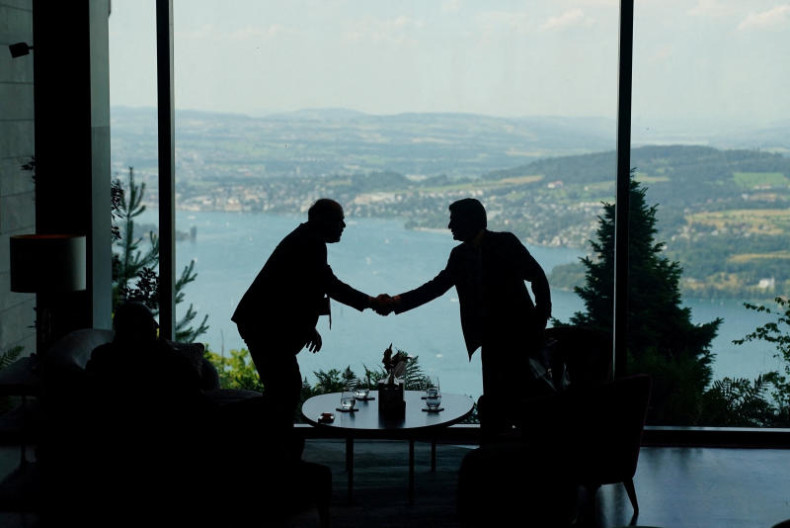
The first round of talks between high-ranking US and Iranian officials in Switzerland ended on Monday, mediators said, after a tense opening marked by Tehran's announcement it had again closed the Strait of Hormuz and US President Donald Trump repeating his threats to resume attacks on Iran. [1] A joint statement from mediating nations Qatar and Pakistan said the United States and Iran agreed to a roadmap towards a final deal within 60 days. [1] Technical talks will continue for the rest of the week in the Qatari-owned Swiss mountain resort of Buergenstock, according to the statement, which was released by the Qatari Foreign Ministry. [1] The parties agreed to a mechanism to end the fighting in Lebanon and opened a communications line to help ensure safe passages for commercial ships through the contested strait, the statement said. [1] US Vice President JD Vance began talks with Iranian officials on Sunday under the terms of a memorandum of understanding reached last week to extend a tenuous ceasefire from April for at least another 60 days. [1] The discussions continued until the early hours of Monday. [1] Mediators said discussions on regional de-escalation and maritime security would continue alongside negotiations on nuclear and economic issues. [4]
Tense Opening and Public Threats
Just before talks officially began on Sunday, Fox News reported that Trump said he told Iranian officials "you won't have a country" if they tried to close the strait again. [1] Trump also reiterated an earlier threat that the US would take over the waterway and possibly charge a toll of its own, Fox News said. [1] Trump said he agreed to last week's memorandum of understanding to avert a global economic depression from high oil prices caused by the strait's closure. [1] Iran's semi-official Tasnim news agency, citing an informed source, said that after Trump's threats became public, the Iranian delegation refused to return to the room where talks were held, though messages were still being traded via Pakistani and Qatari mediators. [1] According to Tasnim's source, Iranians said that the start of negotiations on nuclear matters required the delivery of other parts of the MOU, including the release of frozen assets and US waivers authorising Iranian oil exports. [1] “The Iranians never left and are still here meeting and negotiating deep into the night," a US diplomat involved in the talks told Reuters. [1] Iran said on Saturday that as a result, it had again stopped maritime traffic through the strait and that Sunday's talks would not cover substantive issues such as Iran's nuclear programme. [1] Negotiations have had a beginning tense on Sunday in Switzerland, when Tehran felt offended by the threat of US President Donald Trump with an attack and a warning that the President of Iran should be careful what he says. [2]
Iranian Gains From the Discussions
In a post on social media, Iranian Foreign Minister Abbas Araqchi said his country had secured waivers for oil and petrochemical exports, the release of some frozen assets and the launch of a reconstruction and development plan for Iran. [1] Araqchi said restrictions on Iranian oil and petrochemical exports had been eased and that some blocked funds had been released, though he did not provide details. [4] Iran had previously sought access to billions of dollars in frozen assets as part of any agreement with the United States. [4] The comments came after US and Iranian delegations met in the Swiss resort of Burgenstock, where negotiators agreed to establish mechanisms for continued technical discussions. [4] Pakistani and Qatari mediators, who helped facilitate the recent diplomatic breakthrough, said the talks produced encouraging progress and laid the groundwork for further negotiations on nuclear issues, sanctions and regional security. [4]
Focus on Strait of Hormuz and Lebanon
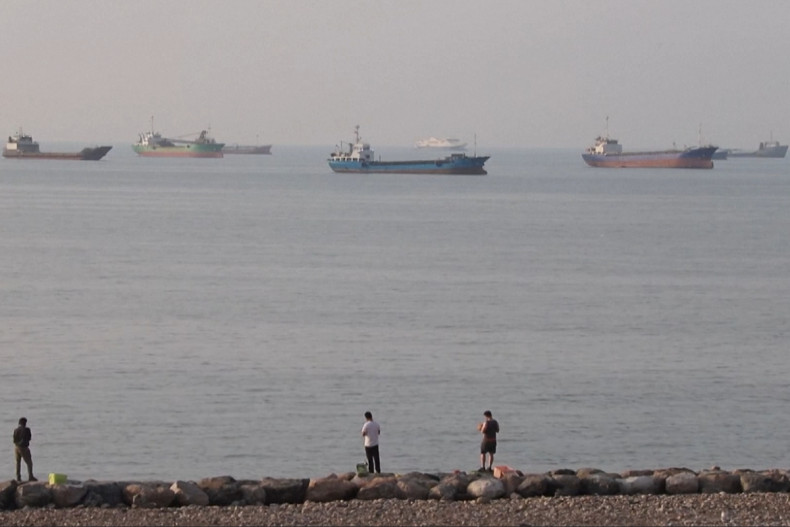
US and Iranian sources provided separate accounts of the discussions in Switzerland. [1] "We've talked about the Strait, Lebanon, nuclear issues, and details of implementing the MoU, among other topics." [1] A US diplomat late Sunday said discussions included “clarifying some of the confusing messaging from Iran on the Strait and building deconfliction mechanisms to ensure the Strait will remain fully open.” [1] The agreement calls for reopening the Strait of Hormuz, a choke point for global energy shipments, and ending all hostilities, including in Lebanon, where Israel has continued to launch deadly strikes as Iranian ally Hezbollah fires at Israeli targets. [1] A statement from the mediators Pakistan and Qatar stated that the cell will include the Lebanese government and will "ensure compliance with the end of military operations in Lebanon". [2] It remains unclear, however, whether this will be sufficient to stop the fighting between the Hezbollah militia, supported by Iran, and Israel, which occupies Lebanon and insists that it must maintain a free hand to attack militants launching attacks in northern Israel, reports AP. [2] Vance played down the impact of violence in Lebanon, saying progress had been made towards ending hostilities there. [1] "These things are always a little bit messy," he said. [1] Back in the US, Trump threatened to resume attacks on Iran if it did not rein in its allies. [1] "Iran must immediately stop their highly paid PROXIES in Lebanon from causing trouble," Trump wrote on social media, apparently referring to Hezbollah. [1] "If they don't, we'll hit Iran very hard again, just like we did last week, only harder!!!" [1] Even as Trump was threatening Iran, Vance told reporters the US president had "asked us to turn over a new leaf to transform our relationship with the people of Iran." [1] Iran cites Lebanon as reason to close strait. [1] Despite the announcement of a new ceasefire in Lebanon on Friday, there has been scant sign of an end to fighting there. [1] Iran said on Saturday that as a result, it had again shut the strait, whose closure for nearly four months caused the biggest disruption of global energy supplies in history. [1] Five vessels passed the strait on Sunday, a sharp drop from the 26 ships spotted a day earlier, data from analytics firm Kpler showed. [1] Sunday appeared to be the quietest day in Lebanon for some time, with no reports of major violence by nightfall, after two days of heavy Israeli strikes and fire from Hezbollah fighters on Israeli positions. [1] More than 1 million people have fled their homes in Lebanon since Israel invaded in March to pursue Hezbollah fighters who fired across the border in support of Tehran. [1] Reuters journalists in southern Lebanon on Sunday saw some of the heaviest traffic since the memorandum was signed, with residents returning to their homes. [1]
Market Reaction and Broader Context
Oil prices had tumbled over the past week to levels unseen since the war started on Feb 28 with US-Israeli attacks on Iran. [1] After the joint statement, Brent crude futures fell further, dropping more than $1 to $79.44 a barrel. [1] Trump reiterated US concerns over Iran’s nuclear activities, regional influence and maritime security. [3] He also stressed the strategic importance of the Strait of Hormuz and said the United States would act to ensure freedom of navigation if commercial shipping were threatened. [3] Trump additionally called on Tehran to exert greater influence over allied groups in Lebanon, where tensions remain elevated despite recent diplomatic efforts to preserve a ceasefire. [3] The remarks came as Iranian Foreign Minister Abbas Araqchi said after the first round of talks that some frozen Iranian assets had been released and restrictions on parts of Iran’s oil exports had been eased under understandings reached through recent negotiations. [3] The negotiations follow a memorandum of understanding signed earlier this month by Trump and Iranian President Masoud Pezeshkian, with mediation by Pakistan and Qatar. [3] Pakistani Prime Minister Shehbaz Sharif and Army Chief Asim Munir travelled to Switzerland in support of the diplomatic process, highlighting Islamabad’s growing role in facilitating dialogue between Washington and Tehran. [3]
Next Steps in the Diplomatic Process
According to a joint statement issued by Pakistan and Qatar, the two sides agreed to create a high-level committee to oversee implementation of the agreement and supervise working groups focused on nuclear matters, sanctions relief and dispute resolution. [4] The parties also endorsed a roadmap aimed at reaching a broader final agreement within 60 days. [4] The negotiations represent the most significant diplomatic engagement between Washington and Tehran in years and follow a memorandum of understanding signed by US President Donald Trump and Iranian President Masoud Pezeshkian. [4] The agreement seeks to address disputes over Iran’s nuclear program, sanctions and regional tensions while reducing the risk of further confrontation. [4] Pakistani Prime Minister Shehbaz Sharif and Army Chief Asim Munir also travelled to Switzerland, underscoring Islamabad’s role in supporting the diplomatic process. [4] Pakistan and Qatar have positioned themselves as key mediators in efforts to sustain dialogue between Tehran and Washington. [4] The talks also come amid efforts to preserve stability in Lebanon and ensure safe commercial navigation through the Strait of Hormuz, a strategic waterway vital to global energy markets. [4]
What to watch next: Technical talks will continue for the rest of the week in the Qatari-owned Swiss mountain resort of Buergenstock, according to the statement, which was released by the Qatari Foreign Ministry. [1]