
Iran tensions drive Brent crude to $96 as US strikes and tanker attacks raise supply fears
Amid rising Iran tensions, oil prices surged to $96 per barrel after US strikes on Iran and Houthi attacks on tankers heightened fears of disruption to global energy supplies through the Strait of Hormuz. [1]
Oil Prices Spike on Renewed US-Iran Conflict
Brent crude reached $96 per barrel and WTI hit $88.27, the highest levels in over a month and nearing the $100 psychological barrier. [1] The increase followed US military strikes on targets in Iran and simultaneous Houthi attacks on two oil tankers in the Red Sea. [1] Market analysts viewed the combined events as heightening risks to global energy distribution routes. [1] The surge occurred on Thursday, 23 July 2026, according to trading data reported by Reuters. [1] Observers noted that even limited disruptions in key shipping lanes could quickly translate into higher costs for energy imports worldwide. [1]
Escalation in the Strait of Hormuz
Iran has threatened a strong response to any further US aggression and warned it will not allow interference in the Strait of Hormuz, through which 20% of global oil passes daily. [1] President Trump threatened additional strikes on Iranian infrastructure if Tehran targets more vessels in the region. [1] Iranian Foreign Minister Abbas Araghchi stated that every aggression against Iran, including against its infrastructure, would trigger a strong and decisive response. [1] The Strait of Hormuz remains central to investor concerns because any interruption there directly affects daily global oil flows. [1] Former Indonesian ambassador to Iran Dian Wirengjurit observed that escalations in the Persian Gulf region consistently influence worldwide energy markets due to its role as a primary distribution hub. [1]
US-Saudi Civilian Nuclear Agreement Signed
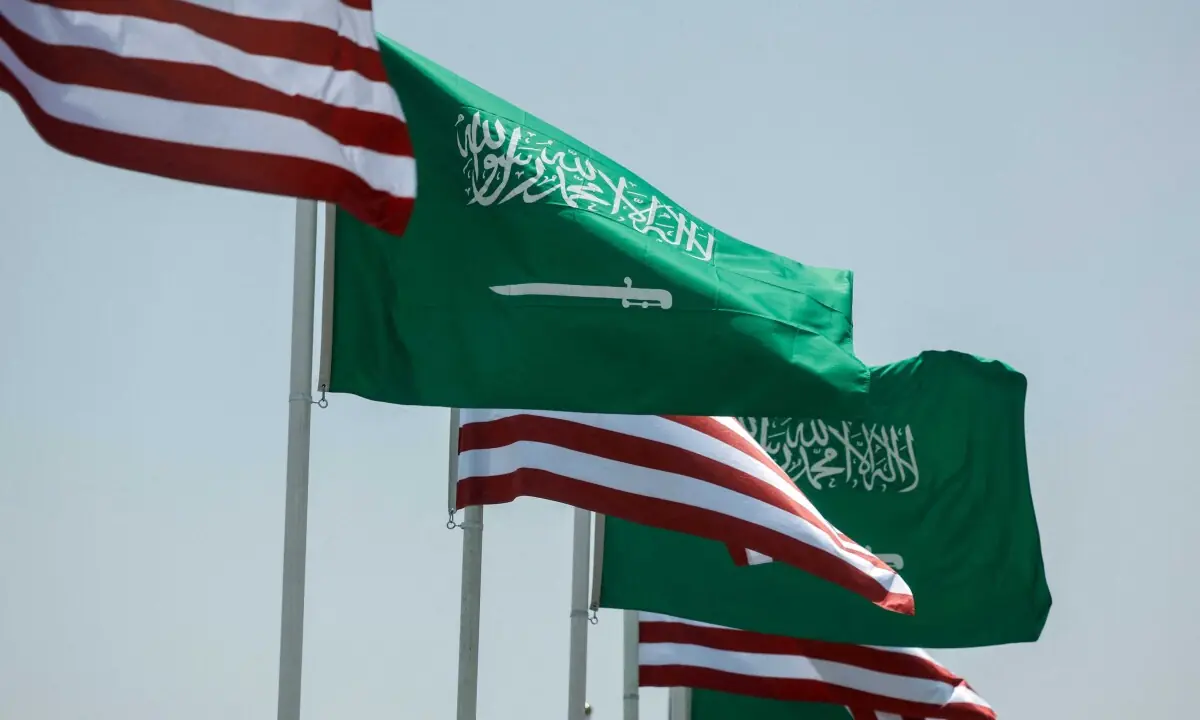
The US signed a civilian nuclear cooperation agreement with Saudi Arabia that includes non-proliferation safeguards, amid the ongoing war with Iran that began over Tehran’s nuclear program. [2] Two agreements—one on peaceful nuclear cooperation and another on bilateral safeguards—were signed by US Energy Secretary Chris Wright and Saudi Prince Abdulaziz bin Salman. [2] The US Energy Department described the pacts as laying the legal foundation for a decades-long, multi-billion-dollar partnership that advances nuclear non-proliferation objectives. [2] The deal will be submitted to Congress for review. [2] US Energy Secretary Wright stated that the agreements uphold the highest standards of nuclear safety and non-proliferation while relying on the world’s best nuclear technology designed in the United States. [2] The agreement was reached under Section 123 of the US Atomic Energy Act. [2]
Bulgaria Authorizes US Refuelling Aircraft
Bulgaria approved the stationing of up to eight US KC-135 refuelling aircraft and 250 personnel at Bezmer Air Base from 24 July to 1 October 2026 to support Middle East operations. [4] Parliament approved the request with 136 votes in favour, 13 against and two abstentions. [4] Iranian officials warned that the authorisation would make Bulgaria an accomplice to aggressors and criminals. [4] Bulgarian Prime Minister Roumen Radev assured that the refuelling aircraft would be used exclusively for logistical and in-flight refuelling missions outside Bulgarian airspace. [4] He added that it is categorically out of the question for military operations in the Middle East to be conducted from Bulgarian territory. [4] The deployment draws on a 2006 defence agreement allowing US forces access to several Bulgarian military installations. [4]
What to watch next: Further statements from Iranian officials on the Strait of Hormuz and any additional US responses to tanker attacks remain key developments to monitor in the coming days.




:quality(30):format(webp):focal(0.5x0.5:0.5x0.5)/tribunnews/foto/bank/originals/Peta-Selat-Hormuz-Iran-OK.jpg)