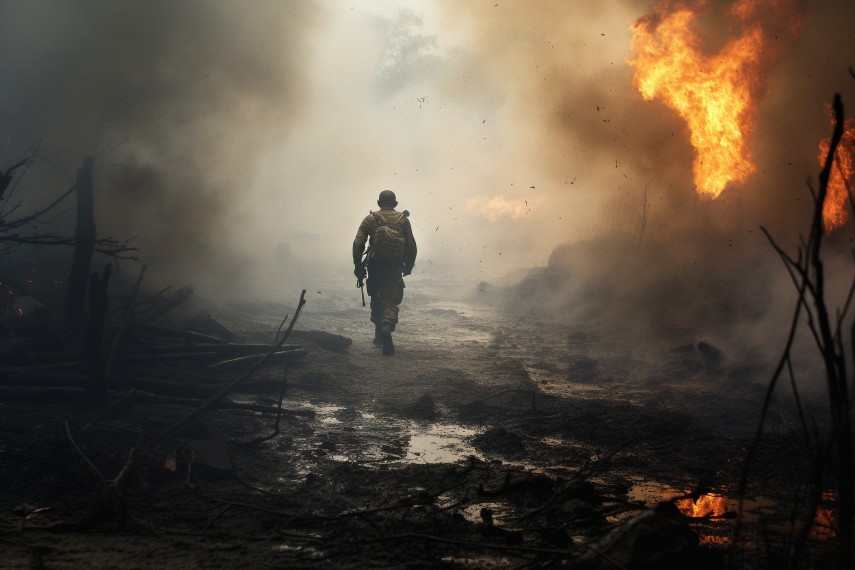

Iran Strikes US Bases in Jordan Killing Two American Service Members
Iran strikes on a military base in Jordan killed two US service members on Friday, marking the first American deaths from direct Iranian fire since the war began in late February.
Iran Suspends US Framework Agreement
The Iranian government announced on Saturday that the framework agreement with the United States is no longer valid after seven consecutive nights of US strikes on Iran. [1] Iranian officials accused Washington of violating commitments under the June memorandum of understanding. [1] Deputy Foreign Minister Kazem Gharibabadi stated that Tehran had suspended the agreement because of US aggressive measures. [1] Supreme Leader Mojtaba Khamenei said the attacks proved that the signature of US President Donald Trump is worthless and invalid. [3] The June memorandum was intended to open the way to a final agreement ending the conflict with negotiations to conclude within 60 days and included provisions on opening the Strait of Hormuz. [1] Khamenei added that Tehran had unforgettable lessons in store for the American enemy. [3]
Seventh Night of US Strikes on Iran
US Central Command reported striking surveillance sites, military logistics infrastructure, underground weapons storage and maritime assets in Iran during the seventh consecutive night of attacks. [1] The strikes hit roads, bridges and a desalination plant according to Iranian authorities. [3] Iranian state media reported that the attacks targeted cities including Ahvaz, Bushehr, Bandar Abbas, the island of Qeshm, Lar, Darab and Yazd. [1] Authorities in Hormozgan province said the strikes killed at least three people and wounded eight. [1] US forces also struck a desalination plant in the southern province of Jask leaving 10,000 people without access to drinking water according to Iranian state television. [3]
US strikes target Iranian economic isolation as Iran suspends framework agreement with Washington. — Source: newsmax
Iran Strikes Across Gulf States
Iran strikes hit targets in Jordan, Kuwait, Bahrain and Saudi Arabia in retaliation for the US campaign. [1] The Islamic Revolutionary Guard Corps said it targeted the Al-Adiri military camp and Ali Al-Salem base in Kuwait, Al-Azraq air base in Jordan and Sheikh Isa air base in Bahrain. [1] Iran also fired at a US military base in Al-Kharaj east of Riyadh and the Red Sea port of Yanbu in Saudi Arabia. [3] The IRGC claimed strikes on US combat aircraft at Sheikh Isa air base in Bahrain and destruction of fighter jets at Al-Azraq in Jordan though the claims could not be independently verified. [3] Iranian forces struck a water desalination plant in Kuwait for the second time in two days. [3]
American Casualties and Gulf Reactions
US Central Command confirmed that two service members were killed in the Iranian missile and drone strike on a base in Jordan with one remaining missing and four medically evacuated. [4] This brings the total US military deaths to 16 since the conflict started in late February. [3] The Gulf Cooperation Council secretary-general Jasem Mohamed Albudaiwi accused Iran of committing war crimes with attacks on civilian infrastructure including water desalination plants. [3] Egypt condemned the Iranian attacks on Kuwait, Bahrain and Oman as flagrant violations of Arab state sovereignty and a dangerous escalation. [5] Qatar condemned the attacks as violations of international law and the UN Charter and called for an immediate cessation of military operations. [5] Kuwait described the repeated targeting of vital infrastructure as part of a systematic aggressive approach. [5]
Strait of Hormuz Escalation
Iran has closed the Strait of Hormuz for more than a week after the resumption of hostilities with the United States. [1] The Islamic Revolutionary Guard Corps said it stopped four vessels attempting to pass without permission and reported explosions on two tankers though US Central Command dismissed the claims as false. [1] Washington reimposed a blockade on Iranian ports in response. [1] The strait which previously carried one fifth of world hydrocarbon trade is again closed by Iran. [1]
Context and Expert Analysis
The conflict began on 28 February with Israeli-American bombings on Iran and has resulted in thousands of deaths mainly in Iran and Lebanon while shaking the world economy. [1] A ceasefire that had been in place since early April broke down at the start of July. [1] US strikes aim to isolate Iran economically and disrupt its ability to maintain control according to retired Army Lt. Col. Tony Shaffer. [2] Analyst David Khalfa of the Jean-Jaures Foundation said the Strait of Hormuz is becoming a trap for both belligerents with the logic of escalation increasingly escaping their control and warned of the risk of a wider regional confrontation. [1] Former senior Israeli intelligence official Danny Citrinowicz said both sides are managing to escalate while still preserving the rules of the game and neither is escalating in a way that would make returning to negotiation too hard. [3]
What to watch next: Observers will monitor whether further Iranian barrages target additional civilian infrastructure in Gulf states and whether US forces expand operations to additional Iranian provinces amid ongoing efforts to control the Strait of Hormuz.






