Iran Strike: Gunboats Fire on Tanker in Strait of Hormuz
Iranian gunboats fired on a tanker, and a second ship was hit by a projectile in the Strait of Hormuz, marking a significant escalation in the strike Iran tensions in the region.[1] These incidents involved two Indian-flagged ships crossing the vital waterway, amid reports of trade ships being targeted as efforts for Iran to reopen related activities falter.[3][5] The events underscore ongoing maritime confrontations linked to broader geopolitical frictions.
Overview of Recent Incidents Involving Iran
Recent reports highlight a series of incidents tied to Iran, centering on maritime attacks in the Strait of Hormuz and connected developments elsewhere. Iranian gunboats fired on a tanker, with a second ship struck by a projectile, as detailed in coverage of the events.[1] This occurred alongside attacks on two Indian-flagged ships while they were crossing the Strait of Hormuz, a critical chokepoint for global trade.[3] Additionally, trade ships were hit in the Hormuz Strait, coinciding with faltering attempts for Iran to reopen associated activities.[5] These primary events reflect heightened activities attributed to Iran, including its stated intentions regarding transit through the strait. The clustering of these reports paints a picture of intensified pressures in the area, with Iran's actions drawing international attention. The Strait of Hormuz, through which a substantial portion of the world's oil passes, has long been a flashpoint, and these strikes amplify concerns over navigation safety. Coverage from multiple outlets emphasizes the immediacy of the gunboat firing and projectile impact, positioning them as key elements in the strike Iran narrative.[1][3][5] Iran's involvement is directly referenced in the context of these ship attacks, linking them to wider regional dynamics. The repetition of such incidents, including the targeting of commercial vessels, suggests a pattern of confrontational tactics. As these events unfold, they connect to Iran's broader positioning against external pressures, particularly those involving port access and blockades. The overview of these incidents provides a foundation for understanding the interconnected nature of the reported actions, all traceable to specific maritime engagements in the Hormuz area.[1][3][5]
Details of Attacks on Ships in the Strait of Hormuz
The attacks on ships in the Strait of Hormuz involved precise actions by Iranian gunboats, which fired on a tanker, while a second ship was hit by a projectile.[1] These targets were two Indian-flagged ships crossing the strait, highlighting vulnerabilities for vessels from various nations navigating this route.[3] Trade ships were similarly struck in the Hormuz Strait, with reports noting that these hits came as Iran reopening efforts faltered.[5] The specifics underscore the direct nature of the engagements: gunboats targeting a tanker and a projectile impacting another vessel, both within the confined waters of the strait.[1] The Indian-flagged ships' involvement adds a layer of international dimension, as they were actively transiting when attacked.[3] This sequence of events—firing from gunboats followed by a projectile strike—indicates coordinated or rapid-succession operations.[1] The faltering of Iran reopening activities provides context for why such trade ships might have been in the area, attempting passage amid uncertainties.[5] Detailed accounts emphasize the timing and location, with the strait serving as the focal point for these maritime incidents.[1][3] No further casualties or damage specifics are detailed beyond the hits themselves, but the nature of the attacks—gunfire and projectiles—signals deliberate interference with shipping.[1] These details align with the strike Iran framework, where Iranian assets are implicated in disrupting transit.[3][5] The repetition in reporting reinforces the gravity, with outlets like CNN capturing the gunboat action and projectile strike in concise yet vivid terms.[1] Channel News Asia specifies the Indian flags and crossing context, tying it to Iran's subsequent statements.[3] Bangkok Post connects the trade ship hits to broader reopening challenges.[5] Together, these elements form a comprehensive view of the attacks' mechanics and implications for strait navigation.
Related Incident in Lebanon
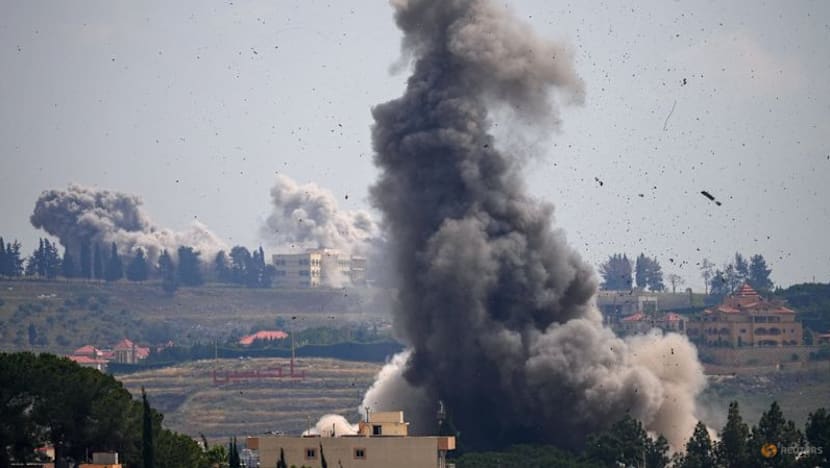
A French UNIFIL soldier was killed in an attack in southern Lebanon, with French President Emmanuel Macron stating that Hezbollah, which is backed by Iran, is likely responsible, though the group denied involvement.[2] This incident occurred on Saturday, leaving three others wounded, and Macron's assessment that "everything suggests" Hezbollah's role links it to Iran-backed elements.[2] The attack targeted peacekeeping forces under the UNIFIL mission, adding to regional instability connected to groups supported by Iran.[2] Macron's public announcement underscores France's position, attributing responsibility amid denials from Hezbollah.[2] The death of the French soldier highlights the risks faced by international peacekeepers in southern Lebanon, where tensions with Iran-backed factions persist.[2] This event provides contextual linkage to Iran through Hezbollah's designation as Iran-backed, paralleling maritime frictions elsewhere.[2] France 24's coverage details the announcement and the suggestive evidence pointed to by Macron, while noting the denial.[2] The wounding of three additional people expands the incident's scope, indicating a serious assault on UN forces.[2] In the broader strike Iran context, this Lebanon development illustrates proxy-related actions, though centered on statements from official sources.[2]
Broader Regional Context
A report described a Saudi oasis adapting to life under Iranian fire, indicating ongoing regional tensions.[4] This account from Al Kharj, titled "Al Kharj en el ojo del huracán: Un oasis saudita se adapta a la vida bajo el fuego iraní," captures adaptations in a Saudi location amid Iranian actions.[4] Published on 20260418T043000Z, it reflects persistent cross-border pressures.[4] The oasis's adjustments to living under such fire point to the lived impact of regional hostilities involving Iran.[4] This fits into the wider canvas of incidents, showing how Iranian-related threats extend beyond maritime zones to affect civilian areas in neighboring countries.[4] The GDELT-sourced report emphasizes survival strategies in the face of ongoing fire, without delving into specifics of attacks but clearly attributing the pressure to Iran.[4] It serves as a snapshot of endurance amid the strike Iran environment, where Saudi territories adapt to repeated exposures.[4]
Iran's Stance on Transit and Blockades
Iran stated it would continue blocking transit through the Strait of Hormuz as long as the US blockade of its ports remains in effect.[3] This position was articulated on Saturday (Apr 18), directly tying Iran's actions to retaliatory measures against US restrictions.[3] The declaration follows the attacks on the two Indian-flagged ships, framing the blockades as a response to impeded Iranian port access.[3] Channel News Asia reports this stance in conjunction with the ship incidents, highlighting Iran's intent to maintain disruptions.[3] The linkage between US port blockades and Hormuz transit interference underscores a tit-for-tat dynamic.[3] Iran's commitment to ongoing blocking signals no immediate de-escalation, especially amid the gunboat firings and projectile strikes.[3] This official posture provides rationale for the maritime attacks, positioning them within a larger strategic calculus.[3]
What to watch next: Monitor Iran's continuation of Hormuz transit blocks in response to US port measures, potential further ship incidents in the strait, and developments around Iran-backed groups like Hezbollah following the Lebanon attack.[3][2]