Iran Receives Diplomatic Proposals Via Mediators as US-Iran Fighting Enters Ninth Day of American Strikes
Outbreak and Current State of Iran-US Fighting
The conflict between Iran and the United States began on February 28 and has continued without pause into its current phase. Iranian Foreign Ministry spokesman Esmaeil Baghaei stated that Tehran has received proposals via mediators to end the fighting but provided no details on whether they include a 10-day truce. [1] The US conducted a ninth consecutive day of strikes on Iran, hitting a civilian nuclear power plant under construction in Darkhovin and extending to areas such as Tabriz, with prior waves aimed at forcing open the Strait of Hormuz and destroying Iranian military capabilities. [1] Tankers and other commercial ships have also been struck in the Strait of Hormuz, through which roughly a fifth of global energy supplies passed before the war. [1] A US naval blockade on Iran’s southern ports continues, in an attempt to strangle the country’s economy. [1] Iran has carried out its own attacks on Kuwait, Bahrain, Jordan and other Arab countries, including on civilian infrastructure, claiming to target US forces in these countries. [1] The US launched a ninth consecutive day of strikes on Iran overnight, extending beyond the Strait of Hormuz region, to areas such as Tabriz in northwest Iran. [1] On Sunday, the US military hit a civilian nuclear power plant under construction in Darkhovin, which Iran said had no military objective. [1] It claims that the targeting of civilian infrastructure shows US opposition to Iran’s economic progress and development. [1] Iran’s Islamic Revolutionary Guard Corps (IRGC) and the conventional army have continued attacks on US military targets. [1]
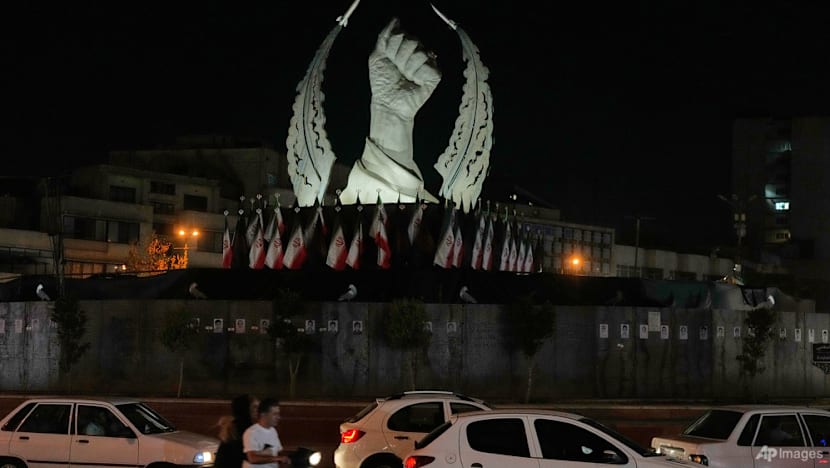
US strikes target Iranian nuclear facility and military sites on ninth day of conflict. — Source: channelnewsasia
US Military Casualties and Identification of the Dead
The total number of US troops killed in the Middle East conflict rose to 17 after deadly strikes over the weekend. [2] Two US soldiers killed in an Iranian attack on Muwaffaq Salti Air Base in Jordan on July 17 were identified as 19-year-old Private Isabella Gonzales from Texas and 25-year-old First Lieutenant Tyler James Feehan from Hawaii, bringing the total US deaths in the conflict to 17, with roughly 430 troops injured. [3] Gonzales was assigned to the 10th Army Air Missile Defense Command in Ansbach, Germany, while Feehan was stationed at Fort Bragg, North Carolina. [3] The Pentagon reported that the soldiers were killed during Iranian missile and drone attacks. [3] A third service member remains missing, and unidentified remains have been recovered from the attack site. [3] The U.S. Central Command (Centcom) has confirmed that four other service members received medical attention and have since been discharged. [3] In March, six US troops were killed when an Iranian drone slammed into a US military facility in Port Shuaiba, Kuwait. [2] Roughly 430 US troops have been injured in the conflict so far. [2] President Donald Trump vowed that Iran would pay many times over for each American soldier killed and has threatened expanded targets including energy plants, bridges, Kharg Island and a nuclear-linked site, while speculation persists about a possible US ground offensive in southern Iran. [2] US President Donald Trump on Monday said Iran would "pay" for killing US soldiers after multiple service members were killed over the weekend as part of the United States' war against Iran, marking one of the deadliest days for US forces since the war started in February. [2] "Every time Iran kills an American Soldier they will pay for that killing many times over," Trump wrote on Truth Social. [2] The White House said Trump would attend the dignified transfer at Dover Air Force Base in Delaware for the service members killed. [2]
Iranian Strikes on Regional Targets and US Bases
Iran has attacked US personnel and targets in Kuwait, Bahrain, Jordan and other Arab countries, including civilian infrastructure, and released video of ballistic missiles used in strikes; it also warned regional countries against allowing US use of their territory. [1] Iran has carried out its own attacks on Kuwait, Bahrain, Jordan and other Arab countries, including on civilian infrastructure, claiming to target US forces in these countries. [1] The IRGC released a video on Monday afternoon showing Kheibar Shekan, Fateh-110, Zolfaghar and Emad ballistic missiles being used in the latest strikes. [1] “Anyone who destabilises the security of the Iranian people will not themselves be safe either!” read a message placed on one of the missiles in Arabic and English. [1] Baghaei urged regional countries not to allow the US military to use their territory to launch or facilitate attacks on Iranian soil in continuation of the US-Israel war on Iran that began on February 28. [1] The broader conflict has also impacted civilian infrastructure and international shipping, with rising oil prices and increased tensions in the region. [3] In response to the attack, the U.S. conducted retaliatory airstrikes against Iranian military targets, including missile and drone storage sites. [3] Defense Secretary Pete Hegseth stated that the strikes were carried out "in honor" of the fallen troops. [3]
US Airstrikes and Targeting of Iranian Sites
The US conducted a ninth consecutive day of strikes on Iran, hitting a civilian nuclear power plant under construction in Darkhovin and extending to areas such as Tabriz, with prior waves aimed at forcing open the Strait of Hormuz and destroying Iranian military capabilities. [1] The US launched a ninth consecutive day of strikes on Iran overnight, extending beyond the Strait of Hormuz region, to areas such as Tabriz in northwest Iran. [1] On Sunday, the US military hit a civilian nuclear power plant under construction in Darkhovin, which Iran said had no military objective. [1] It claims that the targeting of civilian infrastructure shows US opposition to Iran’s economic progress and development. [1] Sources have told Reuters that recent waves of US strikes on Iran aimed at forcing open the Strait of Hormuz are also targeting Iranian military capabilities the US would want to destroy before executing more complex operations against Iran. [2] In the past week, Trump has threatened to expand the targets being struck in Iran to include energy plants and bridges, sending ground forces to seize Iran’s Kharg Island oil hub and bombing a deep-underground nuclear-linked site known as Pickaxe Mountain. [2] The systematic US bombing of southern Iran has led to speculation that US forces may be preparing for a potential ground offensive in this region. [1] This includes any potential attack on the strategically important Kharg Island, from where Iran exports almost all of its crude oil. [1]

US strikes hit Iranian nuclear power plant in Darkhovin during ninth day of conflict. — Source: nzherald
Diplomatic Proposals and Internal Iranian Divisions
Iranian Foreign Ministry spokesman Esmaeil Baghaei stated that Tehran has received proposals via mediators to end the fighting but provided no details on whether they include a 10-day truce. [1] “Proposals have been raised through mediators and have been passed over to us,” he told reporters during a press conference in Tehran. [1] Baghaei said that diplomatic efforts are coming in lockstep with those of armed forces after recent political divisions between hardliners and more moderate factions. [1] US Secretary of State Marco Rubio said Washington remains open to diplomacy but cited Iranian strikes that killed three American service members in the past week as an impediment, while noting a split among Iranian officials between continuing the war and seeking negotiations. [1] US Secretary of State Marco Rubio has said that Washington “always remains open to diplomatic solutions”. [1] But he added that Iran’s missile and drone strikes, which have killed three American service members over the past week, are an impediment to diplomacy. [1] Rubio also claimed that a “split” has emerged among Iranian officials, with one faction wanting to continue war against the US and others seeking negotiations. [1] Iran’s chief negotiator, Parliament Speaker Mohammad Bagher Ghalibaf, hit back at Rubio on Monday, saying that despite the US claiming it seeks an end to the fighting, it continues to import military equipment to the region. [1] “We have reached the level of a full professor on recognising these American games, and we’ve prepared ourselves on that basis. Actions must confirm claims, not contradict them,” Ghalibaf wrote on X on Monday. [1] A number of Iranian officials continue to discuss the memorandum of understanding (MoU) signed with the US last month, which has now been suspended by both sides. [1] Speaking in Tehran during an event on Monday, President Masoud Pezeshkian defended the MoU by saying none of its 14 articles signalled a retreat from the principles of the Islamic Republic or national interests. [1] “We are prepared to give up our lives to defend the country and the interests of the nation, and we have no doubts in this path. But at the same time, we must be realistic and accept the natural repercussions of this steadfastness as well,” he said, pointing to economic pains Iran has been experiencing. [1] Despite ongoing violence, both Washington and Tehran have indicated openness to renewed negotiations. [3]
Prospects for Ground Operations and Deterrence
The systematic US bombing of southern Iran has led to speculation that US forces may be preparing for a potential ground offensive in this region. [1] Baghaei, the Iranian Foreign Ministry spokesperson, warned on Monday that it was “counting down the minutes to welcome” US soldiers. [1] This includes any potential attack on the strategically important Kharg Island, from where Iran exports almost all of its crude oil. [1] Few believe that such a military endeavour by the US would be feasible, let alone holding the ground while Iran maintains a formidable arsenal of drones and missiles. [1] “It is very unlikely that they would be able to seize a place without much hardship, and then holding it would be another matter entirely,” a state television host said on the war-focused Be Vaght-e Iran programme. [1] “But even if all of that happens, it would not be the end of the world.” [1] There appears to be no immediate end to the conflict, and Iranian commanders said their tactic to avoid future US aggression, via their own attacks, is working. [1] “Wisdom dictates that war continues until it leads to full deterrence for the Iranian nation,” Iranian army spokesman Mohammad Akraminia said. [1] “If that does not happen, the enemy will miscalculate again and commit an aggression against Iranian soil.” [1] The war, including its monetary cost, is set to dominate a congressional hearing on Tuesday with Hegseth and Caine. [2] Joe Kent, who headed the National Counterterrorism Centre until March, said the back and forth between US and Iranian forces risked further escalation. [2] "Get our troops out now before we suffer a mass casualty attack. Break the escalation trap," Kent, who resigned over Trump's war in Iran, wrote on X. [2]
What to watch next: Iranian commanders have stated that war must continue until full deterrence is achieved, while US officials have indicated openness to diplomacy only if Iranian strikes cease.