
Iran Fires Missiles at Jordan After U.S. Strikes Near Strait of Hormuz
Jordan shot down five Iranian missiles targeting the Muwaffaq Salti Air Base, which hosts U.S. aircraft, after the United States conducted airstrikes on Iran in retaliation for a U.S. helicopter crash blamed on Tehran. Jordan strikes formed a central part of the defensive response that limited any immediate harm from the incoming projectiles. [2]
U.S. Airstrikes on Iran Following Helicopter Crash
The United States launched airstrikes early Wednesday against Iranian air defense, ground control stations, and surveillance radar sites near the Strait of Hormuz following the crash of a U.S. Army attack helicopter that collided with an Iranian drone. [1] The exchanges of fire came a day after a U.S. Army attack helicopter crashed near the Strait of Hormuz after colliding with an Iranian drone, according to a U.S. official who spoke on condition of anonymity to discuss an ongoing investigation. [2] It was not clear whether the collision was intentional. [2] A drone boat rescued both of the helicopter’s crew, and Trump said they were uninjured. [2] The military’s Central Command said the operation was a response proportional to the recent attacks against forces of the United States and commercial vessels transiting regional waters. [5] U.S. fighter jets targeted air defense, ground control stations, and surveillance radar sites. [2] Iran acknowledged strikes around Bandar Abbas and Qeshm Island but gave no details on damage. [2] Iranian authorities stated that in the U.S. attacks several communication towers and two desalinizadoras were destroyed in the area of Sirik, leaving 20,000 people without potable water. [5] Iranian Foreign Minister Abbas Araghchi condemned the American attacks as a violation of Iranian sovereignty in calls with his counterparts from Turkey and Saudi Arabia and emphasized the inherent right of self-defense, including reciprocal action. [2]
Iranian Retaliation Against Regional U.S. Bases
Iran responded by firing missiles and drones at U.S. military bases in Jordan, Kuwait, and Bahrain, claiming attacks on 21 targets across the region. [4] Iran’s Revolutionary Guard Corps said they had carried out missile and drone attacks on U.S. military bases in Jordan, Kuwait, and Bahrain on Wednesday in retaliation for American strikes on Iranian targets around the Strait of Hormuz. [4] The Revolutionary Guard announced that it responded to those attacks with bombings against 21 U.S. military objectives throughout the Middle East, an extreme denied by Washington. [5] Among the objectives would be U.S. bases in Jordan, Kuwait, and Bahrain. [5] Iran’s top diplomat vowed that there would be a response, and Tehran later claimed attacks in Kuwait, Bahrain, and Jordan. [2] Foreign Ministry spokesperson Esmail Baghaei said in televised comments Wednesday that, following the new attacks, Iran would review its stance on negotiations to end the war. [2]
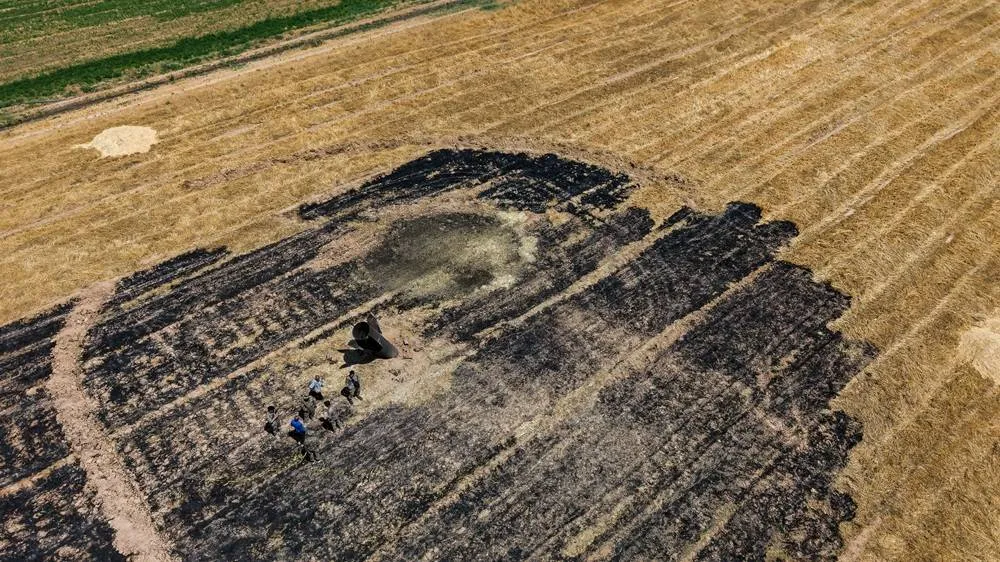
Jordan military intercepts five Iranian missiles targeting Muwaffaq Salti Air Base. — Source: gdelt
Jordan's Interception of Iranian Missiles
Jordan’s military intercepted the five incoming missiles aimed at Muwaffaq Salti Air Base with no injuries reported, while Bahrain and Kuwait also intercepted incoming fire. [3] Jordan said it shot down five incoming missiles, which Iran said targeted the Muwaffaq Salti Air Base. [2] The base has hosted American F-35 fighter jets and other aircraft. [2] Jordan’s state-run Petra news agency reported there were no injuries. [2] Bahrain and Kuwait said they intercepted incoming fire, without elaborating. [2] Jordan’s military action in shooting down five missiles aimed at Muwaffaq Salti Air Base confirmed no injuries or damage. [3]
Impact on Ceasefire and Regional Negotiations
The exchanges mark the second round of back-and-forth strikes this week after Iran and Israel targeted each other on Monday, testing a two-month ceasefire and threatening ongoing negotiations to end the conflict. [1] It is the second occasion in the week that the back-and-forth attacks put the ceasefire to the test after Iran and Israel attacked each other mutually on Monday. [5] U.S. President Donald Trump posted on Truth Social that Iran was taking too long to negotiate a deal and would have to pay the price, while Iran stated it would review its stance on negotiations. [1] Hours after Bahrain, Kuwait and Jordan came under Iranian fire, U.S. President Donald Trump posted on his Truth Social platform that Iran was taking “too long to negotiate a deal” and that “now they will have to pay the price.” [1] Iran, meanwhile, has proved resilient despite having faced weeks of heavy bombing. [2] Foreign Ministry spokesperson Esmail Baghaei said in televised comments Wednesday that, following the new attacks, Iran would review its stance on negotiations to end the war. [2] Efforts to mediate a deal continued. Following consultations with the U.S., a delegation from Qatar arrived in Tehran for talks on Wednesday, according to an official with knowledge of the visit who requested anonymity due to the sensitive nature of the talks. [2] Mediators, headed predominantly by Pakistan, have been trying for weeks to close an agreement. [5]
Jordan forces intercept Iranian missiles targeting US air base after US strikes on Iran. — Source: newsmax
Broader Context of the Iran Conflict
Strikes by the US and Iran shake the Mideast since the U.S. and Israel started the war with attacks on Iran on Feb. 28. [2] The conflict has shaken the global economy, driven up energy prices around the world, and made food and other basics more expensive. [2] The international benchmark for crude oil traded above $92 a barrel on Wednesday, up more than 25% since the start of the war. [2] Iranian Foreign Minister Abbas Araghchi condemned the American attacks as a violation of Iranian sovereignty. [2] Israeli Prime Minister Benjamin Netanyahu appears intent on pursuing much more difficult goals: the collapse of Iran’s theocratic government, the elimination of its nuclear program, and the destruction of the Iranian-allied Hezbollah militant group in Lebanon. [2] Netanyahu said Wednesday that Israel would “continue to act forcefully against Iran and its proxies that threaten the Middle East and the entire world.” [2] Israel’s military said it launched multiple strikes in southern Lebanon over the past day, targeting Hezbollah infrastructure. [2] An airstrike on a village east of Tyre killed at least six people, Lebanon's state-run National News Agency reported. [2] It said two others were killed by an Israeli drone strike on a car in the southern city of Sidon. [2]
Reactions from Egypt and Other Regional Players
Egypt strongly condemned the Iranian attacks on Jordan, Bahrain, and Kuwait as violations of sovereignty, its emphasis on Gulf security, and the setback to improving Egypt-Iran ties. [3] In a series of official statements and comments, Egypt has strongly condemned the Iranian attacks targeting Gulf Arab states, describing them as a dangerous escalation, a blatant violation of national sovereignty, and a direct threat to regional security and stability. [3] Egypt on Wednesday condemned "in the strongest terms" what it described as Iran's attacks on Jordan, Bahrain and Kuwait, saying they constituted "a flagrant violation of the sovereignty and territorial integrity of these sisterly states and a highly dangerous escalation that threatens the security and stability of the entire region," according to a Foreign Ministry statement. [3] Egypt stressed that "the security and stability of sisterly Arab states are an integral part of Egyptian and Arab national security," reiterating its categorical rejection of any actions or practices that undermine state sovereignty or threaten territorial integrity and security. [3] It also underscored the importance of de-escalation and respect for international law in order to preserve regional security and stability. [3] After two years of steadily improving ties that appeared to be moving toward the restoration of full diplomatic relations, Egypt and Iran now seem to be facing a major setback. [3] Egypt views Iran's current war and the subsequent attacks it carried out against Gulf states as a violation of one of its key conditions for fully normalizing relations: that Iran must not threaten the security of the Gulf or the wider region. [3]
What to watch next: Qatar’s delegation continues talks in Tehran while Iran reviews its negotiating stance and Trump warns that stalled talks will carry a price.