
Iran Appoints Interpol-Wanted Rezaei to Head Supreme National Security Council
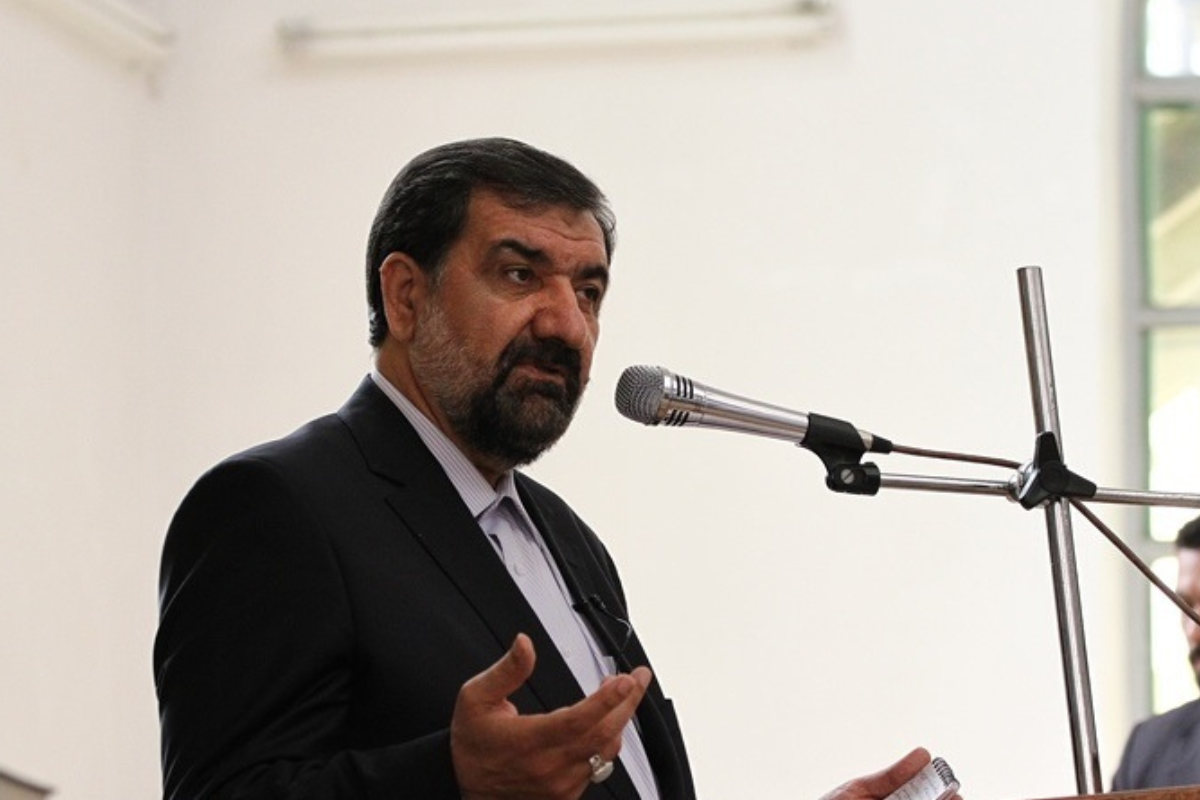
Iran has appointed Mohsen Rezaei, an Interpol-wanted suspect for the 1994 AMIA bombing in Buenos Aires that killed 85 people, as head of its Supreme National Security Council amid an ongoing war with the US and Israel, heightening Iran tensions in the region. The council coordinates Iran's defence, foreign policy, nuclear programme and security. Rezaei, a former IRGC commander, replaces Mohammad Bagher Zolghadr who resigned to become political adviser to Mojtaba Khamenei. [1] This is the second appointment to the post since Israel's assassination of Ali Larijani in mid-March. [1]
Rezaei Appointment Confirmed
Iran has appointed Mohsen Rezaei as head of its Supreme National Security Council, the presidency confirmed on Sunday. [1] The council is Iran's top strategic decision-making body, coordinating defence, foreign policy and security matters across the regime. [1] Rezaei, 71, is the second official to take the post since the assassination of Ali Larijani by Israel in mid-March, during the early weeks of the war between the US, Israel and Iran. [1] Presidency spokesman Mehdi Tabatabaei said on X that President Masoud Pezeshkian had appointed Rezaei following the resignation of Mohammad Bagher Zolghadr as council secretary. [1] Zolghadr will now serve as political adviser to Mojtaba Khamenei, son and successor of the late Ayatollah Ali Khamenei, who was killed on the war's first day. [1] The council, often compared to a politburo, is where rival factions within Iran's leadership contest policy on war, diplomacy and the nuclear programme. [1] Rezaei's appointment points to a harder-edged, military-minded leadership as Iran tests international patience in the Gulf. [1]
Rezaei's Background and Interpol Notice
Rezaei led the Islamic Revolutionary Guard Corps, designated a terrorist organisation by the United States, from 1981 to 1997, before holding a series of senior political roles, most recently as military adviser to Mojtaba Khamenei. [1] He has also been the subject of an Interpol Red Notice since 2007 over the 1994 bombing of the Asociación Mutual Israelita Argentina (AMIA) community centre in Buenos Aires, which killed 85 people. [1] Argentine court records attribute the attack to Hezbollah operatives acting on Iranian orders. [1] Late prosecutor Alberto Nisman alleged in a 2006 indictment that the decision to strike was taken at a meeting in Mashhad in August 1993, under a body he called the 'Committee for Special Operations'. [1] Nisman named Ayatollah Khamenei as head of that committee and said the order to attack came from Khamenei and then-president Ali Akbar Hashemi Rafsanjani. [1] He placed Rezaei, then IRGC chief, within Rafsanjani's intelligence office, alleging Rezaei co-authored the plan and that his role 'extended to the implementation phase of the attack'. [1] Rezaei denies wrongdoing. [1] The notice has previously affected his movements. In 2022, Argentina asked Qatar to detain Rezaei during a visit, citing a judicial order describing his 'proven participation' in the meeting where the attack was decided. [1] Qatar did not act on the request. [1] His attendance that same year at the inauguration of Nicaragua's president drew condemnation from Argentina's foreign ministry, which called his presence 'an affront to Argentine justice and to the victims' of the bombing. [1]
Wartime Leadership Changes in Tehran
Several senior officials have died during the conflict. [1] Israel's military had described Larijani as Iran's 'de facto leader' following the supreme leader's death. [1] Mojtaba Khamenei was reportedly injured in the same strike that killed Larijani and has not appeared in public since, fuelling speculation over who now controls Tehran's decision-making. [1] Rezaei's appointment points to a harder-edged, military-minded leadership as Iran tests international patience in the Gulf. [1]
Strait of Hormuz Blockade Persists
Iran has maintained a blockade of the Strait of Hormuz since the war began in late February 2026, demanding US compensation and other conditions before reopening the waterway, which it calls more important than dozens of atomic bombs. [1] [2] The IRGC said they would not open the Strait of Hormuz until the US meets conditions set by Tehran the day before, including compensation for war damage. [2] Iran has imposed an effective blockade on the Strait of Hormuz since the US and Israel attacked at the end of February 2026. [2] Tehran also wants to charge tolls for shipping and has attacked vessels it accuses of trying to avoid its preferred route. [2] Ongoing attacks on the waterway, which was open before the war, led to the collapse of the April ceasefire. [2] Iran's foreign minister Abbas Araghchi said talks with Oman on transit and management of the Strait of Hormuz are nearing final stages, but reopening depends on conditions and compensation for violations of the June 2026 agreement. [2] Earlier this month Rezaei warned Iran would not tolerate an 'unauthorised route' through the Strait of Hormuz. [1] In July he said control of the waterway was 'more important than dozens of atomic bombs'. [1]
Trump's Economic Pressure Strategy
Trump has signalled the US is semi-negotiating with Iran while relying on mounting economic pressure from a naval blockade that has worsened Iran's financial crisis, high inflation and inability to pay its troops. [2] [4] President Donald Trump said the US is "low-keying it" regarding talks with Iran and only "semi-negotiating," waiting for economic pressure on Tehran to build. [4] Trump told Axios that the US is "only semi-negotiating" with Tehran while closely watching Iran's worsening economy. [2] He said Iran is in "very bad financial condition" and struggling to pay its troops. [2] Trump stated that the US naval blockade has increased pressure on the Iranian government and contributed to the country's economic crisis. [2] The economic impact of the conflict on Americans has eased because oil prices have fallen to just over $75 per barrel. [2] Iran's deputy parliament speaker Ali Nikzad said Iran recognises no shipping route through the Strait of Hormuz except the one agreed with Oman. [4]
Regional Defence Pact Reaction
Iran's foreign ministry described a new mutual defence pact between Saudi Arabia, Turkey and Pakistan as evidence of declining regional reliance on the US security umbrella and stated the agreement is not aimed against Tehran. [5] Iran's foreign ministry said the defence pact signed last week between Saudi Arabia, Turkey and Pakistan is "a sign of a change in the perception" of countries in the region towards the United States. [5] Ministry spokesman Esmaeil Baqaei said at a weekly press conference that countries in the region have realised that security is not a commodity that can be bought from false brokers. [5] He added that countries in the region cannot rely on the claim of security provided by the US as in the past. [5] Baqaei said Iran was not concerned that the pact could be aimed at Tehran, highlighting "deep religious, historical and civilisational ties" with Saudi Arabia, Turkey and Pakistan. [5] He stated there was "no reason to worry that this treaty will be against Iran". [5] The three nations signed the "Mecca Mutual Defense Agreement" on Friday against the backdrop of a five-month war between the US and Iran. [5] Pakistan's foreign ministry said the pact means an attack on any member would be regarded as an attack on all. [5] According to a joint statement, the pact stipulates that any armed attack against any one of the three states shall be regarded as an attack against them all. [5]
What to watch next: Iran's deputy parliament speaker has said the US has practically realised that opening the Strait of Hormuz has no military solution, while Trump continues to monitor economic pressure on Tehran.