
In Most Dangerous Countries: Ukrainian Naval Drone Sinks Russian USV in First Recorded Combat
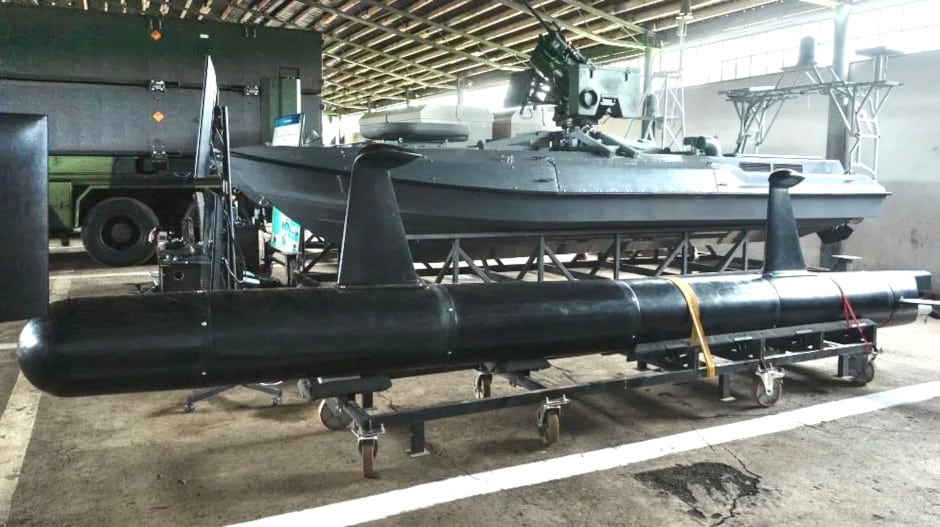
Ukrainian naval drone sinks Russian USV in the world's first recorded combat between two uncrewed surface vessels in the Black Sea amid most dangerous countries. The Ukrainian Sargan-3000 USV, equipped with a Kongsberg Protector remote weapon station mounting a 12.7mm machine gun, destroyed an improved Russian Orcan-type USV. [1] The engagement occurred in the northwestern Black Sea between Odesa and Crimea, based on intelligence from Ukraine's Main Intelligence Directorate. [1]
Historic Naval Drone Duel in Black Sea
For the first time in history, an uncrewed surface drone has destroyed another USV in combat. [1] The Ukrainian Navy Sargan-3000 USV, operating on intelligence from the Main Intelligence Directorate, interdicted a Russian attack USV in the Black Sea. [1] The Russian naval drone was sunk. [1] The exact vicinity of the fight has not been reported but is most likely to be in the Northwestern Black Sea between Odesa and Crimea. [1] The Orcan will likely have been armed with a ramming charge, while the Sargan-3000 was armed with a Kongsberg Protector RWS with a 12.7mm machine gun. [1] The Ukrainian Navy USV used this to sink the Russian USV. [1] USVs are intended to be expendable and the loss of one unit in this way is not in itself significant from an attrition perspective, but the way that it was done is consequential. [1] It will likely lead to an evolution of tactics on both sides. [1]
Details of the Ukrainian and Russian USVs
The Ukrainian Sargan-3000 USV, also known as the Seawolf, is one of the main types of USV associated with the Ukrainian Navy. [1] Built by Nordex, it is also increasingly associated with Norwegian defense firm Kongsberg, whose remote weapon station was used in this case. [1] The Sargan can also carry the Sea Dragon air defence system, a ‘FrankenSAM’ system using Sidewinder or Soviet-era AA-11 Archer missiles. [1] Another notable variant is equipped with extensive electromagnetic warfare equipment. [1] The Russian USV can be positively identified as an improved Orcan type, also referred to as Zefir/Zephyr in some Russian sources. [1] The Orcan is a relatively small drone intended for explosive attacks, being very similar in size and concept to Ukraine’s original Magura V3 and V5 types. [1] It has an internally mounted motor driving a jet ski type steerable water jet, which makes it fast and agile. [1]
Russian USV Operations and Basing
The Orcan surface drone is typical of those being used by Russia for attacks on Ukrainian ports and naval vessels. [1] These are becoming more frequent and more of a threat. [1] Several strikes have been reported, primarily on Odesa, and more have likely been foiled. [1] Several Ukrainian warships and naval vessels have been destroyed, although the ship count and strategic initiative remains with the Ukrainians. [1] Russia has been basing these USVs in northwestern Crimea, in Chornomors’ke, and in a new special base on Lake Donuzlav. [1] The latter base features dispersed revetments dug into the shoreline to protect the USVs before launching their mission. [1] During attacks the Russian USVs work closely with deep strike drones, particularly the Geran type which can provide oversight and control. [1] The aerial drones are equipped with trainable cameras and can act as repeaters to extend the range of the USV’s mesh radios. [1]
Houthi Advances and Yemeni Government Response in Red Sea
Yemen's Riyadh-backed government forces said on Saturday that they had struck Houthi fighters in the strategic Red Sea city of Mocha. [2] Following a week-long offensive, the Houthis on Friday captured Yemen's Red Sea coast, cementing their hold on the Bab al-Mandab Strait. [2] They had seized Mocha the day before after heavy fighting. [2] The armed forces destroyed vehicles and weapons and killed members of the Houthi terrorist militia backed by the Iranian regime near Mocha's port. [2] The spokesman for the Yemeni government forces, Majed Abdullah al-Nazili, said they had also struck Houthi vehicles and fighters on the Mocha-Dhubab road, just outside the city. [2] Nazili said on Friday that government forces had begun shelling areas in Mocha, and called on citizens not to use the Taiz-Mocha and Mocha-Dhubab roads. [2] The fall of the city to the Houthis on Thursday drove many residents to flee to Aden, where the internationally recognised government is based. [2] On Friday, Houthi media said two Saudi strikes hit Mocha's airport, while a local official said the city's seaport was hit by six missiles of unknown origin. [2] The Houthis' ground offensive, launched last week, has killed more than 500 people, according to sources on both sides. [2] It has also displaced about 76,000 people, the UN migration agency said on Saturday, a figure that had quadrupled since last week. [2]
Israeli Actions in Southern Lebanon
Lebanese farmer Saleh woke up before dawn on 3 September to harvest his fig trees in the southern Lebanese border village of Halta. [3] When he stepped out and saw lights outside his neighbours' house, abandoned during the war, Saleh knew an Israeli army unit was there. [3] The Israeli soldiers were searching houses in the village and called three residents on their mobile phones instructing them to come outside. [3] After several hours of interrogations, they took the three men away, including Hatem Abdel-Aal, a member of the municipal council. [3] The Israeli army returned Hatem at around midnight. [3] They told him you have to come to us by foot, without a car. [3] The man followed their instructions and headed their way. He couldn’t refuse. [3]
Broader Regional Context
Naval drones have become increasingly prominent in the Russo-Ukrainian War since 2022. [1] Yemen's civil war began with the group's takeover of the capital Sanaa in 2014, and was paused by a 2022 truce that fell apart in July. [2] The United States previously conducted a seven-week bombing campaign against the Houthis, starting in March 2025, in response to the group's repeated attacks on international shipping in support of Hamas in the war on Gaza. [2] That effort ended with a negotiated ceasefire, though the Houthis kept up their missile and drone attacks targeting Israel. [2] More recently, the group has resumed attacks on ships in the Red Sea after declaring a maritime blockade of Saudi Arabia. [2] Israeli troops take a break as they prepare to enter south Lebanon, in Rosh HaNikra, northern Israel, on 4 September 2026. [3]
What to watch next
The way the Black Sea engagement was conducted will likely lead to an evolution of tactics on both sides. [1] Axios reported that Saudi Crown Prince Mohammed Bin Salman had twice called US President Donald Trump to request American strikes on the Houthis last week, but on Saturday Trump told reporters that the Houthis called us and they don't want to fight with us. [2]