
Hundreds Evacuated as Indonesia's Sinabung Volcano Erupts after Five Years amid natural disasters
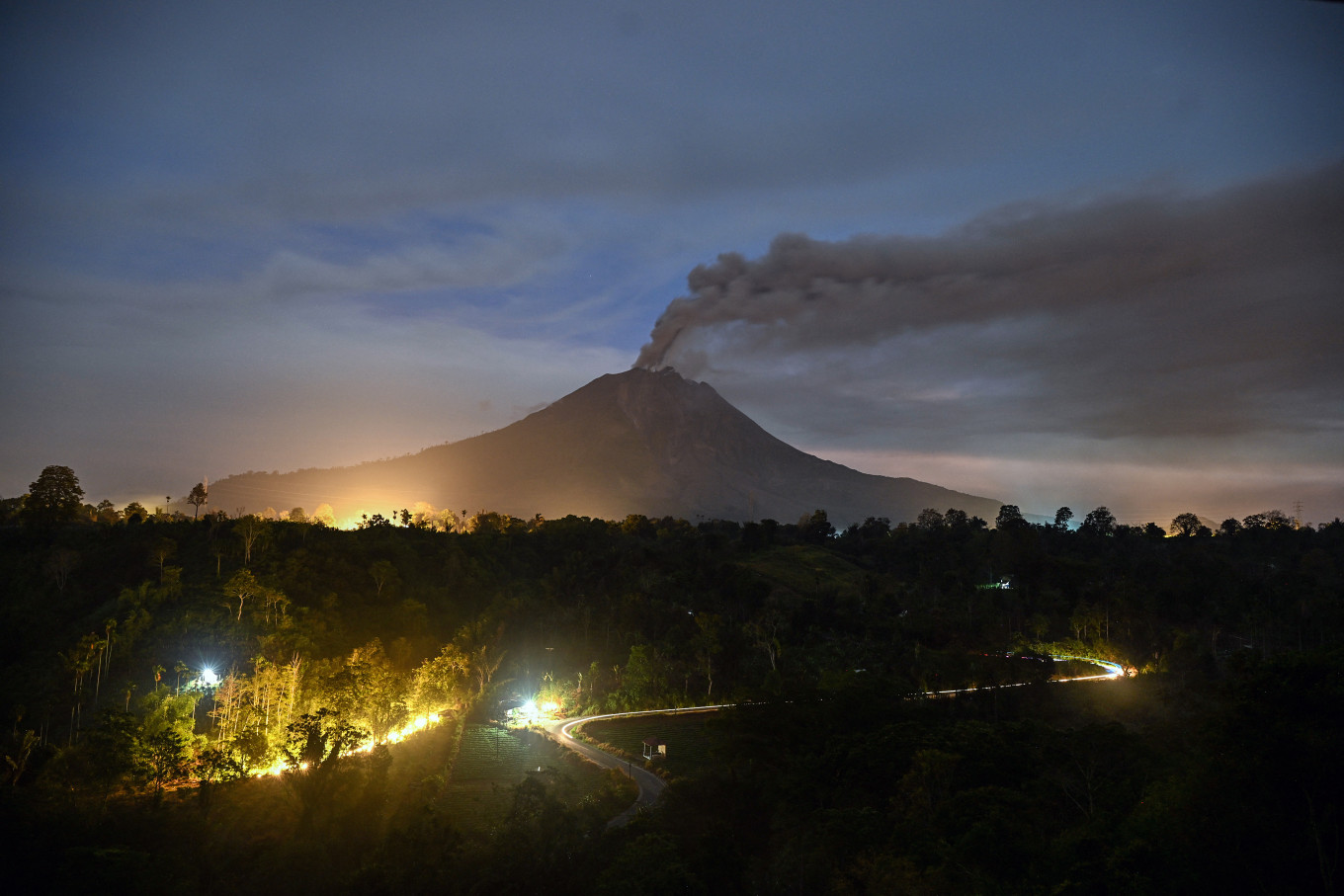
Mount Sinabung in North Sumatra erupted on 31 August 2026 after five years of dormancy, prompting temporary flight disruptions at Kualanamu International Airport due to volcanic ash and the evacuation of hundreds of residents, though many villagers continue working in danger zones amid natural disasters. [5]
Eruption Overview
Mount Sinabung erupted on Monday 31 August around 10:17 local time, generating a dense cloud of black ash. [5] The seismic activity that followed the volcano’s activity lasted about one hour. [5] Residents described the Monday eruption as minor compared to previous larger events that featured volcanic ash and pyroclastic clouds. [1] The eruption occurred after the volcano had been dormant for five years. [1]
Evacuations and Resident Response
Hundreds of residents from villages such as Kuta Tengah remain in temporary shelters. [5] Residents living around Mount Sinabung have disregarded warnings from the Energy and Mineral Resources Ministry’s Geology Agency not to conduct any activities within 3 kilometers of the volcano’s summit. [1] Sarianto from Tiga Pancur village in Karo regency continues to drive his pick-up truck to Gurukinayan village, 1.5 km from Mount Sinabung’s base, to dig sand for sale to irrigation projects. [1] He stated he is used to seeing Mount Sinabung erupt and is no longer afraid. [1] His home is 5.8 km from the volcano’s base. [1] Sarianto said the Monday eruption was nothing compared to eruptions several years ago. [1]

Mount Sinabung in North Sumatra erupts after five years of dormancy, sending a dense ash cloud into the sky. — Source: gdelt
Impact on Agriculture
Volcanic ash has been deposited on surrounding agricultural land, threatening crops on which many residents depend. [5] The situation remains difficult for those whose livelihoods rely on the affected farmland. [5]
Airport Closure and Recovery

Flights resume at Kualanamu International Airport after Sinabung volcanic ash disruption. — Source: antaranews
On 1 September 2026 a thin layer of volcanic ash was detected in the aircraft parking area at Kualanamu International Airport. [2] [3] As a precautionary measure, flight operations were temporarily closed on 1 September based on NOTAM A3250/26. [2] [3] The closure impacted 45 flights canceled and six flights rescheduled. [3] By 2 September 2026 monitoring confirmed no volcanic ash at the airport via paper tests conducted from 08:00 to 16:00 WIB. [2] [4] Operations resumed under NOTAM A3254/26 and NOTAM A3251/26 after aerodrome condition inspections. [2] [3]
Ongoing Monitoring and Aviation Safety
SIGMET data from VAAC Darwin on 2 September showed an ash cloud reaching 14,000 feet moving southwest at 5 knots with stable intensity. [2] [3] The information was valid from 12:00 to 18:00 WIB on that date. [2] [4] The Directorate General of Civil Aviation continues monitoring and coordination with airport operators, airlines, and stakeholders. [2] [3] Airlines retain authority to evaluate operations and adjust schedules, delay, or cancel flights when necessary. [3]
Response to natural disasters and Future Preparedness
Authorities continue to monitor the volcano and assess conditions for a safe return of residents. [5] The Directorate General of Civil Aviation receives updates from VAAC Darwin and meteorological stations to support mitigation steps. [2] [4] Aviation safety remains the top priority during ongoing developments. [3]
What to watch next: Continued coordination by the Directorate General of Civil Aviation with airport operators and airlines will focus on any changes in wind direction that could affect volcanic ash movement patterns.