Houthis Strike Saudi Oil Sites in Jizan and Yanbu After Airstrikes on Hodeidah
Houthi forces fired missiles and drones at Saudi Aramco oil facilities in Jizan and Yanbu on Sunday in retaliation for Saudi strikes on Hodeidah, escalating a regional conflict reignited by the US-Iran war.
Houthi Attacks Hit Saudi Oil Facilities
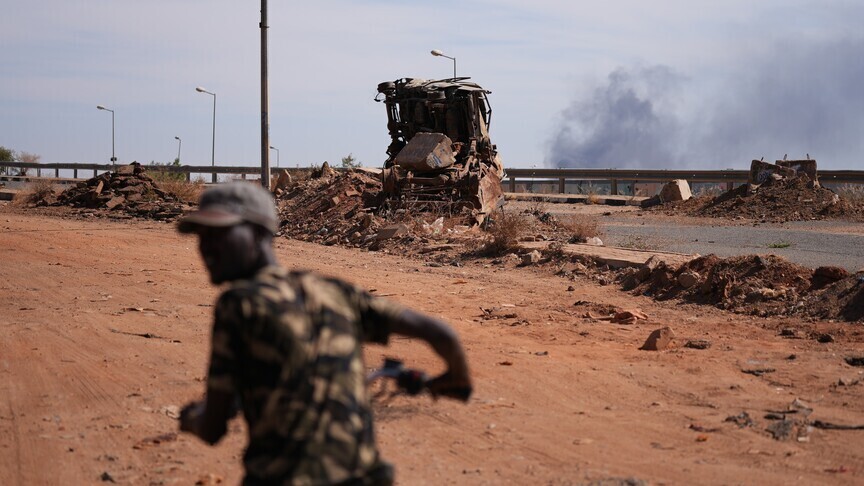
Tehran-backed Houthi forces in Yemen fired missiles and drones at two of Saudi Arabia’s most strategically important oil facilities on the Red Sea. [1] Houthi military spokesman Yahya Saree said the attacks targeted facilities belonging to Saudi state oil giant Aramco in the coastal cities of Jizan and Yanbu. [1] There has been no comment from Saudi Arabia on the extent of any damage to Aramco’s refinery in Jizan, but a large column of smoke was seen rising after the attack. [1] In Yanbu, Saudi Arabia’s principal west coast export gateway, two ballistic missiles aimed at oil installations were intercepted by a Patriot battery operated in Saudi Arabia by the Greek military under an agreement with Riyadh. [1] The skies over the country at the epicentre of the widening war were quiet for a second successive night, with no new US attacks on Iran reported by Sunday morning. [1]
Saudi Retaliation and Truce Collapse
Saudi Arabia and its regional allies joined a brutal civil war against the Houthis in 2015, until a truce was agreed in 2022. [1] The truce collapsed this month after an attack on Sanaa airport to stop an Iranian plane landing provoked the Houthis to fire ballistic missiles at Saudi Arabia. [1] Last Monday, the Houthis declared a naval blockade of Saudi Arabia, and late on Friday the Saudis launched air strikes on the Houthi-held city of Hodeidah. [1] In retaliation, Houthi forces launched Sunday’s attacks. [1]
US-Iran War Triggers Wider Escalations
Iran had been pounded by 13 consecutive waves of overnight US air strikes since July 11, after the Islamic Revolutionary Guard Corps attacked tankers trying to transit the Strait of Hormuz. [1] As hostilities escalated, both sides declared that an interim peace agreement signed in June was dead, and a second phase of talks to finalise a comprehensive peace deal appeared doomed. [1] But there have been no US air strikes since Friday, and tentative signs are emerging that Washington and Tehran are still talking via mediators and might return to more meaningful discussions. [1] US President Donald Trump has not given a reason for the sudden cessation in air strikes on Iran, but a senior administration official told the Reuters news agency that Trump “has always been clear that his preference is diplomacy, but he has shown Iran what will happen if they fail to come to the table in a serious way”. [1] Trump said on Friday that there was still some communication with Iran. “They are talking to us right now; they’d love to make a deal,” he said. “I don’t think they’re ready to … but I’m willing to listen.” [1] Al Jazeera’s Resul Serdar, reporting from Tehran, said Iranian officials had confirmed the two sides were exchanging messages. “There have been proposals conveyed by the mediators, and Tehran is still reviewing them,” Serdar said, adding there was “not much progress yet” due to “fundamental differences” in their positions and deep mistrust. [1]
Global Risks from Blocked Shipping Lanes
Iran’s attacks on shipping in the Strait of Hormuz have put a stranglehold on exports of oil and raw materials for fertiliser, sending energy prices soaring and raising the risk of a food security crisis in some of the world’s most vulnerable countries. [1] The escalating conflict has raised fears that the Houthis could block the Bab al-Mandeb Strait, which connects the Red Sea to the Gulf of Aden. [1] If both the Bab al-Mandeb and Hormuz straits were blocked, the resulting supply chain crisis would cause major economic damage across the world. [1]
Entanglement with Lebanon and Ukraine Conflicts
Besides spreading to the Red Sea, the US-Iran war has become entangled with the deadliest active conflict in the world – Russia’s attempted conquest of Ukraine. [1] A long-range strike on an Iranian vessel in the Caspian Sea on Saturday caused an explosion that killed one sailor and wounded another, according to Iran’s Ministry of Foreign Affairs, which blamed the attack on Ukraine and summoned Kyiv’s charge d’affaires in Tehran to convey its condemnation of the “hostile and criminal” act. [1] Ukrainian President Volodymyr Zelenskyy said in a post on X that Kyiv had achieved “very strong results” with long-range strikes in the Caspian Sea, hitting “vessels used in military cargo shipments involving Iran, as well as a warship”. [1] Zelenskyy claimed in further comments on X on Saturday that since the start of July, Kyiv had detected “active Russian satellite surveillance of the Gulf states and US military facilities located there”. [1] He said the satellite images were passed to Tehran to help the IRGC identify targets for ballistic missile and drone attacks. [1] In March, in response to attacks on Iran, the Tehran-backed Hezbollah movement in Lebanon resumed missile attacks on Israel, which then launched a devastating invasion of southern Lebanon that has displaced 1.2 million people. [1]
West Bank Settler Clash and Arrests
Israeli forces arrested over a dozen Palestinians in the occupied West Bank on Saturday, after at least four Palestinians and two Israeli soldiers were killed in a shootout when armed Israeli settlers approached a Palestinian village. [2] The circumstances of Friday's events remained unclear, but the clash in Tell has already had political repercussions, with Israel vowing to approve more settlements in the West Bank. [2] Israeli media reports and interviews with local Palestinian officials suggested a group of armed settlers entered Tell and were resisted by residents fearful of an attack. [2] The Israeli military initially described the Israeli civilians involved in the incident as hikers, but later acknowledged some were armed and said both sides had opened fire before troops intervened. [2] Walid Zidan, head of the Tell village council, told Agence France-Presse about 20 armed Israeli settlers from a nearby settlement entered the village and clashed with residents on Friday. [2] Palestinian health officials said Israeli soldiers shot and killed four Palestinians in Tell, while the Israeli military reported the deaths of two soldiers, one of them a settler in a local defence squad. [2] Two other Israeli settlers and four more Palestinians were wounded. [2] Israeli soldiers detained 70 people from the village of Tell in the West Bank after a deadly shootout when armed Israeli settlers approached the Palestinian village. [2] Zidan on Sunday said around 70 people from the village had been detained and questioned at a field interrogation centre set up in a house in the village. [2] Around 10 to 12 had been released so far, he told Reuters by telephone. [2] Every person who was brought in was assigned a number, which was written on their forehead, said Saif Hamza, who was released after questioning. [2] Over 80 Palestinians were arrested across the territory, said Amin Shuman, president of the Palestinian higher commission for the affairs of prisoners, calling them “an attempt to impose collective punitive measures and retaliatory policies” against Palestinian citizens after Friday’s events. [2] The Israeli military said security forces had questioned 80 people in the area of Tell and arrested 11 of them. [2] Dozens more were arrested in raids across the West Bank, the Israeli military said, including some whom it described as suspects affiliated with the militant group Hamas. [2] Israel’s Prime Minister Benjamin Netanyahu has announced that following the deaths of the two Israelis, he would allow the establishment of more settlements in the region. [2] Netanyahu said Israel would conduct more raids in Palestinian villages and accelerate “the legalisation of farm outposts and establishment of new ones”. [2]
What to watch next: Tentative diplomatic contacts between Washington and Tehran continue via mediators, with proposals under review despite fundamental differences and deep mistrust.