Houthis Seize Mocha and Red Sea Islands as Saudi Airstrikes Fail to Halt Advance
Iran-backed Houthis have seized the Red Sea port of Mocha and strategic islands near the Bab al-Mandeb Strait, advancing against Saudi-backed Yemeni forces and heightening threats to Saudi oil exports through the waterway.
Houthi Advances Along Yemen's Red Sea Coast
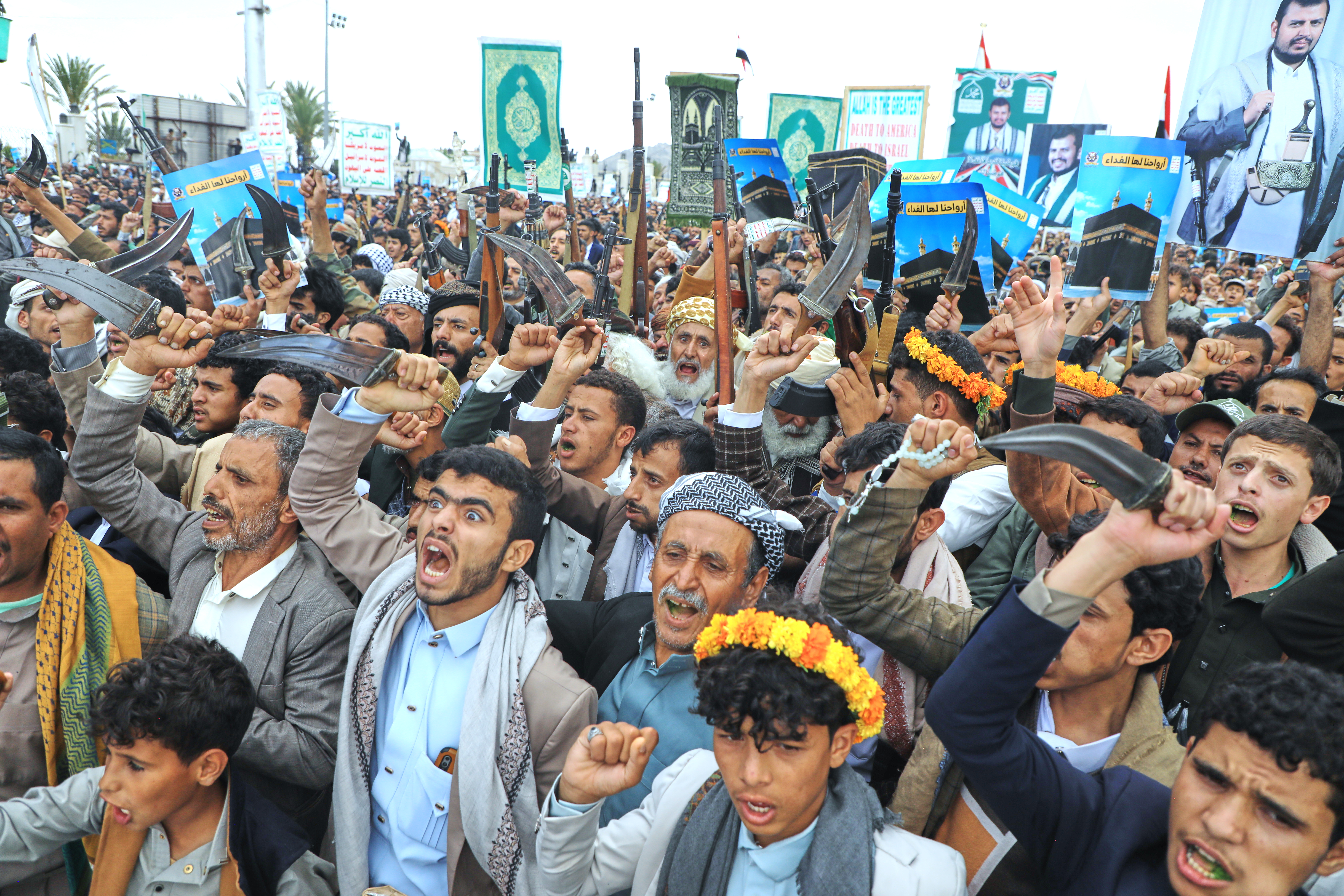
The Houthi rebel group has seized control of the Red Sea port city of Mocha and a number of islands from Yemeni government forces in recent weeks. [3] This advance has given the Houthis a foothold close to the Bab al-Mandeb Strait, a key trade gateway linking Asia and Europe. [3] The Houthis have taken key coastal towns and islands, giving them a foothold to potentially restrict shipping through Bab al-Mandeb, a chokepoint now carrying roughly 7% of global oil supplies after disruptions in the Strait of Hormuz. [3] The renewed fighting ends a 2022 UN-brokered truce. [1] The ceasefire lapsed in October of that year but both sides largely refrained from major escalatory actions until the level of conflict remained low before hostilities resumed and intensified in recent weeks. [1] The Houthis launched missile attacks on airports in the south of Saudi Arabia in response to a Saudi strike on Sana’a International Airport on July 13, while also declaring the imposition of a strict maritime embargo against Saudi vessels. [3] On Telegram, Houthi official Yahya Saree announced an end to what he called the “de-escalation phase” of the conflict. [3] The Houthis have advanced down Yemen’s western coast in recent weeks. [3]
Saudi Military Response and Limitations
Saudi Arabia has conducted hundreds of airstrikes on Houthi targets this week but has been unable to halt the advances despite US intelligence and targeting support. [1] Saudi Arabia has led a coalition battling the Houthis since 2015. [4] The Saudis accused the Houthi of targeting Mecca, Islam’s holiest city, and the Houthi claim to have shot down a Saudi F-15 fighter jet. [1] Saudi Arabia was forced to temporarily close its East-West oil pipeline last week following a drone attack launched from Iraq. [2] Then on Tuesday, Saudi Arabia destroyed a Houthi drone that attempted to enter the airspace near Mecca. [2] For about a decade, the Saudis have been training Yemen’s military, and so far, those forces have been unable to effectively push back the Houthi. [1] Saudi strikes, backed by US intelligence and precision targeting, have prevented the militia from exercising a firm command over some of the territory they have taken, but advances have not been wholly rebuffed. [1] After about a decade of training the Yemen government’s military, the Kingdom had assured US officials that they were confident in their ability. [1] The Houthis on Wednesday released battlefield video of fighters seizing armoured vehicles from Saudi-backed forces. [4] The video also showed warplanes flying overhead and huge explosions billowing into the sky from desert dunes. [4] Houthi military spokesman Yahya Saree said the group had launched fresh drone and missile strikes on the major Saudi Red Sea oil port of Yanbu and at a southern Saudi airbase at Khamis Mushait. [4] He said the Saudis had carried out as many as 450 air strikes on Yemen this week. [4]

Houthis advance along Yemen's Red Sea coast after seizing Mocha port and nearby islands. — Source: cyprusmail
US Policy and Trump's Statements
President Trump has rebuffed Saudi Crown Prince Mohammed bin Salman's requests for direct US kinetic strikes against the Houthi, stating the group does not want to fight the US and is allowing most ships to pass while targeting Saudi vessels. [1] Saudi Crown Prince Mohammed bin Salman spoke twice with Trump last week to ask for US strikes against the Houthi. [1] That request, so far, has been rebuffed. [1] President Donald Trump has made clear that his current red line is direct US participation in kinetic strikes against the Houthi. [1] To date, US military support has been strictly providing intel and targeting data for Saudi strikes. [1] “No offensive strikes,” said a US official. [1] “The Houthi called us and they don’t want to fight with us,” Trump said in remarks to reporters in Ireland last weekend. [1] “They don’t want us to go after them and would much prefer not having us involved and they’re letting most ships go through.” [1] “It’s just one country they’re not too happy with,” Trump said, referring to Saudi Arabia. [1] The US “solidified the ceasefire” with the Houthi during a meeting in Oman this weekend, the US official said. [1] “The Americans sent a message,” a senior Houthi official familiar with the matter told CNN Thursday, “that they don’t want to join the Saudis and be part of the conflict.” [1] “We received this message positively,” the source added. [1]
Regional and Iranian Context
The renewed fighting ends a 2022 UN-brokered truce and is viewed by regional sources as a new front in the US-Iran war, complicating negotiations over the Strait of Hormuz and emboldening Iran. [1] The Houthi, who are supported and trained by Iran’s Islamic Revolutionary Guard Corps (IRGC), have been fighting Saudi-backed Yemeni government forces more than a decade ago during Yemen’s brutal civil war. [1] Many Gulf sources believe the offensive represents a new front in the Iran war that could prolong the conflict. [1] “The Houthi’ Red Sea push is emboldening the IRGC. The Saudis have to get this fixed, otherwise they are negotiating with a gun on the table and they won’t do that,” said Joey Hood, a former US ambassador who spent much of his career working in the Middle East. [1] Hood noted that although the Houthi claim their fight is just with Saudis, there is a clear nexus to Iran. [1] “Iran is in an existential battle now and pulling on all of their proxies to fight. The Houthi are not remote-controlled by Iran but they need fuel from them. So, the Houthi statements of why they are carrying out this offensive now are not a complete reflection of reality,” said Hood. [1] A first meeting between Gulf Cooperation Council (GCC) countries and Iran since the US-Iran war began was canceled earlier this week. [1] Saudi Arabia decided not to attend amid concerns around the language of a potential agreement between Oman and Iran to open the Strait of Hormuz. [1] “Due to the Houthi attacks and the situation near the Bab-el-Mandeb corridor, it’s affecting the Strait of Hormuz deal,” a regional source told CNN. [1] “The Saudis are demanding an all-or-nothing approach, which is understandable, but it delays the process.” [1]

Houthis tighten grip on Red Sea port of Mocha and nearby strategic islands. — Source: asiatimes
Impact on Global Oil Supplies and Shipping
Houthi advances follow attacks on Saudi Arabia's East-West oil pipeline and a drone intercepted near Mecca, raising concerns of an existential threat to Saudi oil production. [2] Saudi Arabia is currently facing “the biggest threat” ever to its production of oil as the Iran-backed Houthi in Yemen are launching cross-border attacks and seizing territory near the Red Sea’s Bab el-Mandeb Strait. [2] Hussain Abdul-Hussain, a research fellow at the Foundation for Defense of Democracies, said the situation is escalating in the Middle East as Iran “likely instigated the Houthi to force a blockade on Saudi Arabia.” [2] “I think this situation is really precarious for the Saudis. This is the biggest threat to their production of oil since their kingdom was founded in 1932. And this is almost existential,” he said. [2] Traders say a prolonged closure of Saudi Arabia’s East-West pipeline could cut off as much as 4% of global oil supply. [4] The price of Brent crude hovered around $108 a barrel on Wednesday, close to its highest levels since May. [4] Oil prices fell in early Thursday trade as reports of Saudi Arabia offering extra crude cargoes through Oman reduced fears of supply disruptions in the Middle East. [4] Brent crude futures dropped $1.24, or 1.2%, to $104.59 a barrel by 0049 GMT, while U.S. West Texas Intermediate futures were down $1.14, or 1.1%, at $101.29. [4] The Bab al-Mandeb Strait was carrying roughly 7% of global oil supplies by June. [3] The Houthis have said their direct targets are Saudi Arabian vessels and Saudi oil. [5] From the strategic position of Mocha, just 75 kilometres north of the Bab el-Mandeb Strait, Houthi rebels can disrupt and effectively control global shipping in and out of the strait. [5]
Expert Assessments and Outlook
Former US diplomat Barbara Leaf called Trump’s own comments about the Houthi “shocking.” [1] “It’s a pretty harsh way to treat your relationship with a close partner, to appear to privilege your agreement with a group you’ve designated as an (foreign terrorist organization) that attacked that partner,” she told CNN. [1] The administration designated the Houthi as a Foreign Terrorist Organization in March 2025. [1] “The Houthi have the advantage of having this really deep and productive relationship with the (Islamic Revolutionary Guard Corps) which has trained them and taken them up several notches from the hard-scrabble kind of cave fighters that they were 12 years ago to a force that can really be quite devastating,” said Leaf. [1] “The Houthi have spent a lot of time in the last months preparing their forces for just this kind of move,” she continued. [1] “They punched through the Saudi-aligned and Yemeni government-aligned forces, not surprisingly, just punched through them – the forces just disintegrated.” [1] “No one wants to fight alone,” said a current Gulf official. [1] Last year’s US military campaign against the Houthi also laid bare the limits of American firepower – as months of bombing failed to effectively dislodge the group’s foothold inside Yemen and ended with an abrupt US-Houthi ceasefire. [1]
What to watch next: Whether the crisis escalates will depend largely on Saudi and Houthi actions in coming weeks, including whether Saudi Arabia returns to an all-out bombing campaign that would break the 2022 truce or whether the Houthi use their new position to target vessels and cause further loss of life that could draw in the EU or US.