
Houthis Claim Large-Scale Missile and Drone Attacks on Riyadh and Yanbu
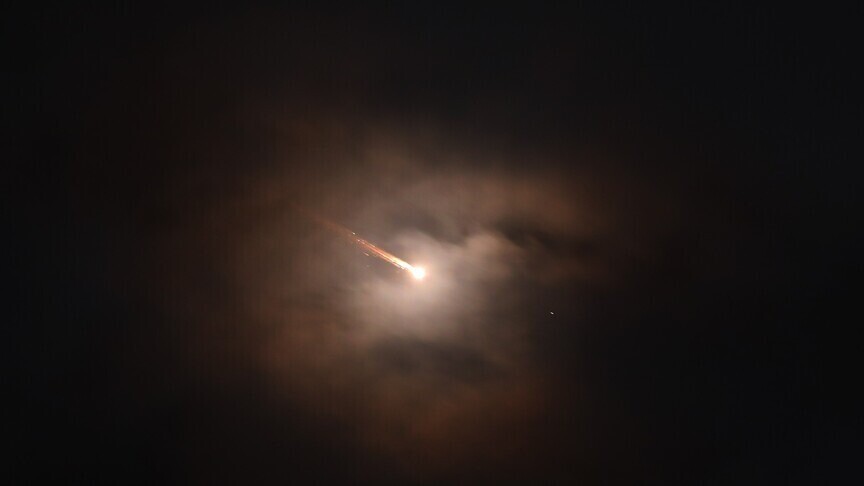
Yemen's Houthis claimed Saturday they launched large-scale ballistic missile, cruise missile and drone attacks on sensitive targets in Riyadh and an Aramco facility in Yanbu, while the Saudi-led coalition reported intercepting the missile aimed at Riyadh and thwarting strikes on several other locations. [2][3]
Houthi Claims of Strikes on Riyadh and Yanbu
Yemen's Houthi group said Saturday that it had launched large-scale attacks targeting the Saudi capital Riyadh and Yanbu, a major industrial and energy hub on Saudi Arabia's Red Sea coast. [2] In a statement broadcast by Houthi-run al-Masirah TV, Houthi military spokesperson Yahya Sarea said the operations involved "a large number of ballistic and cruise missiles and drones." [2] Sarea said the first operation targeted what he described as "sensitive targets" in Riyadh, while the second struck a facility belonging to Saudi oil giant Aramco in Yanbu. [2] "The two operations were successful," Sarea said, claiming that large fires broke out at the targeted sites. [2] Houthi spokesman Yahya Saree said in a statement that the strikes were "in response to the Saudi enemy's criminal attempts to target the capital Sanaa," confirming that Houthi forces had hit targets in both Riyadh and Yanbu using a mix of missiles and drones. [3] Sarea, the Houthi spokesperson, denied that the group deliberately targeted civilians, saying that the attacks against Riyadh were in response to intensified Saudi airstrikes on Houthi-held areas in Yemen. [2] The spokesperson vowed that the Houthis would continue retaliatory operations under what he called an "escalation for escalation" strategy until Saudi airstrikes cease and restrictions on Yemen are lifted. [2]
Saudi Coalition Reports Interceptions
In a later statement, the Saudi-led coalition said that its air defenses intercepted and destroyed a Houthi ballistic missile targeting Riyadh and thwarted attacks on Baish, Taif, Farasan and Yanbu. [2] Coalition spokesperson, Major General Turki al-Maliki, said air defences intercepted and destroyed a ballistic missile fired at Riyadh, and thwarted separate attempts to target Taif, Baish, Farasan, and Yanbu before they reached their targets. [3] Coalition spokesperson Turki Al-Maliki said the attacks targeted "civilians and civilian objects" and vowed "appropriate measures" to deter further attacks. [2] He accused the Houthis of escalating efforts to target civilians and civilian infrastructure, and said the coalition reserves the right to take "appropriate measures" against the group under international humanitarian law. [3]
Explosions and Alerts in Riyadh
The Houthi statement came after explosions were heard in Riyadh twice on Saturday. [2] Smoke was seen rising near King Khalid International Airport in the northeastern part of the capital following the second incident, while some flights were delayed. [2] Saudi authorities had earlier issued an aerial threat alert for Riyadh before announcing that the danger had passed, reportedly the first such alert for the Saudi capital since tensions between the Houthi group and Saudi Arabia intensified recently. [2] Saudi authorities had issued an early-morning alert telling residents to shelter indoors, the first such warning in this latest round of fighting with the Houthis. [3] Hours later, several people in Riyadh told AFP they heard a series of explosions echo across the city. [3] Around the same time, firefighters extinguished a blaze at a fuel depot near Riyadh's airport, where a tanker bearing the Aramco logo had caught fire. [3] Footage circulating online showed smoke rising nearby. [3] It was not immediately clear whether the airport fire was connected to the reported strikes. [3] Large plume of black smoke rises from the fuel storage area at King Khalid International Airport, in Riyadh, Saudi Arabia, 19 September 2026. [3]
Context of Recent Escalation
The attack on Saudi's capital marks the latest escalation between Yemen's Houthi group and Saudi Arabia. [2] This round of conflict began in mid-July when the Yemeni Armed Forces struck Houthi-controlled Sanaa International Airport to prevent an Iranian passenger plane from landing. [2] The plane carried a senior Houthi delegation returning from Iran after attending Khamenei's funeral ceremonies. [2] The Houthi group accused Saudi Arabia, a main ally of the internationally recognized Yemeni government, of launching the strikes and soon launched counterstrikes with ballistic missiles and drones in retaliation. [2] It then announced a ban on Saudi shipping through the Bab al-Mandab Strait on July 20 and has since claimed a series of attacks on Saudi tankers and oil facilities in Saudi Arabia. [2] The attacks come amid rapid Houthi territorial gains in recent weeks, which have left Yemen's Saudi-backed government on the back foot despite a sustained Saudi air campaign against Houthi-held areas. [3] Days earlier, Saudi officials had accused the Houthi group of attempting to strike Mecca, calling it a "cowardly terrorist attack" on the city that draws millions of Muslim pilgrims each year. [3] The Houthis rejected the claim as false. [3] The group says it faces near-constant Saudi bombardment as it pushes to seize full control of Yemen's Red Sea coastline, a campaign that would hand it the Bab al-Mandab strait, a major global shipping route. [3]
International Reactions
Jordan, Bahrain condemn Houthi attacks against Saudi Arabia. [1] Amman, Manama reaffirm solidarity with Riyadh as Saudi Arabia reports new security alerts, recent drone interception. [1] Later on Saturday, Turkish Foreign Minister Hakan Fidan condemned the reported attacks on Saudi territory and oil infrastructure, saying the kingdom should be "kept out" of the broader conflict between Iran and the United States. [3] He also added that Saudi Arabia may have military needs due to the ongoing Houthi attacks and that Turkey was ready to help under the trilateral defence pact. [3] Pakistan has said that there were no discussions about a military reaction from Islamabad under the Mecca agreement in response to the Houthis' attacks, but added that they would act when the "time comes". [3] The US, on the other hand, has been offering the kingdom only limited support of its own, as the American news outlet Axios reported last week that Washington turned down a Saudi request to strike the Houthis directly. [3] Still, on Thursday, the US approved a $24.3 billion sale of F-35 fighter jets to the kingdom, saying the deal would help Riyadh "deter current and future threats," according to the State Department. [3]
Broader Yemen Conflict Background
Yemen's conflict erupted in late 2014 when the Houthis seized the capital, Sanaa, and much of northern Yemen, prompting a Saudi-led coalition to intervene in March 2015 in support of the internationally recognized government. [2] The war in Yemen began in 2014, when the Houthis seized Sanaa and other regions, leading to a Saudi-led intervention in March 2015. [3] A fragile 2022 truce held for years before collapsing in July, after the Houthis defied Saudi control of Yemeni airspace by allowing an Iranian aircraft to land in the country. [3] The Houthis' recent seizure of Yemen's coastline has raised widespread international concern, adding to disruption in global maritime trade already caused by Iran's blockade of Hormuz. [3] The group insists shipping in the sea lane faces no threat, except for vessels linked to Saudi Arabia. [3] Facing limited outside backing, Saudi Arabia has been putting in an effort to expand its own military role in Yemen. [3]
What to watch next: The kingdom's recently signed defence pacts with Turkey and Pakistan have done little to counter the growing Houthi threat, while the group says it will continue under an "escalation for escalation" strategy until Saudi airstrikes cease and restrictions on Yemen are lifted.