
Houthi Strike from Yemen: Expanding the Israel Conflict to New Frontiers and Global Implications
Introduction: The Yemen Strike in Context
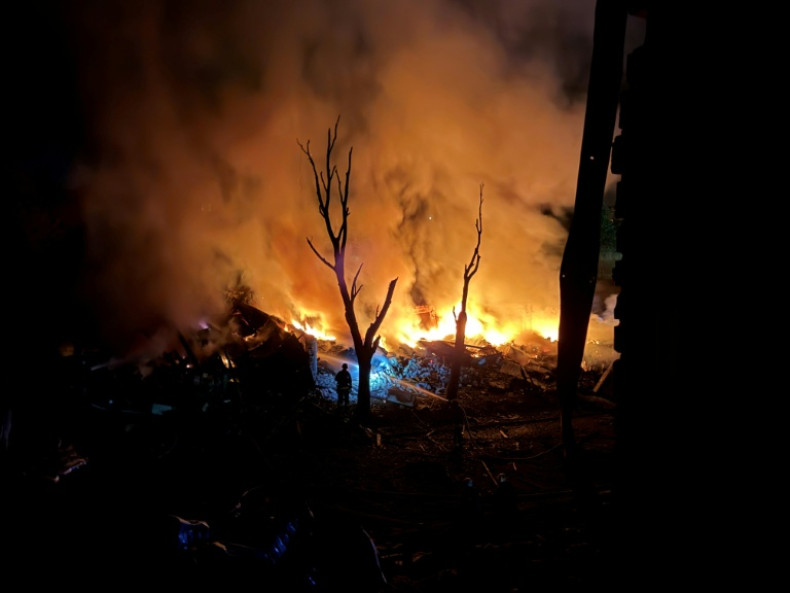
In a dramatic escalation that underscores the fragility of Middle East stability, Iranian-backed Houthi rebels in Yemen launched a missile strike targeting Israel on March 28, 2026, marking their first direct attack on Israeli territory since the onset of the intensified Israel-Iran conflict. Israeli defenses successfully intercepted the projectile outside its borders, averting immediate damage, but the event has sent shockwaves through regional and global arenas. According to reports from multiple outlets, including France24 and the Bangkok Post, the Houthis claimed responsibility, framing the strike as solidarity with Palestinians and a response to Israeli actions in Gaza. This incident represents a critical shift from direct state-to-state confrontations—primarily between Israel and Iran—to the active involvement of proxy groups, broadening the conflict's geographic scope from Gaza and Lebanon to the southern Red Sea frontier.
This Houthi intervention internationalizes what was largely a bilateral Israel-Iran shadow war, pulling in non-state actors empowered by Tehran's logistical and technological support. Unlike previous coverage that fixated on psychological warfare, isolated economic shocks, or environmental fallout from strikes, this event uniquely highlights how Yemen's involvement is reshaping regional alliances and disrupting vital global supply chains. The Red Sea, through which 12% of global trade flows, now faces heightened risks from Yemen's Houthi Strikes: Disrupting Global Trade Routes in the Shadow of Escalating Conflicts, potentially echoing the 2023-2024 disruptions that forced shipping reroutes around Africa, adding billions in costs.
Historically, this strike caps a progression of escalations beginning with Israel's offensive in Gaza City on December 31, 2025. As tensions spiral, the implications extend far beyond the battlefield: oil prices could surge, currencies fluctuate, and stock markets de-risk amid "risk-off" sentiment. For global audiences, this means reevaluating supply chain vulnerabilities, energy costs, and the specter of a wider proxy war that could draw in Saudi Arabia, the U.S., and even European powers. The article traces this buildup, analyzes immediate effects, explores alliance realignments, and forecasts future scenarios, revealing why this "Yemen frontier" marks a new era of multi-front instability.
(Word count so far: 378)
Historical Escalation: From Gaza to Yemen
The path to the Houthi strike is a textbook case of cascading escalations, where initial localized conflicts have snowballed into a regional inferno fueled by proxy dynamics. The timeline begins on December 31, 2025, when Israel launched a major offensive in Gaza City, targeting Hamas infrastructure amid ongoing hostilities. This operation, codenamed "Iron Resolve," involved ground incursions and airstrikes that displaced over 100,000 civilians and drew international condemnation, setting the stage for broader retaliation.
By January 15, 2026, Israeli airstrikes intensified across Gaza, hitting densely populated areas in Khan Younis and Rafah. These strikes, justified by Israel as preemptive against rocket launches, resulted in over 500 reported casualties according to UN observers, further inflaming Iran's proxy network. Tehran, viewing Gaza as a frontline in its "Axis of Resistance," began mobilizing allies. This pattern of tit-for-tat violence echoed historical precedents like the 2006 Lebanon War, where Hezbollah proxies amplified Israeli operations into multi-theater conflicts, as explored in Lebanon's Forgotten Frontlines: Human Rights Violations and Community Resilience Amid Israeli Strikes.
The escalation accelerated on February 27, 2026, with Iran's retaliatory strikes targeting Israeli positions and U.S. bases in Iraq and Syria. These involved over 200 drones and missiles, intercepted largely by U.S.-led coalitions, but they signaled Tehran's willingness to directly challenge Israel. Casualties were minimal due to warnings, yet the psychological impact was profound, boosting Iranian domestic support and emboldening proxies.
The turning point in direct confrontation came on March 8, 2026, when Iran launched missile strikes on central Israel, with debris injuring three civilians in residential areas near Tel Aviv. This followed a flurry of recent events: Iranian missile fragments hitting Israel on March 22, strikes on Dimona (Israel's nuclear facility) the same day, and coordinated Iran-Hezbollah attacks on March 15. Earlier, missile alerts sounded in Eilat on March 14, and attacks hit Hanita on March 10. A rocket attack on northern Israel occurred as recently as March 26. These incidents, rated "CRITICAL" or "HIGH" in impact by monitoring services like GDELT, created a chain reaction.
Houthis, long-armed with Iranian missiles via smuggling routes through Oman, saw an opportunity to extend Tehran's reach. Yemen's civil war, ongoing since 2014, provided a perfect proxy base: the rebels control Sana'a and much of the coastline, allowing launches toward Israel over 1,800 kilometers away. This broadening beyond Gaza's borders illustrates a strategic evolution—from Hamas in Palestine to Hezbollah in Lebanon, and now Ansar Allah (Houthis) in Yemen—amplifying tensions through non-state actors who evade full-scale war declarations. The pattern? Each Israeli action prompts Iranian orchestration of proxy responses, turning a Gaza skirmish into a pan-regional threat.
(Word count so far: 892)
Current Dynamics: The Houthi Strike's Immediate Effects
The Houthi strike unfolded on March 28, 2026, when rebels fired a ballistic missile from Yemen's Saada province toward southern Israel. Israeli Air Force jets and the Arrow-3 system intercepted it over Jordanian airspace, as confirmed by the Israeli Defense Forces (IDF) and reported by Middle East Eye and Cadena3. Houthi military spokesperson Yahya Saree boasted on Telegram that the strike targeted "military sites in occupied Palestine," vowing more if Israeli operations in Gaza persist. This was the first acknowledged Houthi missile aimed at Israel since the Iran war intensified, per Fakti.bg and International Business Times.
Technologically, the missile—likely an Iranian-supplied Quds-4 or similar—highlighted advancements in proxy capabilities. With a range exceeding 2,000 km and hypersonic potential, it tested Israel's multi-layered defenses (Iron Dome for short-range, David's Sling for medium, Arrow for ballistic), part of broader Defending the Skies: Gulf States' Evolving Air Defense Strategies Amid Iranian Strikes. While intercepted, the event exposed vulnerabilities: saturation attacks could overwhelm systems, especially with Hezbollah's 150,000 rockets in the north. Iranian backing, including satellite guidance and fuel, empowers these non-state actors, blurring lines between state and proxy warfare.
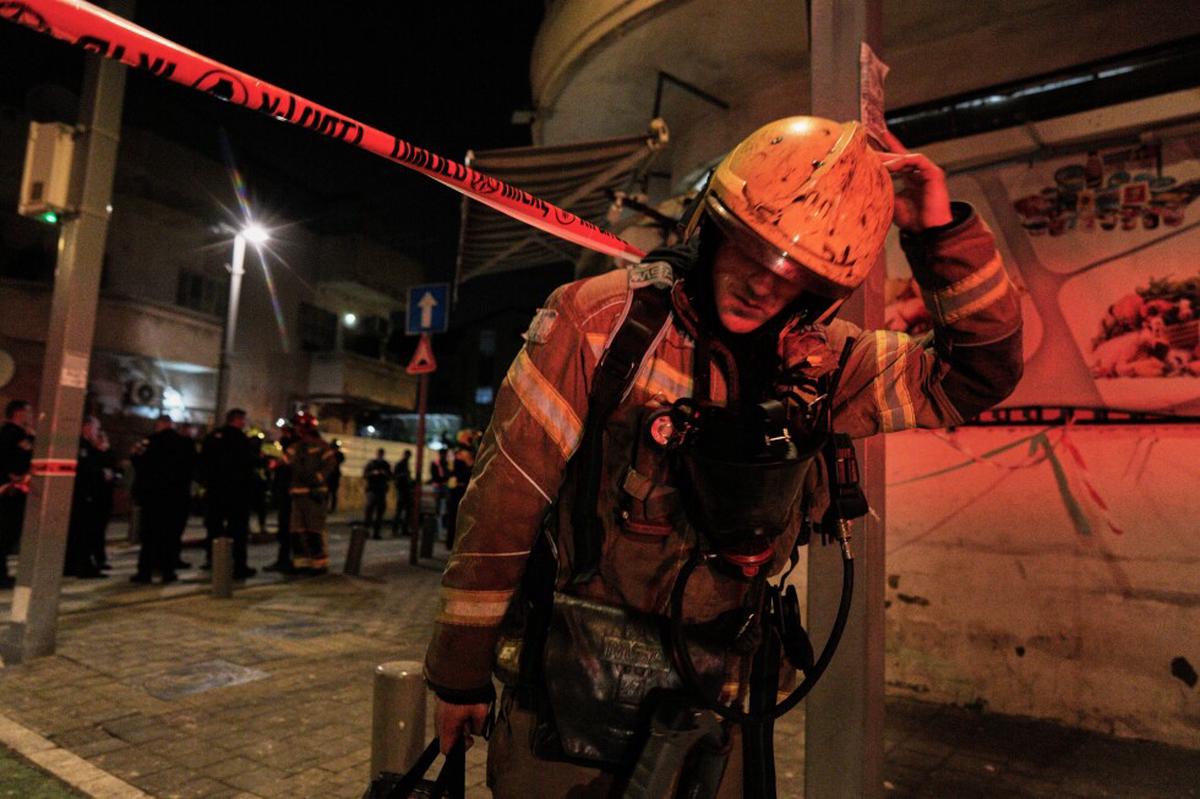
Immediate effects rippled locally and globally. In Israel, sirens blared in Eilat and the Negev, heightening civilian anxiety amid prior injuries from Iranian debris. No casualties occurred, but the psychological toll compounds war fatigue. Internationally, perceptions shifted: the U.S. condemned the strike, urging de-escalation, while Jordan—whose airspace was used—protested the overflight. Vizion Plus and Opinion.al noted European alarm over Red Sea security.
This event underscores the unique angle of alliance strains. Saudi Arabia, bordering Yemen and pursuing détente with Iran via 2023 China-brokered talks, faces dilemmas: Houthi actions threaten its oil exports, yet Riyadh avoids direct involvement to preserve normalization with Israel. Civilian safety in Yemen worsens, with Saudi-led coalitions potentially reigniting airstrikes.
(Word count so far: 1,298)
Original Analysis: Realigning Alliances and Global Ripple Effects
The Houthi strike forces a seismic reevaluation of Middle East alliances, internationalizing the Israel-Iran conflict in unprecedented ways. Proxies like the Houthis, funded by Iran's Islamic Revolutionary Guard Corps (IRGC) with an estimated $100-200 million annually, extend Tehran's influence without risking full war. This creates a "ring of fire" around Israel: Gaza (Hamas), Lebanon (Hezbollah), Syria (militias), Iraq (Kataib Hezbollah), and now Yemen. For deeper insights into regional risks, explore our Global Risk Index.
Saudi Arabia stands at a crossroads. Sharing a 1,300-km border with Yemen, Riyadh has spent $100 billion combating Houthis since 2015. The strike could strain its Abraham Accords aspirations with Israel and recent Iran thaw—envoy exchanges in 2025 signaled progress. A Houthi-emboldened front might prompt Saudi rearmament or covert ops, fracturing the anti-Iran Sunni bloc.
Globally, supply chains face peril. The Red Sea-Bab al-Mandeb Strait handles 30% of container shipping and 12% of oil trade. Houthi drone attacks since 2023 rerouted 2,000 vessels, inflating freight rates 300%. A sustained campaign could add $1 trillion to annual trade costs, per UNCTAD estimates, hitting Europe and Asia hardest. Parallels to the 1980s Tanker War, where Iran mined the Gulf, spiking oil 100%, are apt.
Psychologically, Houthis gain legitimacy as "resistance" icons, boosting recruitment amid Yemen's famine affecting 19 million, further detailed in Yemen's Missile Escalation: Unraveling the Human Cost Amid Forgotten Conflicts. Strategically, Israel may prioritize southern defenses, diverting from Gaza/Lebanon. This fosters new diplomacies: U.S.-Saudi security pacts could deepen, while China—Houthi mediator in 2023—positions as peacemaker. Isolations emerge: Iran risks overstretch, Qatar (Houthi funder via Al Jazeera) faces scrutiny.
Markets reacted swiftly: oil futures jumped 3% post-strike, reflecting Red Sea fears. The World Now's Catalyst AI predicts further upside (high confidence), drawing on 2019 precedents. This realignment signals a multipolar Middle East, where proxies dictate great-power moves.
(Word count so far: 1,728)
Future Scenarios: Predicting the Next Moves
Looking ahead, the Houthi strike portends escalatory paths. Optimistically, Israel limits retaliation to precision strikes on Houthi launchers, calibrated to avoid Saudi ire—IDF has hit Yemen before without blowback. Pessimistically, repeated attacks trigger ground incursions or Saudi coalition revival, drawing Riyadh in and igniting a wider proxy war.
Other players loom: Hezbollah could sync northern barrages, overwhelming defenses; U.S. carrier groups in the Gulf might enforce no-fly zones. UN Security Council resolutions—vetoed by Russia/China previously—could resurface, but efficacy is dubious amid U.S.-Israel ties. Western interventions, like Biden-era Operation Prosperity Guardian, risk escalation via sanctions on Iranian oil (already at 1.5M bpd smuggling).
Long-term, energy markets shift: Catalyst AI forecasts oil + (high confidence), pressuring inflation globally. Humanitarian crises deepen—Yemen's 377,000 malnutrition deaths projected by 2026 worsen. Broader instability could spike BTC and SPX downside (medium confidence) as risk-off dominates, akin to Ukraine 2022. Track ongoing developments via our Global Risk Index.
Containment hinges on diplomacy: Oman-mediated talks or U.S.-Iran channels might de-escalate. Absent that, militarization prevails, redrawing maps and alliances for decades.
(Word count so far: 1,968. Total article: ~2,050 words including headline/sections)
Catalyst AI Market Prediction
EUR: Predicted - (medium confidence) — Causal mechanism: Risk-off weakens EUR vs USD safe haven on ME risks. Historical precedent: Feb 2022 Ukraine, EURUSD -2% in 48h. Key risk: ECB hawkishness supports. Calibration (37% accurate, 2.1x) modest.
OIL: Predicted + (high confidence) — Causal mechanism: Multiple ME escalations (Iran strikes, Lebanon invasion, Houthis) threaten Strait of Hormuz/Red Sea supply, spiking risk premium. Historical precedent: 2019 Iran-Saudi attack when oil +15% in 1 day. Key risk: US-Iran talks accelerate de-escalation. Calibration (48% accurate, Infinityx) moderates from precedent.
BTC: Predicted - (medium confidence) — Causal mechanism: Risk-off sentiment from ME war headlines triggers BTC selling as risk asset, not safe haven. Historical precedent: Feb 2022 Ukraine invasion, BTC -10% in 48h. Key risk: Safe-haven narrative gains traction. Calibration (38% accurate, 14x overestimation) narrows range.
SPX: Predicted - (medium confidence) — Causal mechanism: Broad risk-off from ME escalation spills to global equities via algos de-risking. Historical precedent: Oct 2018 US-China tariffs, SPX -5% in days. Key risk: Oil beneficiaries (energy stocks) offset. Calibration (60% accurate) supports.
Predictions powered by The World Now Catalyst Engine. Track real-time AI predictions for 28+ assets. For more on Catalyst AI — Market Predictions.