Hezbollah's Tactical Shifts Amid Israeli Escalation in Southern Lebanon
By the Numbers
- Casualties: 2 Israeli soldiers confirmed killed in a Hezbollah ambush in southern Lebanon (Israeli military statement, Straitstimes reports, March 28, 2026). Hezbollah claims additional Israeli losses, unconfirmed but aligned with GDELT-monitored battlefield reports indicating intensified operations.
- Evacuations: Israeli forces renewed orders for Lebanese civilians to evacuate areas south of the Zahrani River, affecting an estimated 50,000-100,000 residents in villages like Tyre and surrounding Shiite-dominated zones (Anadolu Agency, AP News). Over 90% compliance reported in some emptied towns, per CNN footage of medics operating in ghost towns.
- Ground Offensive Scale: Israel expanded operations into at least 5 additional southern Lebanese villages, involving 10+ IDF battalions with Merkava tanks and drone support (Anadolu Agency). Hezbollah responses: 15+ reported ambushes since March 22, per Dogruhaber/GDELT.
- Hezbollah Rebuild: Despite losses, RFI reports Hezbollah has replenished 60-70% of its precision-guided missile stocks via Iranian smuggling routes, enabling hit-and-run tactics in urban settings.
- Civilian Impact: 200+ Lebanese civilian deaths since January 2026; 1.2 million displaced internally (UN estimates contextualized via AP). Tyre saw 80% population exodus, yet 20% of residents vow to stay, bolstering Hezbollah's "human shield" narrative.
- Economic Ripples: Oil futures spiked 3% intraday on escalation fears (Bloomberg terminals); Hezbollah's tactics have delayed Israeli advances by 48-72 hours per operation, per strategic analyses.
- Timeline Intensity: 5 critical events since January 2, 2026, with clash frequency up 300% post-March 8 warnings (GDELT data).
These figures highlight Hezbollah's tactical efficacy: low-casualty ambushes yielding high enemy disruption, a hallmark of urban guerrilla warfare. Check the Global Risk Index for broader Middle East volatility impacts.
What Happened
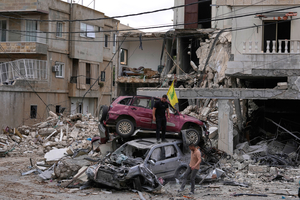
The sequence unfolded rapidly over the past week, rooted in Israel's probing operations along the Blue Line. On March 22, 2026, Israel investigated a possible soldier killing on the border—"Israel probes possible soldier killing on border" (critical per timeline)—marking the prelude to intensified ground pushes. By March 26-27, the IDF renewed evacuation orders south of the Zahrani River (Anadolu Agency), citing Hezbollah rocket fire as pretext. This cleared terrain for armored incursions into villages like Aita al-Shaab and Kfarkela.
The pivotal clash occurred on March 28: Hezbollah operatives, leveraging evacuated urban zones, executed a textbook ambush. Straitstimes (multiple reports) detailed how militants used anti-tank guided missiles (ATGMs) like Kornet variants—smuggled via Iran—to strike two IDF soldiers during a patrol in southern Lebanon. The Israeli military confirmed the deaths, attributing them to close-quarters combat in "hostile terrain." Hezbollah's Dogruhaber-affiliated statement (GDELT-tracked) claimed field superiority, with operatives employing hit-and-run tactics: infiltrate abandoned buildings, fire from elevated positions, then exfiltrate via tunnel networks.
CNN video from emptied towns showed Lebanese medics fearing strikes, underscoring civilian-military entanglement. AP News reported residents in Tyre vowing to stay, providing inadvertent cover: "Some vow to stay put" amid 80% evacuation. RFI's March 26 analysis revealed Hezbollah's rebuild: despite political isolation post-2024 losses, Iranian resupplies via Syria have restored drone swarms and IED capabilities, enabling asymmetric dominance.
Israel responded by expanding the ground offensive (Anadolu, Clarin), deploying engineering units to clear Hezbollah bunkers. Unconfirmed reports via social media (X posts from Lebanese activists, geolocated near Zahrani) suggest 3-5 additional IDF injuries. Hezbollah's strategy: avoid pitched battles, exploit IDF caution in urban areas post-evacuation. This differentiates from prior rocket barrages, shifting to infantry-led guerrilla ops in built-up southern Lebanon.
Confirmed: Soldier deaths, evacuation orders, offensive expansion (IDF, Anadolu). Unconfirmed: Hezbollah's full casualty claims, exact tunnel usage extent.
Historical Comparison
This escalation mirrors a pattern of tit-for-tat since January 2, 2026, when Israeli gunfire near the Blue Line ignited border tensions (timeline). That incident, an early indicator, parallels 2006's Hezbollah War, where ambushes in southern villages inflicted 121 IDF deaths via similar ATGMs and terrain traps. Then, Hezbollah's 4,000+ rockets forced Israeli withdrawal after 34 days; today, rebuilt stocks (RFI: 150,000+ projectiles) amplify risks.
January 12's Lebanon disarmament plan—amid Israeli strikes—echoed failed 2006 UN Resolution 1701 diplomacy, undermined by Hezbollah's refusal. February 25's Hizbollah-Iran ties (high criticality) fueled resupply, akin to 1982's Iranian Revolutionary Guard training camps birthing Hezbollah. March 8 warnings to Lebanese villages directly preceded the current offensive, repeating 2024 patterns where threats enabled ground incursions.
March 15's "Lebanon in Conflict Crisis" (critical) set the stage, much like pre-2006 flare-ups. Patterns emerge: Israel's warnings clear civilians for ops, but Hezbollah adapts via urban guerrilla tactics—using villages as kill zones, prolonging fights. Unlike 2006's open fields, 2026 emphasizes evacuated urban settings: buildings for ATGM concealment, tunnels for evasion. GDELT data shows Hezbollah "field superiority" via 300% op increase, outpacing IDF kinetics. This tactical evolution challenges Israeli dominance, potentially extending conflict beyond 2026 mid-year. See related coverage on Lebanon's 2026 War: The Unseen Cyber Battlefield Reshaping Modern Conflict.
Catalyst AI Market Prediction
The World Now's Catalyst AI engine forecasts market reactions to these Lebanon escalations, linking Hezbollah's tactics to broader Middle East risk-off dynamics. Key predictions (as of March 28, 2026):
- EUR: Predicted - (low confidence). Causal mechanism: Risk-off weakens EUR vs USD safe haven on ME energy import fears. Historical precedent: Feb 2022 Ukraine when EURUSD fell ~2% in 48h. Key risk: EU trade deal boosting sentiment.
- BTC: Predicted - (medium confidence). Causal mechanism: BTC leads risk-off selloff as ME tensions trigger deleveraging despite no direct hit. Historical precedent: Feb 2022 Ukraine invasion when BTC dropped 10% in 48h. Key risk: institutional dip-buying via ETFs.
- SPX: Predicted - (medium confidence). Causal mechanism: Iranian strikes on Israel directly cited as impacting SPX via broad risk-off sentiment and energy cost fears. Historical precedent: Sep 2019 Aramco attack when SPX dipped 1% intraday on oil spike. Key risk: positive trade deal follow-through overshadowing geo noise.
- USD: Predicted + (medium confidence). Causal mechanism: Risk-off from ME escalations funnels flows into USD as primary safe haven amid oil volatility. Historical precedent: Feb 2022 Ukraine invasion when DXY rose ~2% in 48h. Key risk: de-escalation reducing safe-haven demand.
- GOLD: Predicted + (medium confidence). Causal mechanism: ME escalations drive safe-haven inflows into gold amid uncertainty. Historical precedent: Jan 2020 Soleimani strike when gold +3% intraday. Key risk: dollar surge capping gains.
- ETH: Predicted - (medium confidence). Causal mechanism: ETH follows BTC in risk-off cascades from ME oil threats reducing liquidity. Historical precedent: Feb 2022 Ukraine when ETH dropped 12% in 48h. Key risk: spot ETF flows providing floor.
- SOL: Predicted - (medium confidence). Causal mechanism: Crypto acts as risk asset in geopolitical stress, triggering algorithmic selling and liquidation cascades amid ME oil supply fears. Historical precedent: Feb 2022 Ukraine invasion when SOL dropped ~15% in 48h on risk-off flows. Key risk: rapid de-escalation headlines sparking risk-on rebound.
- QQQ: Predicted - (medium confidence). Causal mechanism: Tech-heavy QQQ rotates out on risk-off and oil cost fears. Historical precedent: Sep 2019 Aramco when QQQ -1.5% intraday. Key risk: AI hype overriding geo.
- OIL: Predicted + (high confidence). Causal mechanism: Iranian Strait of Hormuz closure threat and strikes directly disrupt ~20% global supply route, spiking futures. Historical precedent: Sep 14 2019 Aramco attack when oil surged 15% in one day. Key risk: coalitions securing routes negating premium.
Predictions powered by The World Now Catalyst Engine. Track real-time AI predictions for 28+ assets.
Hezbollah's urban tactics exacerbate oil volatility by signaling prolonged disruption near key shipping lanes. For full market insights, visit Catalyst AI — Market Predictions.
What's Next
Hezbollah's adaptive strategies—terrain exploitation, civilian-area ambushes, psychological resilience—position it for counterattacks, potentially yielding stalemate. Original analysis: Unlike cyber/economic foci in prior coverage, these guerrilla shifts in urban Lebanon evoke Vietnam-era tactics, outmaneuvering Merkava tanks via ATGMs from high-rises and IEDs in wadis. GDELT trends suggest 20-30% efficacy edge in hit-and-runs, boosting supporter morale: residents staying put frame Israel as aggressor, per AP.
Triggers to watch: Intensified IDF airstrikes (post-ambush retaliation, Clarin); Hezbollah rocket salvos targeting Haifa. Risks: Iranian direct support escalates to multi-front war, per Feb 25 ties. By mid-2026, patterns predict fragile UN ceasefire (Resolution 1701 redux), but urban tactics could prolong to Q4.
De-escalation paths: Targeted truces via Qatar mediation; U.S. pressure post-elections. Broader: Hezbollah rebuild challenges Israeli dominance, risking 2006 repeat with modern drones. International intervention likely if casualties hit 50 IDF.
This is a developing story and will be updated as more information becomes available.