
Hamas Confirms It Will Disarm Under Palestinian Oversight in Gaza Deal
In the Palestine war, Hamas has confirmed it will disarm as part of a deal to end the war in Gaza, while families continue searching for thousands of missing relatives amid ongoing strikes that have killed more than 1,200 people since a ceasefire began in October. [1]
Hamas Agreement to Disarm
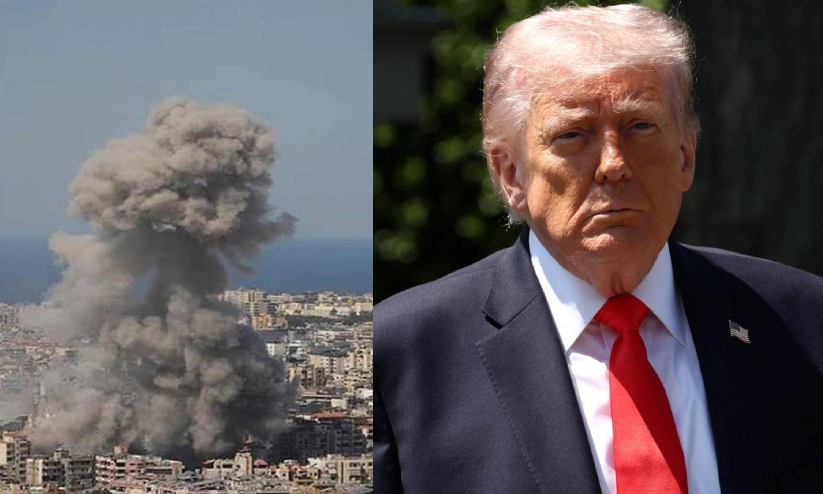
Hamas confirmed Friday that it will disarm in a potential breakthrough for ending the war in Gaza, but major obstacles remain. [2] After months of marathon talks, Hamas has for the first time accepted a framework of the Board of Peace's plan to completely disarm in Gaza. [5] The plan provides for the inventorying and storage of its remaining heavy weapons under Palestinian supervision, potentially removing the most significant obstacle to advancing the Trump-backed peace initiative for Gaza. [5] Palestinian officials involved in the talks believe the new leadership was prepared to take what they describe as the most consequential political decision in Hamas's history, driven by the devastating humanitarian conditions facing more than two million Palestinians in Gaza. [5] A senior Hamas official and member of the movement's negotiating team told the BBC that the talks were "long and extremely difficult," with Hamas insisting on the wording "inventorying and storing weapons" under Palestinian oversight rather than handing them over to Israel. [5] Hamas has agreed to a deal to end its conflict with Israel, under which it will give up its weapons in exchange for a phased withdrawal of Israeli forces from the devastated Gaza Strip. [4] While Hamas has agreed to the plan announced by US President Donald Trump, Israel has yet to comment. [4] It remains too early to judge whether the agreement will be fully implemented or whether all parties will honour their commitments. [5]
Ongoing Strikes and Ceasefire Toll
Despite a ceasefire still in place between Israel and the Palestinian militant group Hamas, the killing does not end. [1] On Thursday, Gaza authorities said four people died in Israel strikes on the territory, including two children. [1] Since the ceasefire took effect in October, more than 1,200 people have been killed in Gaza. [1] Hamas is reportedly holding talks with international mediators in Cairo aimed at consolidating the truce. [1]
{IMAGE_2}
Search for the Missing
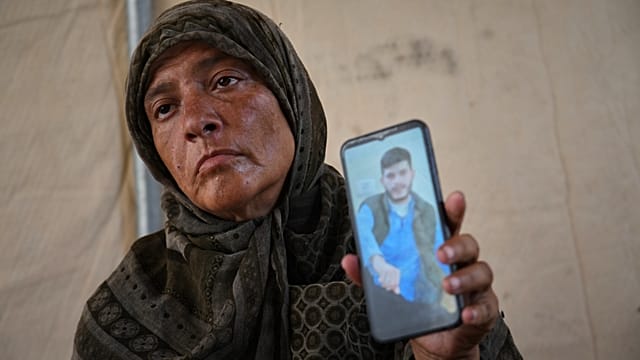
Gaza Holding photographs of their sons who vanished during the war, mothers in Gaza wait for answers. [1] Thousands of people are still missing across the territory, with many lost beneath the rubble of destroyed buildings. [1] Families’ last hope is often that their relative has been detained by Israeli authorities. [1] "Every now and then, whenever a prisoner was released, we would ask, 'Did you see my son? Did you hear his name?'," says Reem Amin Youssef Fayad, whose son is missing. [1] "Some said they had heard his name but had not seen him. Others said they had seen him. Between those who said they saw him and those who only heard his name, we remain in limbo." [1] Jumanah Manaa's son Amro Manaa is also missing: "When I see someone come out safely and their family welcome and embrace them, tears flow from my eyes. I sit and cry and say, 'God, may the day come when he returns and we experience the same joy they are experiencing.’” [1]
Challenges in Body Recovery and Identification
Recovering the bodies of those trapped under the rubble is hampered by Israeli restrictions on bringing heavy equipment into Gaza and by the risks posed by unexploded ordnance. [1] As time passes, it also becomes increasingly difficult to identify the victims. [1] Ziyad Ashour is head of the Medical Evidence Section in the Forensic Medicine Department at Al-Shifa Hospital: "This year, our situation has begun to stabilise, and we have started making significant efforts to trace unidentified people. However, in the Gaza Strip, unfortunately, we do not have DNA testing, which is the main method used around the world for identification. Clothing is not enough, and personal belongings found with the bodies are not enough, because we receive many bodies as cadaver.” [1]
{IMAGE_3}
Voices from Gaza on the Deal
For displaced teacher Mohammed Hamdouna, the conflict ushered in an era of horror that he hopes can finally draw to a close. [4] “Finally, the world’s longest nightmare will end,” the 35-year-old told AFP. [4] “I’m afraid to dream or believe it until the crossings are opened and aid and temporary shelters begin to enter Gaza,” said Hamdouna. [4] He is one of thousands of Gazans originally from the northern part of the enclave who remain displaced with their families. [4] “Finally, Hamas has agreed to hand over its weapons after Gaza was destroyed. The people paid the price in blood. Hamas should have absolutely no role in Gaza,” he said. [4] Ahmed Aal, a 37-year-old taxi driver living in a makeshift tent, said he does not trust Israel. [4] “I’m not optimistic… Israel doesn’t honour agreements — they’ll invent something” to go back to fighting, he said. [4] “Israel and Hamas negotiate from the comfort of hotels. Time doesn’t matter to them, but for us time is everything. Every minute, people die in Gaza,” Aal said. [4] Despite a ceasefire, Israel has continued carrying out daily air and artillery strikes in Gaza, claiming it is targeting militants. [4] Umm Naeem Abu Sultan said she woke to the sound of her children shouting: “Mama, a truce! A truce!” [4] “I felt so happy, as if the door to life was opening for us again, despite the harshness and difficulty of what we went through,” the 55-year-old said. [4] She said she hoped the bombardment would finally end and that all crossings in and out of Gaza would open. [4] Only words Mahmoud Yousef, a 28-year-old originally from Gaza City who is now displaced to central Gaza, said he would believe the news only when he sees results. [4] “Anything before the crossings are opened and tents and aid are allowed in, is just words,” he said. [4] “How many years will it take to implement the agreement? How many years to remove the rubble? How many years to rebuild?” asked Yousef. [4] He once worked at a cafe but, like many other Gazans, now depends entirely on humanitarian aid. [4]
Prospects for Ending the War
In Gaza, however, the announcement was met with little public enthusiasm. [5] After years of failed ceasefires and collapsed agreements, many Palestinians have grown deeply sceptical of new political breakthroughs. [5] Some residents shared their views online, saying they are less interested in the details of negotiations than in whether this deal will actually end the war, allow displaced families to return home and bring lasting relief. [5] For many, confidence in both Hamas and Israel remains low, with previous agreements having repeatedly broken down before delivering meaningful improvements on the ground. [5] If it holds, it could mark the first credible step towards ending a war that has lasted for nearly three years and opening the way for a broader political process. [5]
What to watch next: It remains too early to judge whether the agreement will be fully implemented or whether all parties will honour their commitments, with many residents insisting they will only believe progress when aid enters, crossings open, and rubble clearance begins. [5]