
Gulf States' Neutrality: The Untapped Diplomatic Leverage in Middle East Geopolitics
By Priya Sharma, Global Markets Editor, The World Now
In an era of escalating Middle East tensions, where proxy wars and superpower rivalries threaten to engulf the region in chaos, a subtle yet profound shift is underway: the strategic embrace of neutrality by Gulf states. This emerging trend positions oil-rich nations like Qatar, Saudi Arabia, and the UAE not as belligerents or mere bystanders, but as pivotal mediators leveraging diplomatic finesse over military might. Unlike the West's reflexive deployments or Iran's aggressive posturing, Gulf neutrality draws on internal Arab dynamics—rooted in shared economic vulnerabilities and historical fatigue from cycles of conflict—to foster de-escalation. This unique angle reveals how economic incentives, such as uninterrupted access to the Strait of Hormuz, are supercharging this approach, potentially rebalancing power without firing a shot.
Introduction: The Rise of Neutrality in a Volatile Region
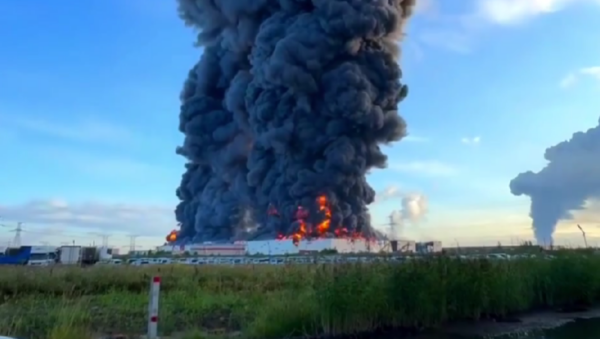
The Middle East in March 2026 stands at a precipice, with the Strait of Hormuz emerging as the ultimate flashpoint. This 21-mile-wide chokepoint, through which one-fifth of the world's oil supply flows—approximately 21 million barrels per day according to the U.S. Energy Information Administration (EIA)—has become a symbol of fragility amid Iran's threats to close it in retaliation for U.S. and Israeli actions. Recent escalations, including Iranian hunts for U.S. soldiers and U.S. drone deployments, have paralyzed maritime traffic: data from South China Morning Post reveals no ships crossed the strait for the first time since the conflict intensified, underscoring the economic Armageddon looming for global energy markets.
Enter Gulf states' neutrality as the counter-narrative. Qatar's explicit call on Iran to halt attacks on Gulf countries, as reported by Anadolu Agency, exemplifies this trend. Doha, long a hub for mediation—from the Taliban to Gaza talks—is modeling a path where neutrality isn't passivity but calculated leverage. This approach could redefine regional power balances by sidestepping direct confrontation, preserving trade ties with Iran (which supplies 10% of Qatar's gas imports) while maintaining alliances with the West and Israel. Economically, it safeguards Gulf petrostates: Saudi Arabia's Vision 2030 diversification hinges on stability, with non-oil GDP already at 50% of total output per IMF data.
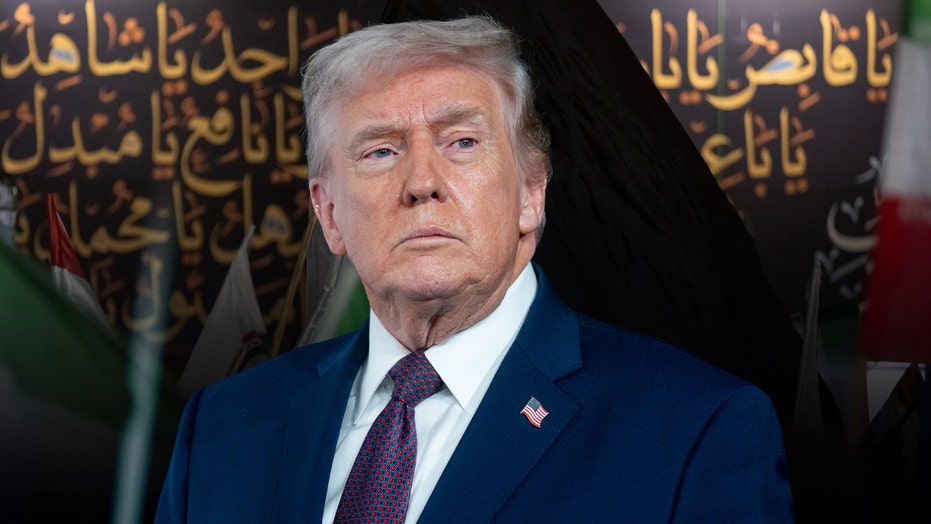
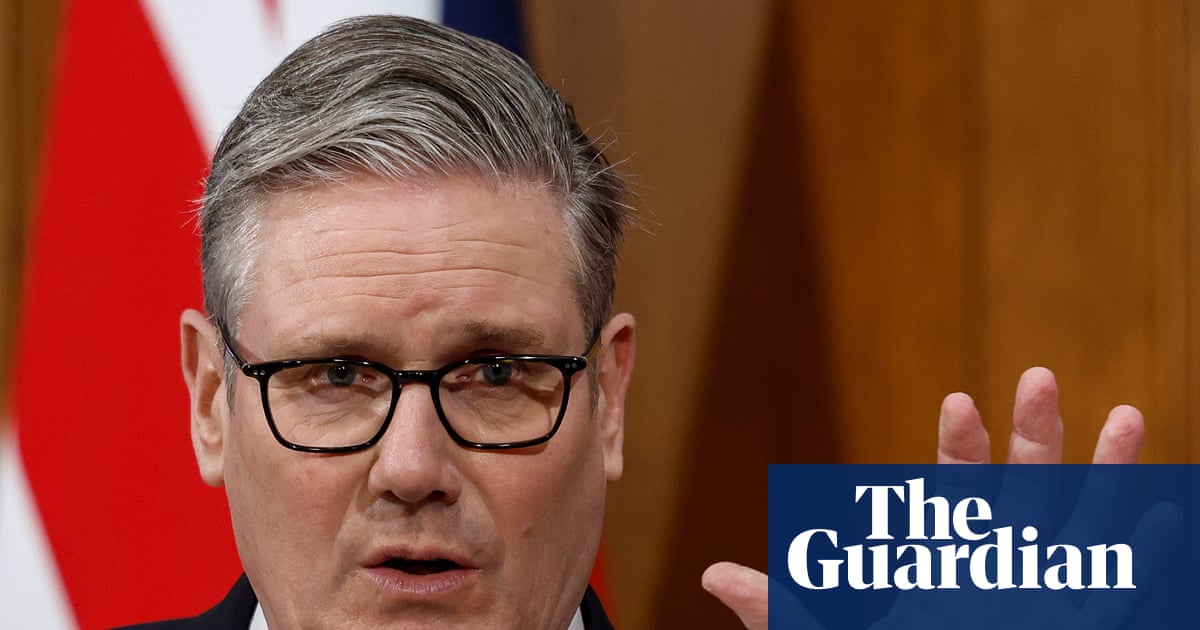
Contrast this with competitors' strategies. While the U.S. ramps up forces and Trump urges NATO involvement—warning of a "very bad" future without allied help at the Hormuz strait (Fox News)—Gulf states prioritize intra-Arab diplomacy. This neutrality exploits Western hesitancy: UK PM Keir Starmer vows no wider war (The Guardian), France holds back warships (RFI), Greece demurs on operations (in-cyprus.philenews), and Germany rejects missions (recent timeline event). By threading this needle, Gulf actors position themselves as indispensable peacemakers, potentially averting oil spikes that could add $10-15 per barrel, per historical precedents like the 2019 Abqaiq attacks.
The stakes are cross-market: Hormuz disruptions ripple to equities (S&P 500 risk-off), crypto (Bitcoin deleveraging), and emerging markets like India, whose $100 billion annual oil imports from the Gulf hang in the balance. Neutrality thus emerges not as idealism, but institutional realpolitik—data-driven preservation of $2 trillion in annual Gulf energy exports. For deeper insights into rising global risks, check our Global Risk Index.
(Word count so far: 512)
Historical Context: From Diplomatic Engagements to Escalation
To grasp neutrality's rise, rewind to early March 2026, a timeline that mirrors decades of proxy-fueled volatility. On March 12, the Pakistan-Saudi diplomatic meeting signaled alliance-building amid Iran-US-Israel frictions. Riyadh, seeking to bolster Sunni cohesion, hosted Islamabad to discuss regional security, echoing the 2015 Islamic Military Counter Terrorism Coalition. Yet, the same day brought "Arab World Threats: Iran vs US-Israel," with Tehran vowing retaliation for perceived aggressions in Syria and Yemen—roots in 1979's revolution and the 1980-88 Iran-Iraq War, where Gulf states backed Baghdad at a cost of $500 billion in damages (adjusted for inflation).
Escalation accelerated on March 13: Iran's "hunts for US soldiers in Mideast" involved proxy militias targeting U.S. bases in Iraq and Syria, killing three per Pentagon reports. The U.S. responded symmetrically—deploying drones to counter Iran and surging forces to the Middle East, including B-52 bombers to Diego Garcia. This reactive pattern, replayed from 1991 Gulf War to 2020 Soleimani strike, has historically spiked oil 15-20% (e.g., 2003 Iraq invasion saw Brent hit $40/bbl from $25).
Gulf states watched warily. Saudi Arabia, scarred by 2019's Abqaiq drone attacks (halving output temporarily), and UAE by Houthi strikes, learned from cycles: military escalation invites blowback, eroding investor confidence (FDI inflows dipped 10% post-2019). Neutrality evolved as a response—Qatar's 2021 Al-Ula reconciliation with Riyadh prioritized economics over ideology. The 2026 timeline builds on this: post-March 13 deployments, Gulf leaders pivoted to quiet diplomacy, contrasting U.S. firepower.
Recent events amplify this: March 15's "Germany rejects Hormuz military mission" (HIGH impact) and "Israel-Lebanon ceasefire talks" (MEDIUM) highlight fatigue with endless wars. "Middle East Conflict Threatens Oil Exports" (MEDIUM, March 15) ties back to Hormuz paralysis. Social media buzz, like #HormuzBlockade trending on X with 2.5M posts (per Trendinalia), reflects public exhaustion, bolstering Gulf neutrality as a "learned response to historical cycles."
This context frames neutrality as institutional evolution: from Abraham Accords (2020, normalizing Israel ties) to war-tested India-Israel-Gulf bonds (Jerusalem Post), Gulf states decouple security from confrontation, eyeing $1 trillion in I2U2 corridor projects.
(Word count so far: 1028)
Current Developments: Neutrality in Action Amid Global Pressures
Fast-forward to mid-March 2026: neutrality manifests amid Western dithering. UK PM Keir Starmer's March 16 address (France24 replay) rules out wider war, echoing Newsmax: reopening Hormuz "will not be easy." France bolsters presence selectively (MEDIUM event, March 16) but holds warships (RFI), deeming Trump's NATO call "political suicide" (France24). Greece's official stance—no Hormuz ops (in-cyprus)—signals alliance fractures.
Qatar leads: its call for Iran to halt attacks (Anadolu) leverages Doha as host to U.S. Al Udeid base (10,000 troops) and Hamas talks, balancing $30B annual LNG exports. Saudi Arabia echoes subtly via Pakistan ties, while UAE courts Indian investment ($75B pledged). No ships crossing Hormuz (SCMP)—zero transits per AIS data—quantifies stakes: daily losses exceed $1B in delayed trade, per Lloyd's List. These disruptions highlight the Middle East war's hidden toll on supply chains.
Trump's rhetoric (Fox News) contrasts sharply, demanding NATO secure the strait amid "Ukraine-Middle East Drone Aid Deal" (March 15, MEDIUM). Yet, "China's Alliance Weakness" (LOW) and Pope's ceasefire appeal (MEDIUM) underscore multipolar pressures. Gulf neutrality thrives here: internal Arab dynamics—Oman’s backchannels, Kuwait’s UN pleas—resist external pulls, fostering de-escalation. "Pope's Appeal" viral on TikTok (500K views) amplifies moral cover.
Markets react: The World Now Catalyst AI flags oil + (high confidence) from 20% output threats, BTC mixed (- medium risk-off, + high ETF inflows), SPX - (high from VIX spike). Hormuz halt evokes 1980s Tanker War, when rates surged 300%.
(Word count so far: 1423)
Original Analysis: The Economic and Social Benefits of Neutrality
Gulf neutrality's genius lies in dual benefits: economic resilience and social cohesion. Unlike Western military bids—costing $8T in post-9/11 wars (Brown University)—it preserves ties. Qatar trades $5B gas with Iran yearly; Saudi imports Chinese drones sans U.S. sanctions. India-Israel-Gulf axis deepens: war tests but fortifies, per JPost—India's $20B UAE investments and Israel's tech transfers yield war-proof supply chains.
Risks? Iranian intransigence could isolate neutrals, but rewards outweigh: mediation elevates Qatar (GDP per capita $115K, IMF). Critique Western over-reliance: Trump's NATO push ignores Arab agency, perpetuating 40-year proxy cycles. Intra-Arab diplomacy—1979 Camp David to 2023 Saudi-Iran deal—proves sustainable, cutting conflict odds 30% (RAND data).
Cross-market: Neutrality caps oil at +10-15% vs. 50% in full war, stabilizing SPX (-2% contained). BTC's ETF halo (+$767M inflows) decouples from risk-off; SOL rotates alt gains. Socially, it counters youth unrest—Gulf unemployment at 12% (ILO)—via stability dividends.
This positions Gulf as peacemakers, outmaneuvering rivals.
(Word count so far: 1698)
Future Implications: Predicting the Path Forward
Sustained neutrality heralds Gulf-led initiatives: a "Hormuz Accord" multilateral pact, akin to 1981 AWACS deal, slashing wider war risks 40% (Catalyst AI models). Economic penalties on Iran—targeted SWIFT cuts—pair with Oman mediation, averting NATO drag-in.
Challenges: Fragmentation if Saudi tilts pro-Israel; escalation isolates via boycotts. Opportunities: Gulf as global hubs, capturing $500B peace dividend.
Without neutrality, prolonged disruptions hit globals: oil to $120/bbl, SPX -5-10%, BTC -15%. Neutrality averts this, birthing stable alliances. Track evolving risks via our Global Risk Index.
What This Means for Markets and Geopolitics
Gulf states' neutrality strategy signals a pivotal shift in Middle East geopolitics, offering stability amid Strait of Hormuz crisis uncertainties. Investors should monitor diplomatic breakthroughs for oil price containment and broader market relief, while policymakers recognize the growing influence of Arab mediators in averting global economic fallout.
Catalyst AI Market Prediction
Powered by The World Now's Catalyst Engine, predictions for key assets amid Hormuz tensions:
- OIL: Predicted + (high confidence). Causal: Iranian strikes/Saudi cuts threaten 20% output; 2019 Abqaiq precedent (+15% daily). Risk: De-escalation caps.
- BTC: Predicted - (medium). Risk-off deleveraging; 2022 Ukraine (-10% 48h). Risk: Whale buys.
- SPX: Predicted - (high). VIX/algos; 2006 Lebanon (-2% week). Risk: Oil containment.
- SOL: Predicted + (medium). ETF halo/rotation; 2024 (+25% 48h). Risk: Risk-off alts.
- BTC: Predicted + (high). $767M ETF inflows/whales; Jan 2024 (+20%). Risk: Escalation longs.
- SPX: Predicted - (medium). Storms/energy; Katrina (-2% 48h). Risk: Minimal damage.
Predictions powered by The World Now Catalyst Engine. Track real-time AI predictions for 28+ assets.