
Iran's Blockade Crisis: Fueling Transatlantic Divisions and NATO's Fragile Future
By the Numbers
The Iran blockade has unleashed a cascade of quantifiable shocks, amplifying economic pain and geopolitical strain:
- Oil Prices: Brent crude has soared past $125 per barrel, a "war high" driven by fears of prolonged Hormuz disruptions. This marks a 15-20% spike in under two weeks, echoing supply fears from past Gulf crises and adding $0.50-$1.00 per gallon to U.S. pump prices overnight. Track broader implications via the Global Risk Index.
- Iran's Military Expenditures: Pentagon estimates reveal Iran has already burned through $25 billion (250亿美元) on military operations since the conflict's onset, straining its economy amid sanctions and forcing rationing of resources for its population of 89 million. For deeper coverage on war costs, see War in Iran Costs $25 Billion After Eight Weeks, Pentagon States and War in Iran: US Expenditure Reaches $25 Billion in Eight Weeks.
- U.S. Troops in Europe: Approximately 35,000 U.S. service members are stationed in Germany alone, part of 100,000 across Europe. Trump's threatened pullout could cost NATO $2-3 billion annually in hosting fees and disrupt joint exercises critical for deterrence against Russia.
- Global Trade Impact: The Strait of Hormuz handles 21 million barrels of oil daily (20% of world supply); even partial blockades have idled 10+ Iranian tankers, with Indian condemnation on April 17 highlighting risks to Asia's 5 million barrels/day imports.
- NATO Budget Strain: Europe's defense spending lags at 1.7% of GDP on average (vs. U.S. 3.5%), with the EU diverting €50 billion in "temporary privileges" to Ukraine instead of full accession, diluting focus on Iran.
- Market Volatility: Crypto assets like Bitcoin (BTC) and Ethereum (ETH) face 10-20% downside risks from risk-off cascades; S&P 500 (SPX) could drop 2%; while safe-havens like gold and USD see inflows.
These figures underscore not just economic turbulence but human costs: Iranian families enduring blackouts, European truckers protesting fuel hikes, and NATO troops wondering about their postings amid alliance fractures. The Strait of Hormuz remains a critical chokepoint in global energy security, amplifying concerns over oil price surge and NATO divisions.
What Happened
The crisis unfolded with breathtaking speed, tracing a timeline of defiance, blockade, and retaliation that has now spilled into transatlantic discord.
On April 13, 2026, Iran adopted a "defiant diplomatic stance," rejecting U.S. demands over nuclear revelations (tied to a "Iran Nuclear Site Revelation" event days earlier on April 29 in recent updates). Hours later, the U.S. imposed a naval blockade on the Strait of Hormuz, citing Iranian missile provocations (April 25) and Hormuz tensions (April 26). This mirrored intercept operations, like the U.S. seizure of an Iranian "ghost ship" on April 27 amid sanctions.
By April 15, U.S. forces physically blocked Iranian oil tankers, halting exports and prompting Iran's military advisor to warn of "confrontation if it persists." India condemned Hormuz shipping threats on April 17, as Iranian tankers began exiting the Gulf under duress— a humiliating retreat for Tehran.
Recent escalations intensified: Trump's rejection of an Iran war proposal (April 28), U.S.-Albania LNG deals to bypass disruptions (April 28), and Pentagon testimony on Iran's $25 billion spend (April 29), as further detailed in War Iran: US Conflict Costs Reach $25 Billion. Internal cables reveal U.S. overtures for a "new international coalition" to reopen Hormuz, bypassing reluctant Europeans.
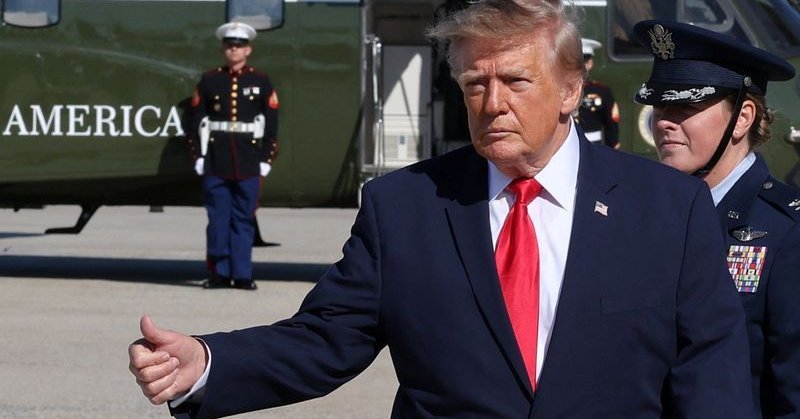
The transatlantic spark ignited when German Chancellor Merz criticized U.S. "overreach," prompting Trump's "ngambek" (tantrum-like) threat to pull troops from Germany, echoed in Danish media. Concurrently, Nordic-Baltic (NB8) foreign ministers convened on Saaremaa, Estonia, signaling independent European maneuvering amid Ukraine aid packages (€50 billion temporary privileges, per Politico). Sailors aboard blocked vessels report dire conditions—water shortages, crew exhaustion—humanizing the standoff's toll.
This chronology reveals a pattern: U.S. unilateralism clashing with European caution, turning a regional blockade into a NATO pressure cooker. Ongoing developments in the US-Iran tensions continue to dominate headlines on Iran blockade impacts.
Historical Comparison
This blockade echoes U.S.-Iran flashpoints but introduces novel transatlantic fissures absent in prior escalations.
In 2019, after tanker attacks, Trump imposed "maximum pressure" sanctions, spiking oil 15% initially without full blockade—Hormuz stayed open via diplomacy. The 2020 Soleimani strike prompted Iranian retaliation but de-escalated via Oman talks, with oil +4% short-term. The 1980s Tanker War saw 500+ attacks, but Reagan's reflagging protected shipping without alienating Europe.
Patterns emerge: rapid escalation (days vs. months), oil surges (2019: +20% in 3 months), and U.S. coalition-building (e.g., 2019's International Maritime Security Construct, which Europeans joined tepidly). Yet, today's crisis diverges sharply. Past events unified NATO against Iran; now, Trump's Germany troop threats—absent in Trump 1.0—mirror Nixon's 1969 Madman theory but target allies. Post-Cold War fractures (e.g., 2003 Iraq War rifts) pale beside current strains: EU's Ukraine pivot dilutes anti-Iran unity, while NB8 meetings evoke 1990s Baltic autonomy pushes.
Human impact amplifies: 2019 saw Yemeni fishermen displaced; today, 89 million Iranians face famine risks from $25B drains including insights from Iran War Costs United States $25 Billion, Pentagon Estimates, paralleling Venezuela's sanction-induced collapse. Emerging players like India (condemning April 17) shift alliances, unlike Europe's lockstep past, underscoring NATO's fragility in a multipolar world.
Catalyst AI Market Prediction
The World Now's Catalyst AI engine forecasts risk-off dynamics from the Iran blockade, with high-confidence oil upside amid transatlantic uncertainty:
- OIL: + (high confidence) – Iran sanctions tighten Strait supply; precedent: 2019 Gulf tensions +15% weekly. Risk: Hormuz reopening.
- EUR: - (high confidence) – EU growth fears from Hormuz; precedent: 2019 tensions weakened EUR 5%.
- USD: + (medium confidence) – Safe-haven amid U.S.-centric risks; precedent: 2022 Ukraine +5%.
- GOLD: + (medium confidence) – Haven buying; precedent: 2012 Mali +3%.
- CHF: + (medium confidence) – Neutral haven flows; precedent: 2022 Ukraine +3% vs. USD.
- SPX: - (medium confidence) – Algo de-risking; precedent: 2006 Lebanon -2%.
- BTC/ETH/SOL: - (medium confidence) – Liquidations from sanctions/crypto freezes; precedents: 2018 Iran sanctions -20%, 2022 Ukraine -10-12%.
- GOOGL/TSM: -/~ (low confidence) – SPX contagion.
Predictions powered by The World Now Catalyst Engine or visit Catalyst AI — Market Predictions. Track real-time AI predictions for 28+ assets.
What's Next
As the blockade grinds into weeks, scenarios range from de-escalation to NATO unraveling, with transatlantic rifts as the wildcard.
Escalation Triggers: Prolonged blockade (Trump's "months" warning) risks direct U.S.-Iran clash—Iran's advisor vows failure, but $25B costs may force restraint. Watch Hormuz tanker incidents or nuclear site strikes (April 29 revelation). U.S. coalition bids falter if Europe balks, per JPost cables.
NATO Fragmentation: Troop pullouts from Germany (35k personnel) could cascade: Baltic states accelerate NB8 pacts, as Saaremaa talks suggest, eroding Article 5 credibility. Europe's Ukraine focus (€50B package) exposes Iran blind spots, fostering "strategic autonomy" a la Macron.
Economic Fallout: Oil at $125+ hammers Europe (EUR - per Catalyst AI), spurring renewables but short-term pain—German factories idle, French yellow vests revive. U.S. LNG deals (Albania) bypass allies, deepening distrust.
Proactive Paths: EU-led diplomacy (e.g., Oman-mediated) or UNSC resolutions could unwind tensions by mid-2026. Opportunities: Nordic-Baltic innovation in hybrid defense, humanizing via refugee aid.
Risks loom large: Failure invites Russian opportunism in Ukraine, Chinese Strait shadowing. For families from Tehran to Tallinn, the path ahead hinges on bridging Atlantic divides—lest headlines become history's fractures. Monitor the Global Risk Index for evolving threats in this Iran blockade crisis.
This is a developing story and will be updated as more information becomes available.