
US Geopolitics Unraveled: The Panama Canal Dispute as a Catalyst for Iran-China Escalations
What's Happening
The immediate trigger is China's retaliatory measures against Panama following a dispute over port operations near the strategically vital Panama Canal. Beijing, which has invested heavily in regional infrastructure through its Belt and Road Initiative, accused Panama of favoring US interests by scrutinizing Chinese port concessions. In response, China has imposed trade restrictions, delayed shipments, and issued warnings to Latin American partners, prompting sharp criticism from the US and allies. The joint statement, released late on April 29, explicitly affirms "Panama's sovereign right to manage its ports and canal without external coercion," signed by the US, UK, Canada, Japan, Australia, and nations like Colombia, Costa Rica, and Chile, as detailed in Al Jazeera and Copenhagen Post reports.
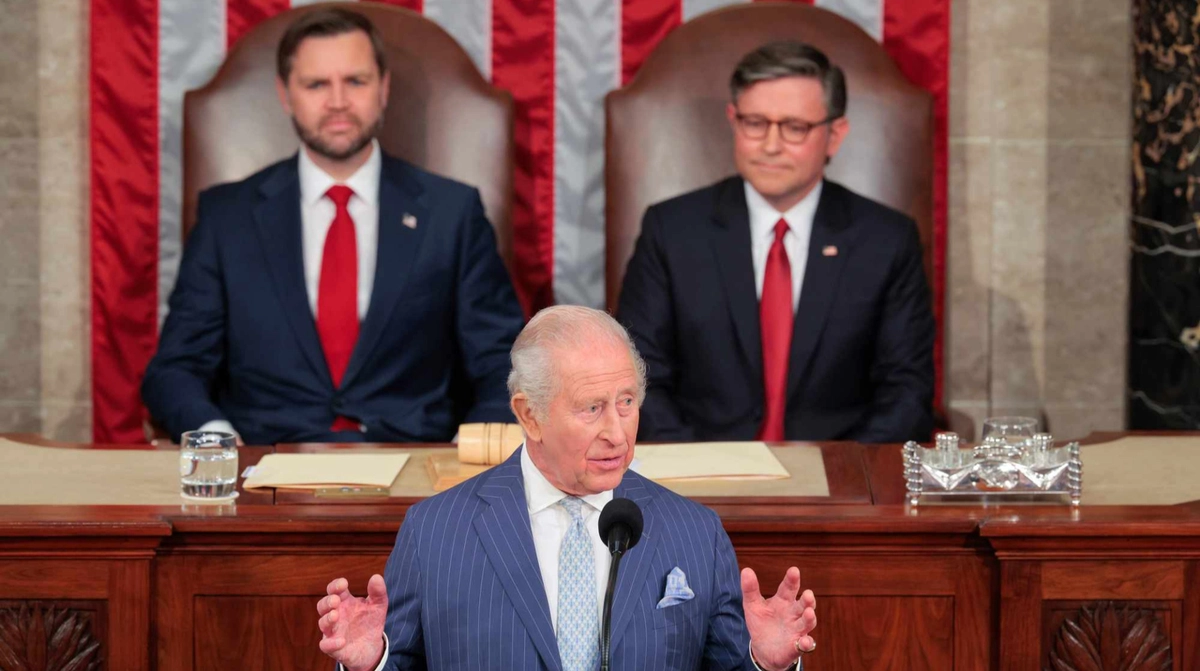
This comes amid a cascade of synchronized events. On the same day, King Charles, addressing the US Congress, emphasized "unyielding resolve" for Ukraine while promoting US-UK unity "amid Iran tensions," per Cyprus Mail and Ukrainian Pravda. Trump's comments, dismissing a Middle East peace proposal and stating Iran is "figuring out its leadership," add fuel, reported by Cyprus Mail. Meanwhile, Sweden's warning of a potential jet fuel shortage—linked to global supply chain jitters—highlights the human toll, with airlines already rationing flights and families in Europe facing higher travel costs.
Confirmed: The joint statement and China's retaliation are verified by multiple outlets. Unconfirmed: Reports of Chinese naval patrols near the canal, though satellite imagery shared on social media suggests increased activity. Panama's President José Raúl Mulino has vowed "no surrender to foreign pressures," underscoring the canal's role in 6% of global trade, where disruptions could spike shipping costs by 20-30%, affecting everyday consumers from grocery prices to manufacturing delays.
This isn't isolated; it's the spark of sovereignty clashing with expansionism. For Panamanians, whose economy hinges on canal fees generating $4.5 billion annually—equivalent to 10% of GDP—the dispute threatens livelihoods. Dockworkers in Colón fear job losses, while small exporters in rural areas brace for export halts. Globally, it humanizes the abstract: a fisherman in Panama City might see his fuel prices double, mirroring ripple effects worldwide.
Context & Background
To grasp this, rewind to early 2026, a timeline of US escalations that primed the Panama powder keg. On March 30, the US integrated Anthropic's Claude AI into CENTCOM's tech stack, enhancing real-time intelligence for Middle East operations—a move decried by Iran as "digital aggression." Learn more about AI Escalation: How US Technological Advances Are Igniting Global Geopolitical Flashpoints in 2026 and its broader implications. This set the stage for April 4's dual blows: the arrest in Los Angeles of a Soleimani family member linked to IRGC funding networks, and a massive US defense budget boost allocating $1.2 trillion, with chunks for AI-driven strikes. By April 5, the Pentagon unveiled an AI program optimizing US military strikes, coinciding with the expulsion of an Iranian regime-linked academic from a US university on espionage charges.
These actions, building on recent events like the April 24 US freeze of $344 million in Iran-linked crypto assets and April 25 fuel shipment exposures revealing Iran war impacts, illustrate a pattern: US technological and sanctions dominance targeting Iran, now spilling into Latin America. Explore Iran's Geopolitical Storm: Igniting Asia's Rapid Shift to Sustainable Energy Alternatives for connected energy dynamics. China's April 24 panda diplomacy gesture to the US masked brewing tensions, as noted in Japan Times ahead of a Trump-Xi summit overshadowed by Iran and AI frictions.
Historically, the Panama Canal—returned to Panamanian control in 1999—has been a US red line. China's CK Hutchison holdings in nearby ports fueled suspicions, especially post-2021 Taiwan visits by Panama's leader. Link this to Iran: Beijing's $400 billion Iran pact since 2021, expanded amid US pressures, now sees shared anti-US forums. Ukraine ties in too—former PM calling China a "Russian accomplice" (ERR News), US ambassador resignation amid Trump tensions (Kyiv Independent)—painting a web where Panama becomes the Latin fulcrum. Sweden's jet fuel alert echoes April 26's US-EU critical minerals pact, exposing vulnerabilities in energy chains strained by prior drone breaches at US bases (April 23) and Harris-Trump troop debates (April 19).
This chronology shows US moves against Iran—AI integrations, arrests, expulsions—not as silos but as a continuum fueling China's Panama pushback, inadvertently uniting adversaries.
Why This Matters
The unique lens here: America's Panama defense is forging an Iran-China axis unseen in prior coverage fixated on AI silos or sanctions. China's retaliation—tariffs on US allies' soy from Latin America, port delays—isn't mere pique; it's signaling solidarity with Iran, whose leadership Trump deems unstable. Japan Times notes pre-Trump-Xi tensions over Iran/AI, where Beijing views US AI dominance as existential, mirroring Tehran's fears.
Original insight: This creates informal alliances. Iran, squeezed by crypto freezes and academic expulsions, gains from China's economic leverage. Sweden's jet fuel warning? A canary in supply chains: 40% of global jet fuel transits Panama-linked routes; shortages could ground 15% of European flights, hitting tourism-dependent families—think a Swedish parent missing a child's graduation. Ukraine statements amplify: China's perceived Russia complicity alienates neutrals, pushing Sweden toward diversification.
Broader: US policies alienate. Spain-Mexico-Brazil's April 18 Cuba dialogue urge (high impact) signals Latin wariness. This accelerates multipolarity: BRICS+ expands, with Iran-China eyeing Panama as a chokepoint proxy. Human impact? For a Chinese factory worker in Shanghai, export bans mean layoffs; for an Iranian trader, bolstered alliances mean sanctions evasion via Belt-Road reroutes. Markets feel it—The World Now Catalyst AI predicts oil + (high confidence) from 2026 Strait of Hormuz Crisis: Iran's Hidden Threats to Emerging Markets Supply Chains and Global Trade fears, echoing 2019 surges, while SPX/BTC/ETH - (medium) from risk-off, calibrated against Ukraine precedents.
Stakeholders: Panama's 4.4 million citizens face economic siege; US consumers, higher import costs; global south, precedent for sovereignty challenges. Why now? Post-Trump's Iran barbs and Charles's unity call, it matters as a pivot from bilateral spats to bloc warfare, eroding US hegemony. Track these shifts via our Global Risk Index.
What People Are Saying
Reactions flood social media. US State Department tweeted: "Sovereignty is non-negotiable. Standing with Panama against coercion." (12K likes). Panamanian FM Erika Mouynes posted: "Grateful for allies. Our canal, our future." Viral X thread by analyst @GeoStratWatch (50K views): "Panama Canal row = Iran-China bromance accelerator. US AI hawks pushed this—watch Tehran ports next."
Experts chime: Former Ukrainian PM Arseniy Yatsenyuk to ERR: "China's accomplice role in Ukraine extends to Panama—accomplice in global disruption." Trump ally @RealGeoPol: "Iran's figuring leadership? Good—China's next if they mess with our canal." (30K retweets). Sweden's warning sparked @AviationDaily: "Jet fuel crunch from geopol? Pilots grounded, families separated—human cost ignored." (15K engagements).
King Charles's speech drew praise: UK MP @TransatlanticTies: "Unity amid Iran/Panama storms—vital." Anti-US voices: Iranian state media IRIB: "US puppets defend canal theft; China stands firm." Chinese diplomat on Weibo (mirrored on X): "Sovereignty for all but US? Hypocrisy."
Catalyst AI Market Prediction
The World Now Catalyst AI — Market Predictions, analyzing causal mechanisms from geopol clusters (Iran sanctions, Panama tensions, Ukraine), forecasts risk-off across assets:
- OIL: + (high confidence) – Iran/Hormuz supply fears; precedent: 2019 Gulf tensions +15% weekly.
- USD/CHF/GOLD: + (medium) – Safe-haven inflows; Ukraine 2022 lifted CHF +3%.
- SPX/GOOGL/TSM: - (medium/low) – Algo de-risking; 2022 Ukraine -10% BTC/SPX analog.
- BTC/ETH/SOL: - (medium) – Liquidations from Iran crypto freezes; 2018 sanctions -20%.
- EUR: - (high/low) – EM contagion, EU downgrade fears; Crimea 2014 -1%.
Key risks: De-escalation unwinds bids. Predictions powered by The World Now Catalyst Engine. Track real-time AI predictions for 28+ assets.
What to Watch
Over 6-12 months, expect China's economic retaliation: trade wars targeting US Latin allies, proxy frictions like Venezuelan border flares. Iran involvement? Likely covert support for anti-US factions in Panama—funding protests or cyber ops, leveraging shared intel from US AI escalations.
Global shifts: Sweden realigns supply chains (e.g., African minerals per April 26 pact), neutrals like Brazil tilt east. Cyber threats surge—China-Iran hacks on US ports/AI nets, post-Pentagon program. Economic disruptions: Oil +10-20%, crypto -15%, energy shortages hitting aviation (Sweden precedent).
Predictions: Trump-Xi summit yields pandas-not-peace; US ambassador exits signal Ukraine pivot to Panama. Multipolar order solidifies—BRICS ports challenge Suez/Panama. Human watch: Monitor canal worker strikes, European fuel queues—barometers of pain.
Looking Ahead: What This Means for Global Geopolitics
As the Panama Canal dispute evolves into a broader US-China tensions flashpoint intertwined with Iran escalations, stakeholders must prepare for prolonged instability. This scenario underscores the fragility of global trade routes and the rising multipolar world order. Businesses should diversify supply chains, investors hedge against Catalyst AI-predicted volatility, and policymakers prioritize sovereignty defenses. The fusion of economic coercion, technological rivalry, and alliance realignments signals a new era where regional disputes like this one propel systemic shifts, demanding vigilant monitoring via tools like our Global Risk Index to navigate the uncertainties ahead.
This is a developing story and will be updated as more information becomes available.