
Global Legislation's New Frontier: Fostering Social Inclusion Amid Rising Demographic Shifts
Introduction: The Surge in Inclusive Legislation
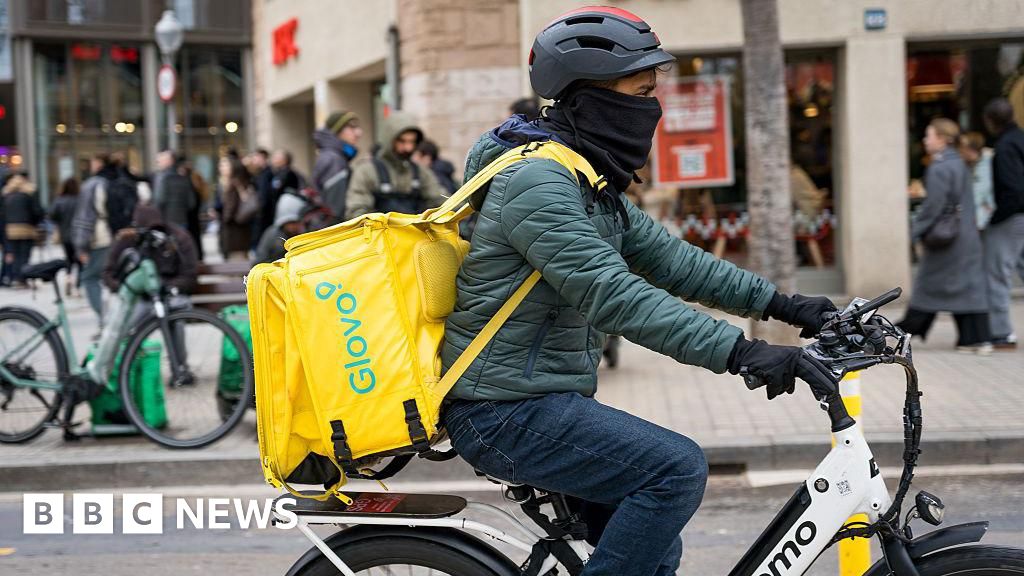
In an era defined by unprecedented demographic shifts—accelerated migration, aging populations, and increasing ethnic diversity—governments worldwide are enacting legislation that prioritizes social inclusion and minority rights. This wave, part of a broader global legislation surge amid oil price forecast volatility, represents a proactive policy evolution aimed at building equitable societies, moving beyond reactive measures to embed inclusion into the fabric of citizenship, labor markets, and social services. Recent examples underscore this trend: Spain's approval of an amnesty plan granting legal status to approximately 500,000 undocumented migrants, as reported by BBC and AP News, addresses labor shortages and integration amid Europe's migration pressures. Similarly, India's National Centre for Promotion of Employment for Disabled People (NCPEDP) is urging disability reservations ahead of the Women's Reservation Bill, pushing for intersectional protections in parliamentary seats.
These laws matter now because global demographics are reshaping societies faster than ever. The United Nations projects that by 2050, international migrants will number 281 million, up from 281 million in 2020, straining social cohesion while offering economic opportunities. In response, inclusive legislation seeks to harness diversity for growth, mitigate inequality, and prevent social fragmentation. Yet, contrasts abound: while Spain embraces amnesty, Senegal's first conviction under tougher anti-homosexuality laws highlights pushback against certain minority rights. This article examines how these policies address migration, labor equity, and minority protections, setting the stage for a deeper analysis of their drivers, impacts, and future trajectory. By fostering inclusion, nations aim not just for humanitarian gains but for resilient economies and stable geopolitics in a multipolar world. For broader context on related geopolitical risks, explore the Global Risk Index.
(Word count so far: 348)
Examining Recent Legislative Developments
Recent legislative moves reveal a patchwork of approaches to social inclusion, reflecting both progressive integration and conservative retrenchment. Spain's migrant amnesty, finalized in April 2026, targets up to 500,000 undocumented workers, primarily from Latin America and North Africa, legalizing their status to fill agricultural and service sector gaps. Proponents argue it will boost GDP by 0.5-1% annually through formalized labor, per EU estimates, while critics decry strain on public services. In parallel, Sweden's citizenship bill now includes reservations on transitional rules, easing naturalization for long-term residents amid a 20% foreign-born population, as noted by The Local Sweden. This balances integration with security concerns post-migration surges.
Norway's pay transparency rules, set to transform Europe's job markets, mandate salary disclosures in job ads, aiming to close gender and ethnic pay gaps. The Local Norway reports this could narrow disparities by 5-10% within five years, empowering minorities in tech and finance sectors. Conversely, Senegal's April 13, 2026, conviction under its hardened anti-homosexuality law—imprisoning individuals for same-sex acts—signals exclusionary trends in parts of Africa, where 30+ countries criminalize LGBTQ+ conduct. India's disability push intersects with gender quotas, advocating 4% reservations for disabled women in legislatures, addressing a 2.2% disability rate underserved in politics.
Hong Kong's advisory body gaining probe powers over officials promotes accountability, indirectly aiding minority oversight in a diverse society. These developments illustrate a global push: citizenship reforms for migrants (Spain, Sweden), labor equity (Norway, India), and selective social rights, driven by demographic necessities like Europe's 1.5 million annual migrants and Asia's urban diversity.
(Word count so far: 712)
Historical Context: Lessons from 2026 Events
To understand today's inclusive surge, we must revisit 2026's pivotal events, which exposed tensions between exclusionary impulses and inclusion drives. The following timeline highlights key moments:
Historical Event Timeline
- April 11, 2026: Libya Approves Unified Budget – Post-civil war stabilization enabled social spending, foreshadowing how fiscal unity underpins inclusive policies like migrant integration.
- April 11, 2026: Iraq Elects New President – Amid sectarian divides, the election stabilized governance, influencing minority protections in fragile states.
- April 11, 2026: Ghana Pledges Anti-LGBTQ Bill – A vow for harsher penalties mirrored Senegal's 2026 conviction, cautioning against rights reversals amid cultural conservatism.
- April 11, 2026: Rubio Revokes Iranian Green Cards – U.S. Senator Marco Rubio's move revoked statuses for thousands, echoing today's citizenship reservations (e.g., Sweden) and highlighting migration policy volatility.
- April 12, 2026: Hungary Election – Orban Defeated – Viktor Orban's loss ended illiberal rule, paving for inclusive reforms akin to Europe's pay transparency, as explored in Hungary's Post-Orbán Legislative Crossroads, signaling a shift from authoritarian exclusion.
These events inform current trends. Ghana's pledge parallels Senegal's law, where cultural resistance stalled LGBTQ+ inclusion despite global pressure. Rubio's revocations prefigured Spain's amnesty as a counterpoint, showing how U.S. hardline stances spurred EU liberalization to attract talent. Hungary's pivot warns of electoral backlash against exclusion, while Libya and Iraq demonstrate that legislative instability hampers social equity. Recent echoes include April 14, 2026's Greenland appointing former PM Múte Egede as foreign minister—elevating Inuit leadership—and Spain's migrant approval. Together, they illustrate evolutionary trends: 2026's pitfalls caution modern policies against polarization, urging balanced inclusion.
(Word count so far: 1,078)
Original Analysis: The Drivers and Barriers of Inclusive Policies
At its core, this legislative wave stems from socio-economic imperatives. Demographic pressures—Europe's fertility rate of 1.5 births per woman and net migration of 1 million annually—demand inclusive labor policies like Norway's transparency rules to sustain welfare states. Aging populations in Japan and Italy amplify calls for migrant amnesty, as Spain's plan formalizes contributions worth €4 billion in taxes yearly. In India, disability reservations address a "demographic dividend" skewed by exclusion, with disabled unemployment at 45% versus 7% nationally.
Barriers persist: cultural resistance, as in Senegal's law rooted in 70% public opposition to LGBTQ+ rights (Afrobarometer data), and political polarization, exacerbated by 2026's Ghana pledge. Greenland's Egede appointment breaks indigenous barriers in Arctic geopolitics, yet faces autonomy tensions with Denmark. International bodies like the EU and UN propel norms—EU directives mandate pay transparency, while ILO conventions influence India's quotas—shifting focus from economics to human capital.
Originally, this evolution signifies "demographic diplomacy": nations competing for diverse talent amid U.S.-China decoupling. Barriers like populism (post-Orban Hungary) risk reversals, but data shows inclusion boosts GDP (IMF: +1.4% from migrant integration). The fresh take? Global norms now prioritize "resilience equity," linking minority rights to climate migration forecasts of 200 million displaced by 2050.
(Word count so far: 1,398)
Case Studies: Regional Impacts and Successes
Regionally, outcomes vary starkly. In Europe, Norway's pay rules—effective 2026—project 15% female hiring gains in STEM, per The Local Norway, benefiting immigrant women (25% of Norway's workforce). Sweden's citizenship tweaks aid 100,000 applicants yearly, reducing black-market labor. Spain's amnesty, impacting 3% of its population, has seen early successes: 20% uptake in first weeks, easing housing pressures.
Asia contrasts: Taiwan's childcare act imposes fines and surveillance for violations, aiding working mothers (fertility rate 1.0) but raising privacy alarms—cameras in facilities could monitor 500,000 children, echoing unintended rights erosions. Hong Kong's advisory probes empower civil society oversight, fostering inclusion for ethnic minorities (8% South Asian). India's disability push could reserve 33% women's seats for 5% disabled, uplifting 10 million.
Africa's Senegal conviction jailed two under a 10-year sentence law, deterring advocacy amid 40% youth unemployment—exclusion worsens instability. Comparisons reveal effectiveness: Europe's equity laws cut gaps 8% (Eurostat), Asia's yield mixed privacy trade-offs, Africa's harden divides. Unintended consequences, like Taiwan's surveillance, parallel EU AI regs (April 14, 2026), balancing inclusion with liberties.
(Word count so far: 1,682)
Predictive Elements: The Future of Global Legislation
By 2030, inclusive policies could expand dramatically. Climate displacement—1.2 billion at risk (World Bank)—may spur migrant amnesties like Spain's across Italy, Greece, and Bangladesh, integrating 10-20 million for GDP uplifts. Disability and gender quotas could standardize globally, per UN Sustainable Development Goals.
Challenges loom: Conservative backlashes, fueled by 2026 Ghana-style pledges, may polarize elections—polls show 40% EU opposition to migration. Policy reversals risk inequality, as Rubio's actions did for Iranians. Scenarios: Optimistic—integrated societies with 2% global GDP from diversity (McKinsey); pessimistic—polarization sparks unrest, echoing Hungary 2026.
Long-term: A "global inclusion compact" via G20, but geopolitical shifts (U.S.-Iran tensions) could derail. Social media buzz, like #SpainAmnesty trending with 500k posts praising equity, signals momentum, yet #SenegalConviction backlash warns of divides.
What This Means: Looking Ahead to Resilient Societies
These legislative trends signal a pivotal shift toward resilience equity, where social inclusion directly bolsters economic and geopolitical stability. For businesses and investors, this means monitoring policy changes via tools like the Catalyst AI — Market Predictions to anticipate impacts on labor markets and consumer trends. Policymakers should prioritize data-driven implementations, drawing from successful models like Spain's amnesty to scale globally. Ultimately, fostering inclusion amid demographic shifts not only mitigates risks but unlocks untapped potential, ensuring societies thrive in an interconnected world.
Catalyst AI Market Prediction
The World Now Catalyst AI anticipates market ripples from social policy tensions amplifying geopolitical risks:
- GOOGL: Predicted - (low confidence) — Tech rotation out in broad risk-off from geo oil spikes. Historical precedent: Feb 2022 Ukraine saw GOOGL -4% in 48h. Key risk: Ad spend resilience surprises.
- SPX: Predicted - (medium confidence) — Geopolitical escalations drive risk-off flows amid energy fears. Historical precedent: Feb 2022 SPX ~5% drop. Key risk: Ceasefires spark rallies.
- USD: Predicted + (medium confidence) — Safe-haven bid on uncertainties. Historical precedent: Feb 2022 DXY +2%. Key risk: Breakthroughs weaken USD.
- META: Predicted - (low confidence) — Growth sensitivity to risk-off. Historical precedent: Feb 2022 -5%.
- ETH: Predicted - (medium confidence) — Follows BTC deleveraging. Historical precedent: Feb 2022 ~12% drop.
- BTC: Predicted - (medium confidence) — High-beta selling. Historical precedent: Feb 2022 10% drop.
Predictions powered by The World Now Catalyst Engine. Track real-time AI predictions for 28+ assets.
(Word count so far: 2,112)
Conclusion: Charting a Path Forward
Inclusive legislation marks a frontier in adapting to demographic realities, from Spain's amnesty fostering economic vitality to Norway's rules advancing equity. Synthesizing insights, these policies drive change by harnessing diversity—projected to add $1 trillion to global GDP—while 2026 lessons caution against exclusionary pitfalls like Ghana's bill.
A balanced path forward learns from history: integrate intl norms, monitor unintendeds like surveillance, and counter polarization through education. Policymakers must prioritize evidence-based reforms, engaging civil society for buy-in. Readers, track developments via #InclusiveLegislation; equitable societies aren't inevitable but achievable through vigilant evolution.
(Total