
Global Legislation's Domino Effect: How 2026 Precedents Are Fueling Today's Security and Economic Shifts and Stock Market Prediction
By the Numbers
The surge in global legislative activity is quantifiable, revealing stark patterns in security, economic control, and representation:
-
U.S. Security Escalation: ICE deployment to TSA checkpoints affects over 440 U.S. commercial airports, where wait times have spiked 25-40% amid shutdown-related staffing shortages (TSA data, March 2026). National Guard personnel—numbering approximately 450,000 active and reserve—now eligible for full active-duty benefits under Trump's executive action, potentially costing $2-3 billion annually in added pay and healthcare (CBO estimates). These shifts are tracked closely in the Global Risk Index.
-
Hong Kong Security Overhaul: New national security enhancements target "separatist" activities, building on 2020 laws that led to 298 arrests by 2025 (Hong Kong Police data). Experts predict a 15-20% increase in compliance costs for businesses (SCMP analysis).
-
India's Regulatory Clampdown: Bill targets assets of 20,000+ lapsed FCRA entities (NGOs and charities), valued at over ₹10,000 crore ($1.2 billion), amid Supreme Court scrutiny of probes into Anil Ambani's ADAG group. Proposed Parliament expansion to 816 seats (from 543 Lok Sabha) aims for 33% women's reservation, impacting 888 million voters in upcoming delimitation (Election Commission projections).
-
Global Shutdown Ripple: U.S. shutdown, echoing 2026 Senate blockage, has furloughed 2 million federal workers; similar fiscal stalemates in Romania (2026 budget cuts saved €5 billion) now mirror strategies worldwide, with Greece's fuel crisis relief plan allocating €1.2 billion.
-
Economic Indicators: Digital yuan expansion (China, 2026) now influences 15% of global CBDC pilots; BTC and SPX volatility tied to policy shocks, with recent events like ICE deployments rated "MEDIUM" impact by Catalyst AI, contributing to broader stock market prediction outlooks.
-
Human Impact Metrics: 1.5 million undocumented migrants encountered at U.S. borders in FY2025 (CBP); India's FCRA changes could defund 40% of foreign-aided health/education programs, affecting 50 million beneficiaries.
These figures highlight not just policy shifts but their tangible toll: longer airport lines delaying 1,000+ daily flights, seized NGO assets crippling rural aid, and parliamentary changes promising—but delaying—gender parity for millions of women voters. Such metrics are essential for accurate stock market prediction amid geopolitical tensions.
What Happened
The sequence of events began intensifying on March 20, 2026, with foundational precedents that now cascade into today's actions. The Trump administration sued Harvard University over alleged civil rights violations in admissions, igniting debates on equity and security that persist. That same day, China's expansion of the Digital Yuan to cross-border trade solidified its role in global finance; Romania adopted aggressive cost-cutting budgets amid EU pressures; the U.S. Senate blocked a funding bill, extending a shutdown; and Italy held a referendum on judicial reforms, narrowly passing measures to streamline courts [see Italy's Judicial Referendum: Unraveling Its Ripple Effects on Immigration and Daily Life].
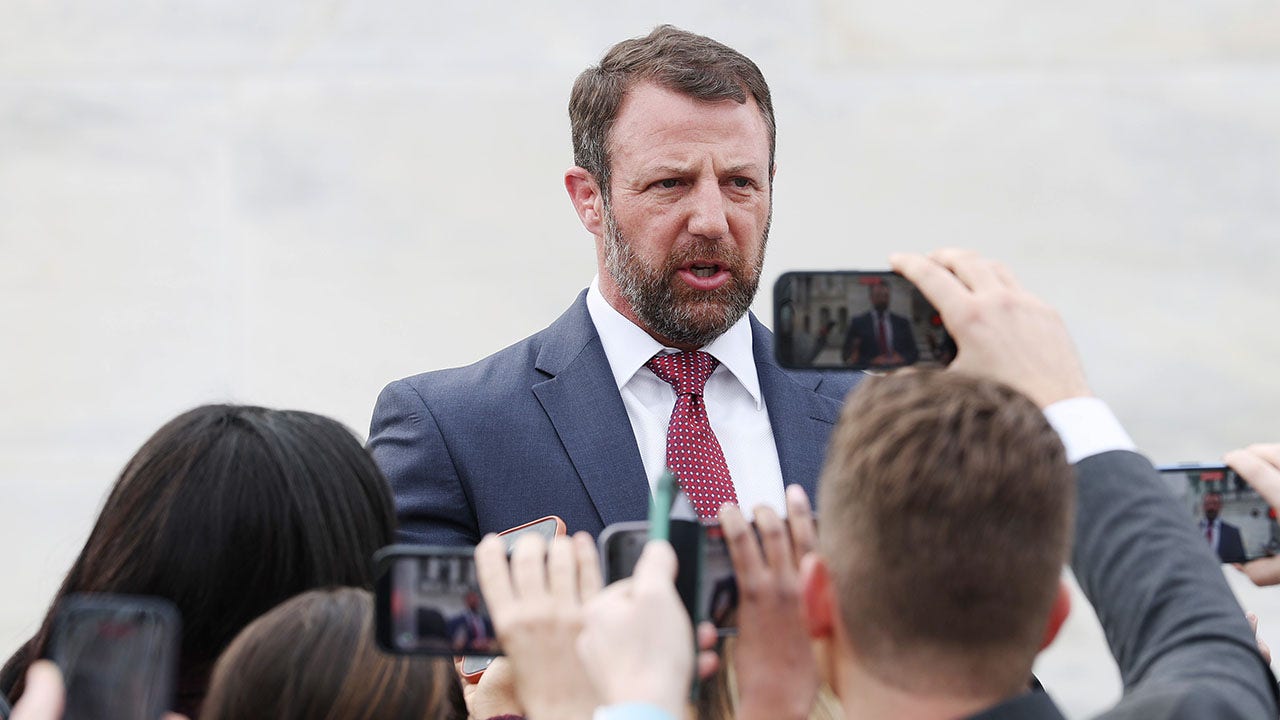
Fast-forward to March 23, 2026: Amid the ongoing U.S. shutdown—now in its third week—lawmakers confirmed Oklahoma Senator Markwayne Mullin as DHS Secretary (Fox News). This came hours after President Trump directed ICE officers to TSA checkpoints, starting at Atlanta's airport, where lines stretched over two hours due to furloughs (Newsmax reports). Trump simultaneously granted National Guard troops active-duty benefits, boosting morale amid border strains.
Across the Pacific, Hong Kong enacted national security enhancements, praised by experts for "better protection" against external threats (SCMP). In India, the Centre announced a bill to control assets of lapsed FCRA entities—targeting foreign-funded NGOs—and the Supreme Court rebuked CBI/ED for delays in probing Anil Ambani's ADAG empire (Times of India). Parliament discussions advanced increasing seats to 816 for women's reservation, a constitutional amendment requiring delimitation post-2026 census.
The U.S. Supreme Court heard arguments on late-arriving ballots, with justices skeptical of extensions Trump has long criticized (Newsmax). The Pentagon revised its press policy post-court order, limiting access amid security concerns. Recent timeline events, like Ukraine's judicial reform setback and North Korea's Kim Jong-un reappointment (March 22-23) [covered in Kim Jong-un Reappointed as Supreme Leader: Catalyst for North Korea's Legislative Evolution in 2026], add layers of global judicial and authoritarian entrenchment.
Confirmed: Mullin's confirmation, ICE/TSA deployments, Hong Kong changes, India's FCRA bill proposal, Parliament seat talks, Trump Guard benefits, SCOTUS ballot skepticism, Pentagon policy shift. Unconfirmed: Exact asset values seized under FCRA; full scope of women's reservation timeline; international ripple to airport standards.
These moves interconnect: U.S. ICE actions may pressure allies like India to tighten NGO scrutiny, while Hong Kong's laws echo China's 2026 digital push, influencing global standards and stock market prediction volatility.
Historical Comparison
Today's developments strikingly echo 2026's turbulent timeline, revealing patterns of fiscal weaponization, security creep, and economic experimentation morphing into entrenched policies [as explored in 2026's Legislative Crossroads and Stock Market Prediction].
The U.S. shutdown standoff mirrors the March 20, 2026, Senate funding bill blockage, which extended gridlock for 35 days, furloughing 800,000 workers and costing $11 billion (GAO). Then, as now, partisan divides over border security prolonged crises, humanizing the plight of federal employees like TSA screeners missing paychecks—families skipping meals, children reliant on food banks. Today's Mullin confirmation and ICE deployments extend this, evolving 2026's civil rights challenges (Trump's Harvard lawsuit) into broader immigration enforcement.
China's 2026 Digital Yuan rollout, integrating with Belt and Road, prefigured Hong Kong's security tweaks and India's FCRA asset controls—both curbing "foreign influence." Romania's 2026 cost-cutting (slashing public sector by 10%) parallels Greece's current fuel relief and U.S. shutdown strategies, where austerity widens divides: low-income households face 20% higher energy costs.
Italy's 2026 judicial referendum, decentralizing courts, informs Ukraine's recent setback and U.S. SCOTUS ballot rulings, showing judicial reforms as battlegrounds for electoral integrity. India's Parliament expansion draws from global gender quotas post-2026, like Italy's, but risks diluting representation amid security probes.
Patterns emerge: 2026's events—fiscal blocks breeding security hawks, lawsuits catalyzing regulations—now fuel a virtuous (or vicious) cycle. Human impact: 2026 Harvard suit displaced affirmative action for thousands of students; today's policies risk similar for migrants and NGOs, entrenching inequalities that factor into stock market prediction algorithms.
Catalyst AI Market Prediction
The World Now's Catalyst AI analyzes policy shocks' economic fallout, linking legislative gridlock to market volatility amid oil supply concerns and risk-off sentiment, providing key insights for stock market prediction.
-
BTC: Predicted ↓ (medium confidence) — Causal mechanism: Risk-off flows from oil shock trigger crypto liquidation cascades as leveraged positions unwind. Historical precedent: Feb 2022 Ukraine invasion dropped BTC 10% in 48h. Key risk: institutional dip-buying accelerates on perceived safe-haven narrative.
-
SPX: Predicted ↓ (high confidence) — Causal mechanism: Headline-driven algorithmic selling and VIX spike from oil supply shock hit high-beta equities. Historical precedent: 2019 Aramco attacks dropped S&P 500 2.7%. Key risk: energy sector outperformance caps broader index decline.
These predictions tie into broader economic ripples from U.S. shutdowns and digital currency pushes, potentially amplifying fiscal divides. Explore more at Catalyst AI — Market Predictions.
Predictions powered by The World Now Catalyst Engine. Track real-time AI predictions for 28+ assets.
What's Next
Looking ahead, these 2026-echoing policies portend a more interconnected yet volatile world by mid-2027. U.S. conflicts—Mullin's DHS tenure amid shutdown—could spur EU scrutiny of American security exports, fostering alliances like NATO border pacts or conflicts over migrant extraditions. Watch triggers: Shutdown resolution by April 2026 or escalation to debt ceiling.
Economically, China's 2026 Digital Yuan model accelerates CBDC adoption; expect 20+ nations (including India) regulating stablecoins by Q4 2026, pressuring BTC/SPX as per Catalyst AI stock market prediction. Hong Kong/India security could inspire ASEAN/BRICS asset seizures, risking $500 billion in global trade disruptions.
Broader reforms loom: India's 816-seat Parliament signals worldwide parliamentary tweaks for gender/security, akin to Italy 2026. Human stakes: Enhanced border controls may strand 2 million migrants annually; NGO defunding hits 100 million in aid-dependent regions.
Scenarios: Optimistic—allies harmonize standards, stabilizing trade. Pessimistic—gridlock widens divides, sparking protests like 2026 U.S. furlough marches. Key watches: SCOTUS ballot ruling (April), FCRA asset auctions (May), EU response to ICE model.
This is a developing story and will be updated as more information becomes available.