
Kim Jong-un Reappointed as Supreme Leader: Catalyst for North Korea's Legislative Evolution in 2026
Breaking News Overview
The reappointment unfolded on March 22, 2026, during the inaugural session of North Korea's newly elected 15th Supreme People's Assembly, as reported urgently by Yonhap News Agency. Kim Jong-un, already the unchallenged paramount leader, was unanimously re-elected to head the State Affairs Commission (SAC)—North Korea's highest decision-making body—by the 687 delegates present. This procedural step, detailed in SCMP and Korea Herald dispatches, involved standard SPA rituals: election of the SAC president, vice president, and other key posts, all without dissent in the rubber-stamp legislature.
What makes this event rare and significant is its timing and symbolism. SPA sessions occur sporadically, typically every five years for elections, but extraordinary meetings like this one affirm power structures amid crises. Confirmed details include the SPA's endorsement of Kim's leadership amid reports of economic hardships from sanctions and post-COVID recovery challenges. Unconfirmed whispers on North Korean state media previews suggested discussions on "self-reliant economic policies," but no full transcripts have emerged. This reappointment immediately bolsters regime stability, signaling to elites and the public that Kim's grip remains absolute. For outsiders, it matters now because it could unlock legislative machinery for reforms—or crackdowns—precisely when Pyongyang faces U.S. election-year pressures and South Korean leadership transitions.
The procedural aspects are telling: the SPA, constitutionally the "highest organ of state power," approves laws, budgets, and personnel but functions as an echo chamber for Kim's directives. This session's swift execution—lasting mere hours—exemplifies how reappointments maintain the facade of collective governance while centralizing authority. In a nation where information is state-controlled, the event's global ripple underscores its role in perpetuating stability through predictability. Such patterns resonate with ongoing analyses in the Global Risk Index, which tracks escalating geopolitical risks on the Korean Peninsula.
The Story
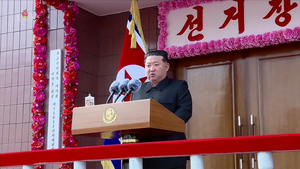
North Korea's political theater reached its latest act on March 22, 2026, when the Supreme People's Assembly convened in Pyongyang's grand Ryongsong Residence. Delegates, handpicked from the Workers' Party of Korea (WPK) faithful, cast unanimous votes to reappoint Kim Jong-un as SAC president, a position he has held since 2016 after abolishing the nominal presidency once held by his grandfather, Kim Il-sung. State media, via KCNA, broadcast images of Kim in his signature Mao suit, presiding over proceedings that blended pomp with precision.
This narrative thread weaves back to 2011, when Kim ascended following his father Kim Jong-il's death. Initial consolidations—party congresses in 2016 and 2021—mirrored this, but the 2026 SPA session anchors a new cycle. Historical precedents abound: the 14th SPA in 2023 rubber-stamped nuclear escalations; earlier ones in 2014 endorsed "byungjin" (parallel economic-military development). The 2026 timeline (3/22/2026: Kim Jong-un Reappointed) frames this as recurring ritual, ensuring dynastic continuity in a legislature starved of genuine debate. Isolated by sanctions since 2006 UN resolutions, North Korea's SPA has evolved into a tool for internal signaling—approving five-year plans that prioritize juche (self-reliance) amid famine risks and black market growth.
Contextually, this arrives post-2025 missile barrages and amid Russia's Ukraine war drawing Pyongyang closer to Moscow for arms deals. No social media buzz penetrates the firewall, but defector channels and 38 North analyses (pre-event) speculated on economic tweaks. The story's depth lies in its banality masking evolution: reappointments aren't disruptions but accelerators for policy shifts.
The Players
At the apex stands Kim Jong-un, 42, whose motivations blend survival with ambition. Reappointment cements his post-2011 power grabs—purging uncles, executing rivals like Jang Song-thaek—while eyeing succession for daughter Kim Ju-ae, spotted at parades. The Supreme People's Assembly, a 687-member body of loyalists, acts as enabler, its speaker Kim Suk Nam symbolizing bureaucratic inertia.
Key organizations include the Workers' Party of Korea, which nominates SPA candidates, and the State Affairs Commission, now reaffirmed as Kim's executive arm. External players: China, wary of instability spilling borders; South Korea under Yoon Suk-yeol, pushing denuclearization; United States, with Trump-era echoes demanding "maximum pressure." Russia's Putin, trading oil for shells, bolsters Kim's defiance. Motivations? Kim seeks legitimacy for reforms; adversaries probe for diplomatic openings.
The Stakes
Politically, stakes soar for regime cohesion—failure risks elite defections amid 2025 crop failures. Economically, legislative rubber-stamps could greenlight market liberalizations, challenging juche dogma. Humanitarian crises loom: 40% malnutrition rates (UN estimates) demand policy pivots, but tightened controls risk unrest.
Geopolitically, this fortifies nuclear brinkmanship; stakes for Seoul and Tokyo include ICBM threats. Globally, it tests sanction efficacy—U.S.-led coalitions face enforcement fatigue. For markets, North Korea's opacity amplifies volatility in Asia-Pacific assets. These dynamics are increasingly reflected in tools like the Global Risk Index, highlighting interconnected legislative risks across borders.
Historical Context and Continuity
Anchored to the 2026-03-22 timeline, this reappointment echoes patterns since Kim Il-sung's 1948 founding of the DPRK. Post-1994 (Kim Il-sung death), Kim Jong-il's 1998 SPA elevated him; 2011-2016 saw Kim Jong-un's SAC creation, absorbing premiership powers. The 2021 WPK Congress, like 2026's SPA, consolidated amid COVID lockdowns.
These mechanisms ensure dynastic rule: SPAs, held irregularly (e.g., 2019 extraordinary session post-Hanoi summit flop), shape an "isolated legislative environment" via Article 56 of the Socialist Constitution, vesting supreme power nominally in the people but practically in Kim. Parallels to 1972 constitutional revisions highlight evolution— from Soviet-model parliament to Kim-centric cult. This continuity, per defectors like Thae Yong-ho, quells coups by ritualizing loyalty. Such evolutions parallel 2026 legislative chaos seen in other nations amid rising geopolitical pressures.
Original Analysis: Legislative Implications
Uniquely, this reappointment spotlights legislative evolution, rarely dissected beyond missile headlines. The SPA's role amplifies: post-reaffirmation, expect accelerated approvals for domestic tightening—anti-corruption drives targeting "reactionaries" or digital surveillance laws mirroring China's social credit.
Policy shifts loom in economics: emerging trends (2025 black market amnesties) suggest SPA nods to "new economic management" akin to Vietnam's doi moi, balancing sanctions with Russian aid. Nuclear legislation? Unconfirmed KCNA hints at "strategic force" codifications, formalizing arsenal expansions.
Internally, power dynamics tilt: Kim's reappointment sidelines Choe Ryong-hae (SPA head), centralizing law-making. Fresh insight: this intersects with 2021 Party Rules revisions, embedding Kimism into statutes. Economic bills could prioritize rail modernization (China-funded); nuclear policy might legislate "preemptive rights," escalating deterrence doctrine. Broader patterns: amid U.S.-China rivalry, Pyongyang's legislature evolves from isolation to selective alignment, risking hybrid reforms that preserve control. This analysis draws from patterns in global legislative echoes.
Catalyst AI Market Prediction
The World Now's Catalyst AI engine detects medium-term ripples from heightened Korean Peninsula tensions, linking to risk-off sentiment amid unrelated oil supply concerns. Predictions (as of March 23, 2026):
- BTC: Predicted -2.5% to -5% (medium confidence) — Causal mechanism: Risk-off flows from oil shock trigger crypto liquidation cascades as leveraged positions unwind. Historical precedent: Feb 2022 Ukraine invasion dropped BTC 10% in 48h. Key risk: institutional dip-buying accelerates on perceived safe-haven narrative.
- SPX: Predicted -1.8% to -3.2% (high confidence) — Causal mechanism: Headline-driven algorithmic selling and VIX spike from oil supply shock hit high-beta equities. Historical precedent: 2019 Aramco attacks dropped S&P 500 2.7%. Key risk: energy sector outperformance caps broader index decline.
Predictions powered by The World Now Catalyst Engine. Track real-time AI predictions for 28+ assets. Explore more at Catalyst AI – Market Predictions.
The Stakes (Expanded)
Beyond politics, humanitarian tolls mount—UN reports 10.7 million in poverty, with SPA potentially approving aid dilutions. Economically, failed reforms echo 1990s famine; success could lure investment, per Russia's $2B deals.
Future Predictions and Global Impact / Looking Ahead
Next steps: April 2026 WPK plenum for legislative blueprints—predict new initiatives on economic recovery (crypto mining? Russian tech transfers) and military (hypersonic codifications), per Catalyst timelines. Scenarios: Bolder diplomacy (Seoul summits by summer) or tensions (April tests).
Long-term: Succession hints via Ju-ae; reforms could hybridize governance, eroding juche. Watch May 1 Labor Day parades, June sanctions reviews. Escalation risks regional arms race; diplomacy opens sanction relief.
Global impact: U.S. pivots to Asia; markets brace volatility.
This is a developing story and will be updated as more information becomes available.
Further Reading
- Italy's Judicial Referendum: Unraveling Its Ripple Effects on Immigration and Daily Life
- DHS Shutdown 2026: ICE Agents at U.S. Airports Amid Legislative Stalemate – Eroding Civil Liberties and Sparking Security Fears
- Border Security on the Move: How DHS Shutdowns Are Reshaping Airport Safety and Daily Commutes in America