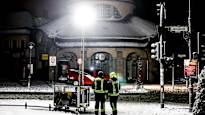

German Prosecutors Open Terrorism Investigation into Suspected Far-Left Arson Attack on Berlin Power Grid
Berlin, Germany — German authorities have escalated their response to a major power outage in the capital, with prosecutors announcing the launch of a formal terrorism investigation into what police suspect was a deliberate arson attack by a far-left group. The incident, which began on January 4, 2026, left tens of thousands of residents without electricity, highlighting vulnerabilities in critical infrastructure amid rising concerns over domestic extremism.
The disruption occurred around 2:16 p.m. UTC on Sunday, January 4, when fires were set to high-voltage power cables in Berlin, according to Berlin police statements. The attack severed power supplies to significant portions of the city, affecting residential areas, businesses, and public services. Emergency responders quickly contained the blazes, but restoration efforts extended into subsequent days as utility crews assessed damage to the underground and overhead lines. No injuries were reported, but the outage compounded winter challenges for affected households, with temperatures hovering near freezing.
Berlin police have publicly attributed the arson to a far-left extremist group, citing evidence from the scene including incendiary devices and ideological graffiti. Classified as a medium-severity incident, the attack fits a pattern of sabotage targeting symbols of state or corporate power, which far-left militants in Germany have employed in recent years to protest issues like gentrification, climate policies, and capitalism. Investigators recovered materials consistent with tactics used by autonomist or anarchist cells, though no group has claimed responsibility as of the latest updates.
On January 6, 2026, German prosecutors confirmed they would treat the case as potential terrorism, elevating it from standard criminal arson probes. This move, reported by Finnish public broadcaster Yle, signals a belief that the act aimed to intimidate the public or coerce government policy changes, meeting legal thresholds under Germany's anti-terrorism statutes. The Federal Prosecutor's Office in Karlsruhe, which handles nationwide terrorism cases, is coordinating with Berlin state prosecutors to analyze forensic evidence, surveillance footage, and digital footprints.
Escalating Concerns Over Far-Left Extremism
Germany has faced a resurgence in far-left violence in recent years, distinct from the historical Red Army Faction (RAF) era of the 1970s and 1980s. Contemporary groups, often loosely organized under the autonomist or anti-fascist umbrellas, have targeted railways, construction sites, and now energy infrastructure. According to the German Interior Ministry's annual reports, left-wing extremists committed over 1,000 attacks in 2024 alone, with a spike in property damage exceeding €10 million. Power grids have emerged as attractive targets due to their societal impact and difficulty in securing expansive networks.
This Berlin incident echoes a 2023 arson on a Tesla Gigafactory site near Berlin, claimed by the far-left "Vulkan Group," which halted production and drew terrorism scrutiny. Utilities like Stromnetz Berlin, responsible for the affected lines, have bolstered patrols and invested in drone surveillance, but experts note the challenges of protecting thousands of kilometers of cabling. The Verband der Elektrizitätswirtschaft (VDEW), Germany's electricity industry association, has called for federal aid to harden infrastructure against such asymmetric threats.
Political reactions have been swift and bipartisan. Berlin Mayor Kai Wegner (CDU) described the outage as an "attack on our city's lifeline," urging harsher penalties for eco-terrorism and ideological violence. Green Party leaders, typically aligned with left-leaning causes, condemned the act while emphasizing the need to address root grievances like energy transition delays. Interior Minister Nancy Faeser (SPD) reiterated the government's €100 million commitment to counter-extremism programs, including online radicalization monitoring.
Broader Context of Terrorism Threats in Germany
While Islamist extremism remains the dominant terrorism concern—accounting for most thwarted plots per the Bundesamt für Verfassungsschutz (BfV)—domestic far-left and far-right threats have grown. The BfV's 2025 risk assessment identified over 40,000 left-wing radicals, with sabotage capabilities posing risks to the 2026 World Cup co-hosting preparations. Recent events include far-right bomb plots in 2025 and Antifa clashes during G7 summits, underscoring a multi-front challenge.
The power outage's timing, just after New Year's celebrations, amplified its disruptive effect, canceling public events and straining emergency services. Full power restoration was achieved by January 5 evening, but economic losses are estimated in the millions, including spoiled goods and lost productivity.
Outlook: Heightened Vigilance Ahead
As the terrorism probe unfolds, authorities anticipate arrests based on CCTV from nearby areas and tip lines. Enhanced security measures around Berlin's substations are now in place, with calls for EU-wide intelligence sharing on transnational anarchist networks. This incident serves as a stark reminder of Germany's balancing act: safeguarding democracy while navigating polarized debates on extremism.
The investigation's outcome could set precedents for classifying infrastructure sabotage as terrorism, potentially influencing sentencing under Section 129a of the German Criminal Code, which carries up to 10 years imprisonment. For now, Berlin residents are urged to report suspicious activity, as police warn of possible follow-on attacks.
(Word count: 712)






