
Geopolitics Middle East developments include Trump assertion that Israel will reduce Lebanon operations after Iran warning
In recent developments within geopolitics middle east, US President Donald Trump stated that Israel would dial back fighting in Lebanon after Iran threatened to end peace talks, though Iranian media reported Tehran had suspended contacts with Washington. Conflicting accounts emerged on Monday regarding the status of negotiations to end more than three months of conflict involving Israel and Hezbollah. Egyptian President Abdel Fattah Al-Sisi reaffirmed that a two-state solution remains the only viable path to lasting peace and stability in the Middle East during a meeting with US Jewish leaders. Iran has gained significant global leverage following the US-Israeli war that began in February, according to analysis of shifting regional power balances. EU foreign policy chief Kaja Kallas stated that ending the Middle East war and keeping the Strait of Hormuz open is in everyone’s interest.
Trump Claims Progress on Lebanon Ceasefire
US President Donald Trump asserted that Israel would dial back fighting in Lebanon after Iran threatened to end peace talks. Iranian media reported that Tehran had suspended contacts with Washington over Israel’s expanding offensive in Lebanon. Efforts to negotiate an end to the Middle East war appeared mired in uncertainty on Monday, with Iran-linked media reporting that Tehran had suspended contact with Washington even as US President Donald Trump insisted talks were continuing “at a rapid pace” and claimed to have helped broker a halt to fighting between Israel and Hezbollah [3]. The statements from the US side emphasized ongoing diplomatic momentum despite the reported suspension from the Iranian side. Trump’s claims positioned the United States as actively involved in brokering reductions in hostilities between Israel and Hezbollah. These assertions came amid reports of expanding Israeli operations in Lebanon, which Iranian media linked directly to the decision to pause contacts. The situation highlighted how statements from Washington contrasted sharply with reports from Tehran on the same day.
Iranian Leverage After February War in Geopolitics Middle East
Iran has gained significant global leverage following the US-Israeli war that began in February, according to analysis of shifting regional power balances [2]. The US-Israeli war has upended the power balance in the Middle East, as Tehran finds itself with significant global leverage. A banner depicts missiles being fired behind Iranians who are rallying in solidarity with the government, at Valiasr Square in Tehran on 6 April 2026. The Iran war, which began in February with a joint Israeli-US attack, has seen Tehran combine its trans-regional capabilities. This development has positioned Iran with enhanced standing in discussions about regional stability. Analysts noted that the conflict starting in February altered previous dynamics, allowing Tehran to project influence beyond its immediate borders. The reported leverage stems from Tehran’s ability to maintain cohesion during the period of joint Israeli-US actions that commenced in February.
Egypt Reaffirms Two-State Solution
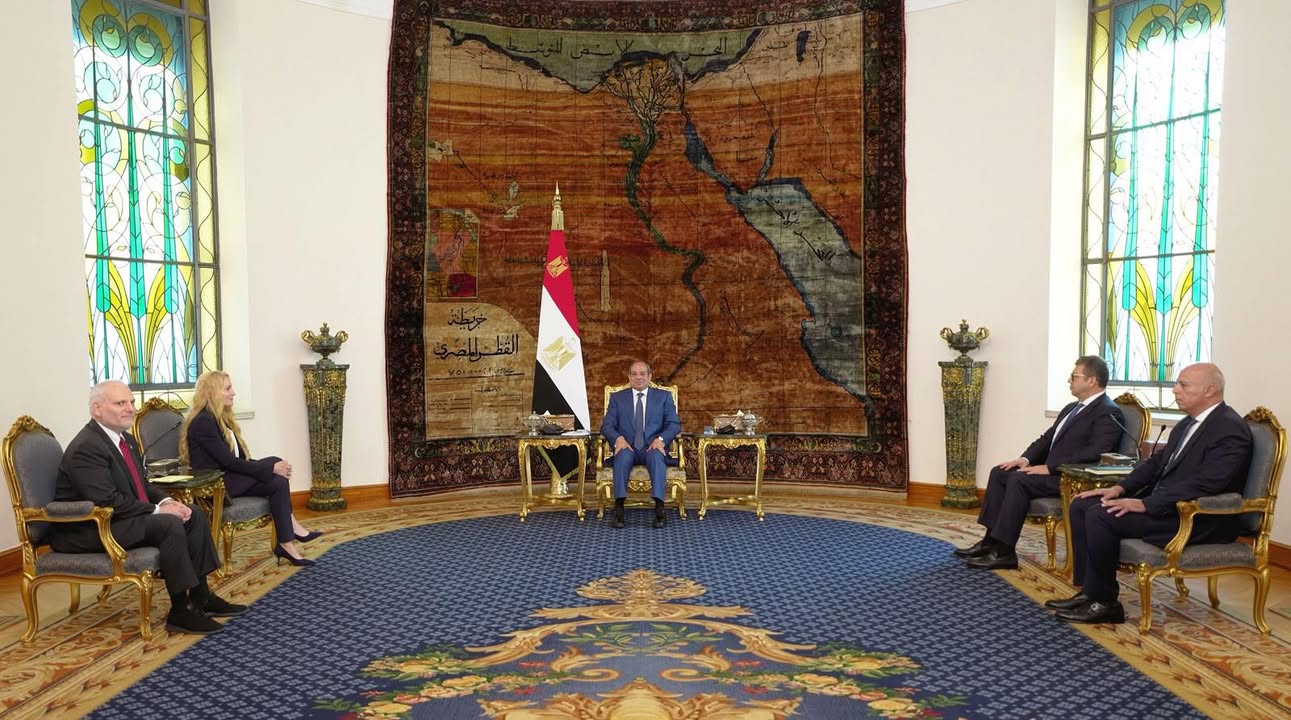
Egyptian President Abdel Fattah Al-Sisi reaffirmed that a two-state solution remains the only viable path to lasting peace and stability in the Middle East during a meeting with US Jewish leaders [1]. Al-Sisi tells US Jewish leaders two-state solution remains key to Middle East stability. Egyptian President Abdel Fattah Al-Sisi has reaffirmed that a comprehensive and just settlement of the Palestinian issue based on a two-state solution remains the only viable path to achieving lasting peace and stability in the Middle East. According to a statement issued by the Egyptian presidency, Al-Sisi met with a delegation from the Conference of Presidents of Major American Jewish Organizations. The Egyptian leader stressed that this approach constitutes the sole framework capable of delivering enduring regional stability. The meeting underscored Egypt’s consistent position on the Palestinian issue as central to broader Middle East peace efforts. Al-Sisi’s remarks to the US delegation highlighted the necessity of addressing the Palestinian question through established two-state parameters.
EU Calls for Regional Stability
EU foreign policy chief Kaja Kallas stated that ending the Middle East war and keeping the Strait of Hormuz open is in everyone’s interest [4]. European Union (EU) top diplomat Kaja Kallas on Monday said the bloc sought stability in the region, adding that it was in everyone’s interest for the ongoing war in the Middle East to end and for the Strait of Hormuz to remain open. Kallas, who serves as vice-president of the European Commission and the EU high representative for foreign affairs and security policy, is visiting Pakistan at the invitation of Deputy Prime Minister and Foreign Minister Ishaq Dar to participate in the 8th round of talks. The EU diplomat emphasized collective interest in both concluding hostilities and maintaining open maritime routes critical for energy flows. Kallas made these remarks while engaging in bilateral discussions in Pakistan focused on regional matters. The position articulated by the EU official aligned with broader calls for de-escalation across multiple fronts in the Middle East.
Negotiations Remain Fragile
Conflicting accounts emerged on Monday regarding the status of negotiations to end more than three months of conflict involving Israel and Hezbollah [3]. The conflicting accounts highlighted the fragile state of negotiations aimed at ending more than three months of conflict. Iranian media reports of suspended contacts stood in direct contrast to US assertions of rapid progress and a brokered halt in Lebanon fighting. These divergent narratives illustrated the challenges in aligning positions between the involved parties. The uncertainty persisted even as external actors continued to reference ongoing diplomatic channels. Reports from Monday captured the tension between claims of advancement and indications of paused engagement.
What to watch next: Observers will monitor further statements from US, Iranian, Egyptian, and EU officials on the pace of talks and any adjustments in Lebanon operations or regional positions.