
Geopolitics global update: India releases Joint Air Defence Doctrine after Op Sindoor
In this geopolitics global update, India has introduced a new Joint Air Defence Doctrine that brings together its Army, Navy, and Air Force one year after Operation Sindoor, while Timor-Leste President José Ramos-Horta separately highlighted leadership shortcomings and regional proposals during the Shangri-La Dialogue.
India unveils Joint Air Defence Doctrine
India has released a new Joint Air Defence Doctrine integrating its Army, Navy, and Air Force one year after Operation Sindoor [1]. The doctrine establishes a unified aerial shield designed to address contemporary aerial threats. This development comes directly after India broke Pakistan’s offensive during Operation Sindoor, marking a shift toward coordinated multi-service air defence measures [1]. The release underscores India’s focus on strengthening aerial protection through a single integrated framework rather than separate service-specific approaches.
The primary purpose of the doctrine is to create a cohesive response mechanism against evolving challenges in the air domain. By unifying the three services, India aims to ensure seamless coordination in detecting, tracking, and neutralising threats. The timing, exactly one year after the successful conclusion of Operation Sindoor, reflects lessons drawn from that operation and broader global vulnerabilities in air defence systems [1]. Officials have positioned the doctrine as a foundational step in modernising India’s overall defence posture.
Integration of Indian armed forces
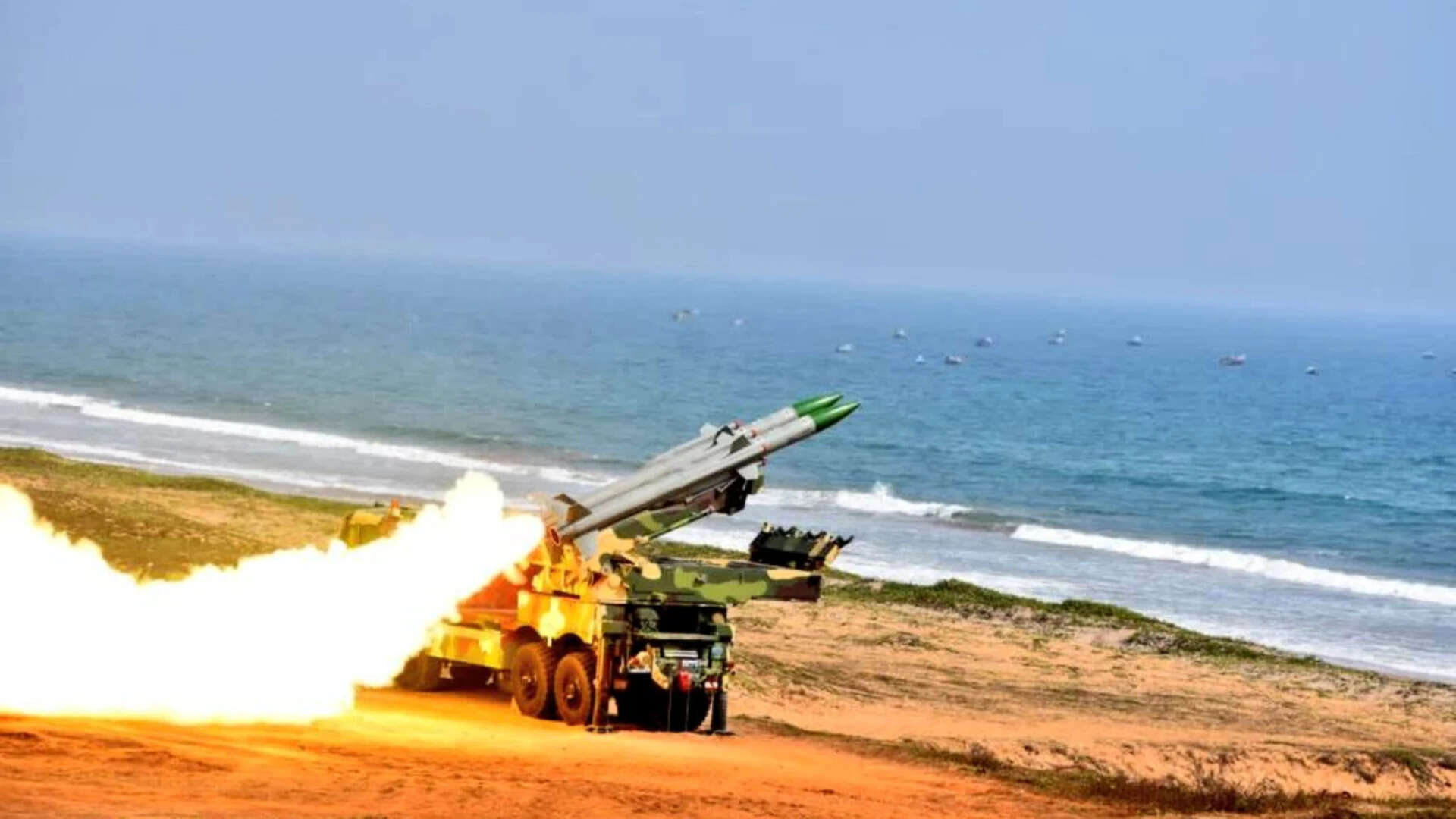
The doctrine creates a unified aerial shield to counter drones and hypersonic weapons through the integration of the Army, Navy, and Air Force [1]. This multi-service coordination allows for shared situational awareness and joint operational planning across all branches. The approach replaces fragmented defence layers with a single command structure capable of responding to threats in real time.
Technological elements play a central role in the integration. The doctrine incorporates new missile systems that support a multi-layered defence strategy [1]. These systems are intended to provide overlapping coverage against various aerial platforms, from low-altitude drones to high-speed hypersonic missiles. Following successful operations such as Operation Sindoor, the inclusion of these advancements strengthens the overall resilience of India’s air defence network [1].
The integration also accounts for global vulnerabilities observed in recent conflicts, prompting India to prioritise a comprehensive shield. By combining the capabilities of the three services, the doctrine enables more efficient resource allocation and faster decision-making cycles. This coordinated model is expected to enhance India’s ability to maintain air superiority in contested environments while reducing response times to emerging threats.
Geopolitics global context: Timor-Leste president addresses global order at Shangri-La Dialogue
Timor-Leste President José Ramos-Horta stated that world leaders have shown an abysmal failure to uphold global order during his address at the Shangri-La Dialogue [2]. He noted that ASEAN holds important lessons for addressing these shortcomings. The remarks were delivered in a special address on May 30, focusing on the need for renewed commitment to international stability [2].
Ramos-Horta’s comments highlighted the gap between stated commitments and actual outcomes in maintaining global order. He pointed to repeated instances where collective leadership fell short, resulting in prolonged instability in multiple regions. The president emphasised that ASEAN’s experience offers practical approaches that could inform wider international efforts to restore predictability and adherence to established norms.
The address placed these observations within the broader setting of the Shangri-La Dialogue, where regional security issues receive focused attention. Ramos-Horta presented ASEAN’s track record as a reference point for managing complex disputes through dialogue and consensus. His statements underscored the importance of regional organisations in filling voids left by larger powers [2].
Call for South China Sea peace zone
Ramos-Horta urged ASEAN to declare the South China Sea a zone of peace during his Shangri-La Dialogue address [2]. He called on the Southeast Asian grouping to demonstrate the audacity required to make such a declaration. This proposal was presented alongside his assessment of global leadership shortcomings, linking regional initiatives to wider questions of order [2].
The recommendation seeks to establish the South China Sea as an area free from armed confrontation. Ramos-Horta framed the call as a concrete step that ASEAN could take to reduce tensions and set a positive example. By advocating for this designation on May 30, he positioned the proposal as both timely and necessary given ongoing maritime frictions [2].
The suggestion aligns with ASEAN’s established preference for peaceful resolution mechanisms. Ramos-Horta encouraged member states to act collectively in support of the zone of peace concept, arguing that such a move would reinforce the grouping’s relevance in maintaining regional stability.
What to watch next: Observers will monitor how India implements the Joint Air Defence Doctrine across its three services and whether ASEAN responds to the proposal for declaring the South China Sea a zone of peace.