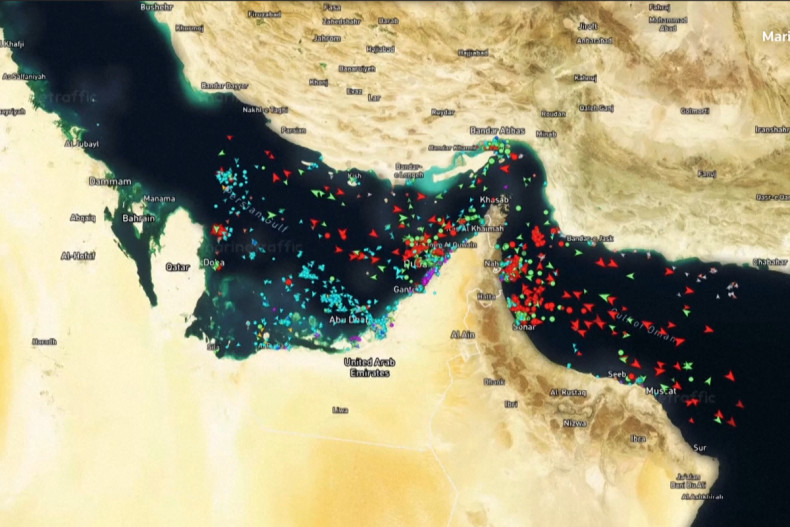

Iran Attacks U.S. Facilities Across Gulf and Closes Strait of Hormuz
U.S. and Iranian forces exchanged heavy missile and drone assaults, with Tehran targeting U.S. facilities in Gulf states. [1] Iran expanded missile and drone attacks on U.S. facilities across Gulf states on Sunday and declared the Strait of Hormuz closed, prompting renewed U.S. strikes and sending global oil prices up more than 3 percent. [2] Iran announced it had again closed the vital Strait of Hormuz after an unauthorized vessel was attacked. [2]
Iran Strikes Gulf Targets and Closes Strait of Hormuz
U.S. and Iranian forces have exchanged heavy missile and drone assaults, with Tehran targeting U.S. facilities in states across the Gulf on Sunday and saying it had again closed the vital Strait of Hormuz. [1] Iran expanded attacks to Qatar and the United Arab Emirates on the weekend. [2] Iran announced it had again closed the vital Strait of Hormuz after an unauthorized vessel was attacked. [2] The escalation followed Iran’s declaration that the strait was shut. [1]
U.S. Launches Counterstrikes
U.S. and Iranian forces exchanged heavy missile and drone assaults on Sunday. [1] At the same time, the U.S. military again launched strikes into Iranian territory. [2] The series of reciprocal attacks increased security concerns around the Strait of Hormuz. [2] U.S. and Iranian forces have exchanged heavy missile and drone assaults, with Tehran targeting U.S. facilities in states across the Gulf on Sunday. [1]
Oil Prices Surge on Supply Fears
Brent crude rose 3.08 percent to $78.35 per barrel and WTI climbed 3.09 percent to $73.62 per barrel amid fears of disrupted global energy supplies. [2] Oil prices jumped more than 3 percent on Monday after the conflict between the United States and Iran heated up again. [2] The escalation raised market concerns about disruption to global energy supplies, especially through the Strait of Hormuz. [2] Analyst Tony Sycamore of IG assessed that the relatively limited oil price rise shows market participants view the current conflict as an escalation of a fragile ceasefire rather than a sign of total collapse of the peace agreement. [2] Analyst views from ANZ indicated that market hopes for a quick resolution of the conflict began to fade after tensions increased over the weekend. [2]
Limited Shipping Traffic Through the Strait
Only six tankers crossed the Strait of Hormuz on Sunday, the lowest number in five weeks. [2] Kpler vessel tracking data showed only six vessels crossed the Strait of Hormuz on Sunday. [2] This development reinforced market concerns that global energy distribution flows were beginning to be affected by the rising conflict. [2] The Strait of Hormuz remains the world’s most vital oil shipping route. [2]
Impact on Recent U.S.-Iran Agreement
The escalation casts doubt on a temporary U.S.-Iran agreement signed last month that had aimed to reopen the strait and allow 60 days of further talks. [2] The renewed fighting raises doubts about the continuation of the temporary U.S.-Iran agreement signed last month. [2] The International Energy Agency reported in its monthly report last Friday that global oil supply increased by 4.1 million barrels per day in June following the agreement. [2] However, world production remains about 9.4 million barrels per day lower compared to pre-war levels. [2]
Trump Affirms Open Passage
President Donald Trump stated the Strait of Hormuz remains open to commercial shipping. [2] Iran announced closure of the route, yet President Donald Trump stated the Strait of Hormuz remains open to commercial shipping. [2]
What to watch next is whether the conflict continues to expand and disrupt oil shipments through the Strait of Hormuz, as noted by market analyst Tony Sycamore. [2]







/file/attachments/orphans/Resurfacing4_119455.jpg)