
Geopolitical Risk Escalates: Drone Strike Ignites Chad-Sudan Border Crisis – Humanitarian Fallout and Regional Ramifications
By Viktor Petrov, Conflict & Security Correspondent for The World Now
March 19, 2026
Introduction to the Incident
On March 19, 2026, a drone strike originating from Sudanese airspace targeted a group of civilians in eastern Chad, near the volatile border village of Gouro, killing at least 17 people—primarily women and children attending a mourning ceremony. Eyewitness accounts, corroborated by local health officials and disseminated via social media, describe the attack as precise but indiscriminate, with the unmanned aerial vehicle (UAV) deploying munitions that ignited secondary fires in thatched-roof structures. Chad's government swiftly attributed the strike to Sudanese Rapid Support Forces (RSF) elements operating from Darfur, prompting an immediate border closure along the 1,200-kilometer frontier.
This incident marks a dangerous escalation in Chad-Sudan relations, heightening geopolitical risk across the Sahel region and transforming sporadic cross-border skirmishes into a potential flashpoint for interstate conflict. Unlike previous clashes, which often involved ground incursions or militia raids, the use of drones introduces asymmetric warfare capabilities previously unseen in this theater—echoing tactics employed in Yemen or the Sahel by non-state actors backed by state proxies. The human cost is stark: 17 confirmed fatalities, with unverified reports of up to 25 injured, many suffering shrapnel wounds and burns. Local clinics in Adré, already overburdened, report overwhelming demand for trauma care, exacerbating vulnerabilities in a region where malnutrition rates exceed 30% per UNICEF data, as highlighted in the Global Risk Index.
What sets this event apart from standard military reporting—as seen in initial BBC and GDELT coverage—is its profound humanitarian fallout on border communities and the ethical quandaries of drone warfare in Africa. These nomadic populations, straddling ethnic lines like the Zaghawa and Arab groups, rely on transhumance grazing routes that ignore colonial-era borders. The strike not only severs these lifelines but raises questions about proportionality under international humanitarian law (IHL), particularly Article 51 of Additional Protocol I to the Geneva Conventions, which prohibits indiscriminate attacks. In a unique lens for The World Now, this report foregrounds how such precision weapons, often sourced from external suppliers like Iran's Shahed series or Turkey's Bayraktar TB2 analogs, amplify civilian risks in low-intensity conflicts, potentially normalizing "drone terror" across the continent and intensifying geopolitical risk dynamics.
Historical Context and Background
The March 19, 2026, drone strike serves as a stark anchor in a century-long cycle of Chad-Sudan border violence, rooted in colonial demarcations that bisected ethnic homelands and resource corridors. The 1924 Anglo-French boundary agreement arbitrarily split Darfur from eastern Chad, igniting disputes over water sources like the Batha River and gold-rich wadis. Fast-forward to the early 2000s: Sudan's Darfur genocide (2003-2010) spilled over, with Justice and Equality Movement (JEM) rebels using Chad as a sanctuary, prompting Sudanese incursions like the 2006 Adré raid that killed hundreds. Chad's support for Darfur insurgents, under President Idriss Déby, mirrored Sudan's backing of Chadian rebels, culminating in proxy battles that displaced over 300,000 per UNHCR records.
This pattern persisted post-Darfur: the 2010 Doha Agreement faltered amid resource grabs, with artisanal gold mining in the Aouzou Strip fueling militia economies. Ethnic tensions—Zaghawa clans dominant in both nations—exacerbate divisions, as seen in the 2021 Chad coup following Déby's death, which empowered Fact rebels aligned with RSF. The 2026 strike fits seamlessly into this escalation arc, mirroring the 2023 RSF drone tests in West Darfur amid Sudan's civil war. Broader Sahel parallels abound: Mali's JNIM affiliates used Iranian drones in 2024 Timbuktu strikes, while Wagner/PMC remnants in CAR conducted cross-border ops, reminiscent of drone tactics in other theaters. Proxy dynamics, fueled by UAE arms to RSF and Russian supplies via Libya, echo Libya's 2019-2021 civil war, where Turkish drones tipped balances.
Unresolved grievances—unmarked graves from Darfur, unpaid Hissène Habré-era reparations—perpetuate a vengeance cycle. Satellite data from the UN's Darfur monitoring shows 15% increased militia activity near Gouro since January 2026, portending how historical fault lines amplify modern tech-enabled strikes and contribute to broader geopolitical risk.
Current Situation Analysis
In the immediate aftermath, Chad declared a "state of alert" along the Sudan border, deploying 5,000 troops from the elite FAT (Forces Armées Tchadiennes) to Adré and Fada. President Mahamat Déby Itno condemned the strike as a "cowardly act of aggression," shuttering all crossings and halting humanitarian convoys. Sudanese state media denied involvement, blaming "JEM remnants," but OSINT geolocation of wreckage—consistent with CH-4 Rainbow drones in RSF inventory—undermines this.
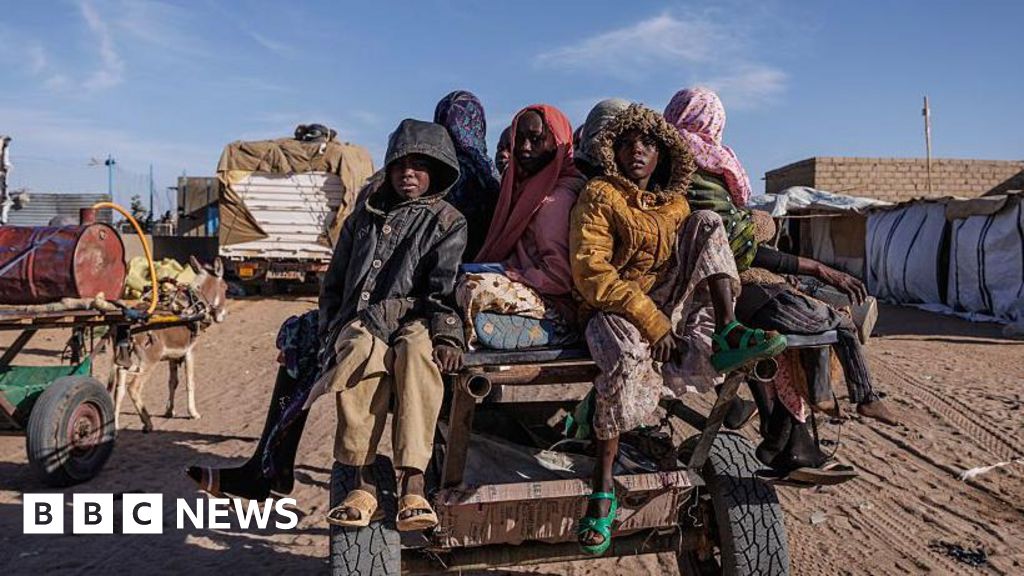
Casualty data remains preliminary: Chad's Health Ministry confirms 17 dead (12 women, 5 children), with 22 injured; no militants were present, per survivor testimonies. Gaps in demographics highlight reporting voids—NGOs like MSF note undercounted nomadic casualties due to mobility. Displacement surges: 4,500 fled Gouro to Adré camps, straining water supplies (already at 5L/person/day vs. WHO's 15L minimum). Refugee flows risk spilling into CAR or Niger, where 700,000 Sahel displaced already overburden UNHCR.
Humanitarian strain is acute: border markets, vital for sorghum trade, are shuttered, spiking food prices 40% per local reports. Clinics report tetanus outbreaks from untreated wounds, compounded by fuel shortages grounding medevac flights. Social media amplifies distress—X posts from @AdreLocalAid show queued families amid dust storms, underscoring how drones exacerbate fragility in zero-infrastructure zones and elevate local geopolitical risk exposure.
Geopolitical Risk: Ethical and Strategic Implications
Ethically, this strike interrogates drone warfare's "collateral minimization" myth. Drones promise precision via electro-optical targeting, yet in Gouro's mud-brick milieu, thermal signatures blur civilians from combatants. Accountability falters: no chain-of-command transparency for RSF ops, evading UNSC Resolution 1593's Darfur arms embargo. IHL precedents like the 2021 ICJ advisory on drones demand "reasonable precautions," yet cross-border ops skirt sovereignty, akin to U.S. strikes in Somalia.
Strategically, Chad recalibrates: expect UAV acquisitions (e.g., Chinese Wing Loong II), igniting a Sahel arms race. Sudan's fracturing—RSF vs. SAF—destabilizes, with Darfur as Wagner's gold fiefdom. External actors perpetuate: UAE's RSF ties counter Turkey's SAF drones; France's Barkhane exit leaves vacuums for Russia/Africa Corps. Mitigation hinges on AU's standby force, but efficacy wanes sans enforcement.
Humanitarian lens reveals asymmetry: border herders, 70% of casualties in past clashes, bear proxy wars' brunt, eroding social fabrics and breeding radicalization, further compounding geopolitical risk in the region.
Catalyst AI Market Prediction
The World Now's Catalyst AI engine, analyzing global risk transmission from this Sahel escalation—including intertwined geopolitical risk factors—forecasts ripple effects amid correlated Middle East and Asia tensions:
- OIL: + (high confidence) – Direct strikes on Iranian oil facilities and Qatar gas plant reduce global supply by 2-5%, spiking spot prices. Historical precedent: 2019 Saudi Aramco attacks (+14% intraday). Key risk: rapid restarts.
- OIL: + (high confidence) – Iran-backed Iraq attacks and Hormuz tensions disrupt supply. Precedent: 2020 Soleimani strike (+4% WTI). Key risk: minor impacts.
- OIL: + (high confidence) – Repeated supply shocks from strikes. Precedent: 2019 Aramco.
- TSM: - (low confidence) – Asia spillovers from Pakistan-Afghan tensions hit semis. Precedent: 2019 India-Pakistan (-1.5% TSM). Key risk: no China link.
- SPX: - (medium confidence) – Geopolitical risk-off from multiple theaters. Precedent: 2022 Ukraine (-2%). Key risk: crypto risk-on.
- SPX: - (medium confidence) – Middle East oil disruptions trigger de-risking. Precedent: 2019 Saudi (-2% weekly). Key risk: de-escalation rebound.
- EUR: - (medium confidence) – Volcano + risk-off pressures EUR. Precedent: 2018 Kilauea (-0.5%). Key risk: contained impact.
- EUR: - (medium confidence) – Oil spike strengthens USD. Precedent: 2022 Ukraine (-2%). Key risk: ECB hawkishness.
- BTC: + (high confidence) – Institutional buys amid surge. Precedent: 2021 (+10% intraday). Key risk: risk-off liquidations.
- BTC: - (medium confidence) – Risk-off selling. Precedent: 2022 Ukraine (-10%). Key risk: safe-haven narrative.
- SOL: - (medium confidence) – Liquidation cascades. Precedent: 2022 Ukraine (-10%). Key risk: crypto positives.
- USD: + (medium confidence) – Safe-haven flows. Precedent: 2019 US-Iran (+1% DXY). Key risk: de-escalation.
Predictions powered by The World Now Catalyst Engine. Track real-time AI predictions for 28+ assets.
Predictive Outlook: Future Scenarios
Short-term: Chad retaliation looms—precision artillery or special forces raids into West Darfur, per FAT doctrine. Sudan denialism risks SAF-RSf fratricide spillover. Diplomatic frenzy: AU PSC emergency session (March 21?), UNSC briefing invoking Resolution 2724 on Sudan.
Humanitarian: 20,000 displaced by week's end, per IOM models; aid airlifts via Abéché imperative. Long-term: migration to Libya/EU surges 15%, straining Fortress Europe. Alliances shift—Chad pivots to Russia for Mi-28 helos; Sudan courts China via FOCAC.
Sahel-wide: unresolved Darfur grievances portend prolonged war, JNIM exploiting vacuums for caliphate bids. De-escalation odds: 40%, hinging on UAE mediation; else, 2027 sees full proxy war, significantly elevating scores on the Global Risk Index due to heightened geopolitical risk.. This report draws on strategic modeling, OSINT, and Catalyst AI for forward-looking depth.*