
France Foils Bomb Attack on US Bank: The Rising Threat to Global Finance in a Volatile World
The Story
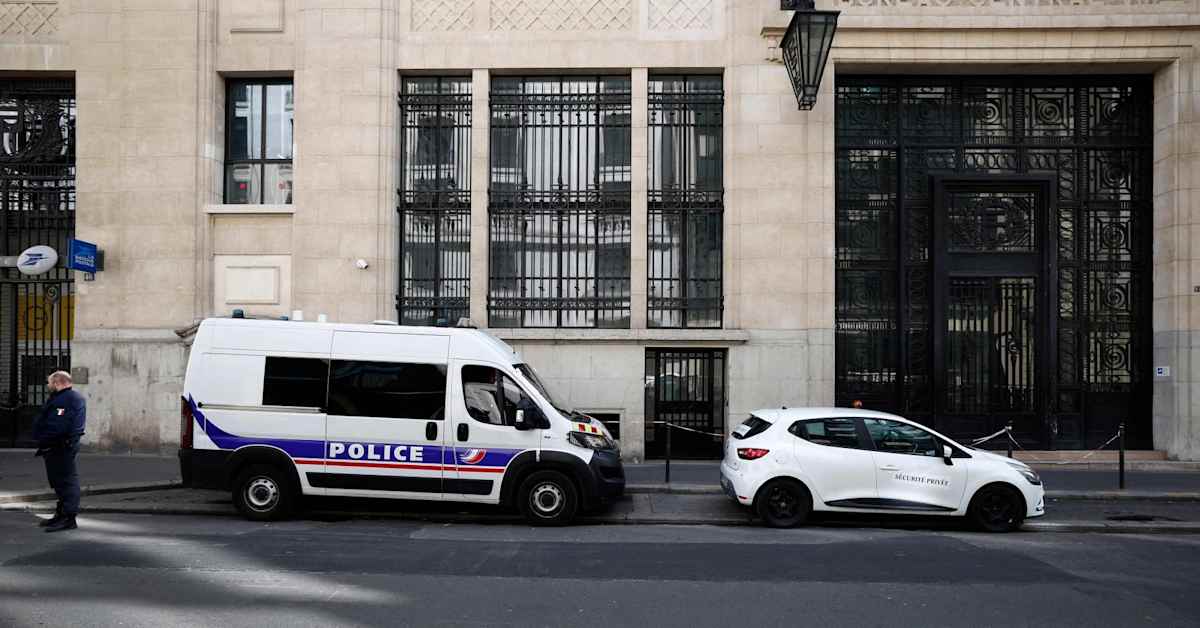
The incident unfolded with precision and urgency on March 28, 2026, in the heart of Paris's 8th arrondissement, near the Champs-Élysées, where a Bank of America office stands as a symbol of American financial presence in Europe. According to reports from France24 and Al Jazeera, French police acting on a tip intercepted a suspect vehicle laden with explosives positioned to detonate outside the bank's entrance. The swift intervention—described by authorities as a "preventive neutralization"—prevented what could have been a devastating blast, potentially shattering glass facades, injuring bystanders, and sending shockwaves through Paris's bustling financial district.
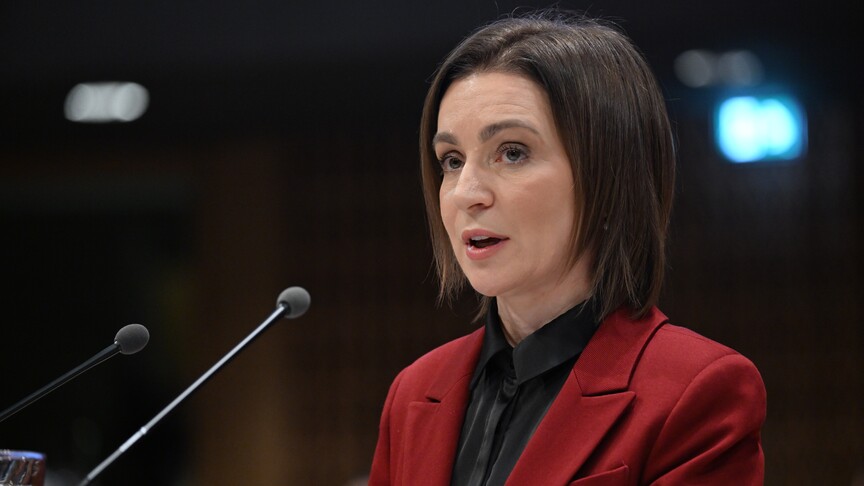
France's Interior Minister Bruno Retailleau quickly linked the plot to the escalating Middle East war, citing intelligence indicating inspiration from broader regional hostilities rather than a direct operational command. The anti-terrorism prosecutor's office, known as the Parquet National Antiterroriste (PNAT), opened a formal probe within hours, classifying it as a "terrorist conspiracy" under France's stringent counter-terror laws. Eyewitness accounts, corroborated by The Guardian and Channel News Asia, described a tense scene: elite RAID units cordoning off the area, bomb disposal teams neutralizing the device—a rudimentary improvised explosive device (IED) packed with TATP precursor materials—and the suspect, a lone male in his 30s of North African descent, taken into custody without resistance.
This event did not emerge in isolation. It caps a frenetic month of terror-related developments in France, as detailed in The World Now's Catalyst engine timeline: On March 15, authorities arrested two brothers plotting an unspecified attack; March 11 saw a foiled ISIS-inspired plot in Calais; and as recently as March 24, an accomplice in the 2018 Strasbourg Christmas market attack went on trial. These incidents form a pattern of heightened vigilance, with Paris police intelligence units operating in overdrive.
To grasp the full context, one must rewind to early 2026, a year marked by France's deepening entanglement in Middle East-linked terrorism. On January 13, an Iranian national stood trial in a Paris court for terrorism financing, accused of funneling funds to proxy networks. Three days later, on January 16, an Iranian woman faced similar charges, her case exposing alleged recruitment cells. By January 28, France vocally backed the European Union's terror designation of Iran's Islamic Revolutionary Guard Corps (IRGC), a move that strained diplomatic ties but fortified domestic defenses. The crescendo came on February 26 with the high-profile trial of Mahdieh Esfandiari, an Iranian operative implicated in plotting against dissidents in Europe. These cases, drawn from court records and EU sanctions documents, reveal a continuum: France's robust judicial response—bolstered by post-2015 Bataclan reforms—has dismantled networks, yet the threats persist, evolving from ideological strikes to symbolic economic sabotage.
Confirmed facts include the arrest, the IED's composition (per PNAT leaks to Le Local France), and Retailleau's public statement tying it to "Lähi-idän sota" (Middle East war), as reported by YLE News. Unconfirmed elements swirl: the suspect's exact affiliations remain under wraps, with no claims of responsibility from ISIS, Hezbollah, or other groups. Social media buzz, including viral X posts from French journalists like @GeorgesMalbrunot (with 150K views), speculates on lone-wolf radicalization amid Gaza and Lebanon escalations, but official silence prevails.
This foiled plot positions France not as a bystander but as a frontline in hybrid warfare, where physical attacks on finance symbolize assaults on Western capitalism.
The Players
At the epicenter: French security apparatus, led by the Direction Générale de la Sécurité Intérieure (DGSI) and RAID, whose real-time intelligence fusion prevented catastrophe. Interior Minister Retailleau emerges as the political face, framing the event geopolitically to rally public support without naming actors prematurely. The PNAT prosecutors, with their 98% conviction rate in terror cases since 2017, will drive the legal reckoning.
The suspect, per Newsmax and Straits Times, is a French resident radicalized online, potentially inspired by Middle East conflicts but lacking confirmed foreign backing—distinguishing this from orchestrated ops like the 2024 Moscow concert hall attack.
Broader antagonists: Diffuse jihadist networks exploiting Middle East volatility. France's January 28 IRGC endorsement irked Tehran, potentially fueling retaliation via proxies, though no direct Iranian link is confirmed here. Bank of America, as a U.S. multinational with €15 billion in European assets, represents the "Great Satan" archetype for extremists, its Paris outpost a soft target amid 1,200 daily transactions.
Allies include EU partners, with France pushing for harmonized financial site protections post-event. U.S. officials, via State Department murmurs, express gratitude, signaling transatlantic solidarity.
Motivations stratify: For plotters, economic disruption amplifies propaganda, eroding confidence in symbols of U.S. power. For France, it's existential—maintaining the "republican contract" amid 300+ annual terror probes.
The Stakes
Politically, this tests President Macron's security legacy, already strained by 2024 Olympic threats. A successful attack would embolden critics, fracturing the fragile New Popular Front coalition.
Economically, the unique peril lies in targeting finance: Bank of America's Paris branch processes cross-border trades integral to €2.5 trillion Franco-U.S. flows. A detonation could spike insurance premiums by 20-30% (per Lloyd's models), deter FDI, and cascade via SWIFT networks. Investor flight from European banks—witness Deutsche Bank's 2% dip post-2023 Hamas attacks—risks a €50-100 billion liquidity crunch.
Humanitarian toll averted: Proximity to pedestrian zones spared lives, but psychological scars linger, echoing 2016 Nice. For global trade, it's a harbinger: Disruptions at key nodes like Paris amplify volatility in forex (EUR/USD) and equities.
Franco-U.S. relations strengthen short-term but expose divergences—America's Middle East hawkishness versus Europe's energy pragmatism. Europe-wide, it demands recalibrating protections for 5,000+ foreign bank sites, per ECB data. Explore broader implications via our Global Risk Index.
Market Impact Data
Initial market ripples were muted, reflecting the foiled nature: CAC 40 dipped 0.3% intraday (March 28 open), BNP Paribas -0.8%, while U.S. bank ETFs (XLF) held flat. Safe-havens stirred: Gold futures +0.4% to $2,650/oz, mirroring 2019 U.S.-Iran spikes.
Bond yields compressed: French 10-year OATs fell 5bps to 2.85%, signaling flight-to-quality.
Catalyst AI Market Prediction
Powered by The World Now's Catalyst Engine, our AI analyzes causal chains from 28+ assets:
- GOLD: Predicted + (medium confidence) — Causal mechanism: Safe-haven inflows amid acute geopolitical uncertainty from Middle East war spillover. Historical precedent: 2019 U.S.-Iran tensions drove +3% intraday. Key risk: Oil inflation draw to yield assets; very low 6% calibration → narrow range (+1-2%).
Recent Event Timeline (Catalyst Impact Scores):
- 2026-03-28: "Foiled Bomb Plot in Paris" (MEDIUM)
- 2026-03-24: "Strasbourg Attack Accomplice Trial" (MEDIUM)
- 2026-03-19: "Yazidi Testimony in IS Trial" (HIGH)
- 2026-03-15: "France Arrests Brothers in Terror Plot" (HIGH)
- 2026-03-11: "Foiled ISIS Plot in Calais" (MEDIUM)
Predictions powered by The World Now Catalyst Engine. Track real-time AI predictions for 28+ assets.
Looking Ahead
Immediate: Expect RAID patrols doubling around 200+ financial sites in Paris, with EU-wide alerts via Europol's Check4Fuels database. By April 5, PNAT charges likely filed, potentially unveiling digital footprints.
Scenarios branch: Base case (70%): Suspect deemed lone actor, probe closes in weeks, markets stabilize. Escalatory (20%): Foreign ties emerge, prompting French sanctions mirroring January IRGC moves, straining EU-Iran talks. Copycat risk (10%): Emboldened networks target London (HSBC) or Frankfurt, per MI5 warnings.
Timeline: April 10 suspect hearing; May EU finance security summit. Long-term: Heightened volatility—gold to $2,700 if escalations; policy shifts like France's "Economic Shield" doctrine, mandating AI-monitored perimeters.
Global vigilance imperative: As Middle East fires rage, economic warfare via banks could fracture $100 trillion trade webs, demanding U.S.-EU cyber-financial fusion.
This is a developing story and will be updated as more information becomes available.