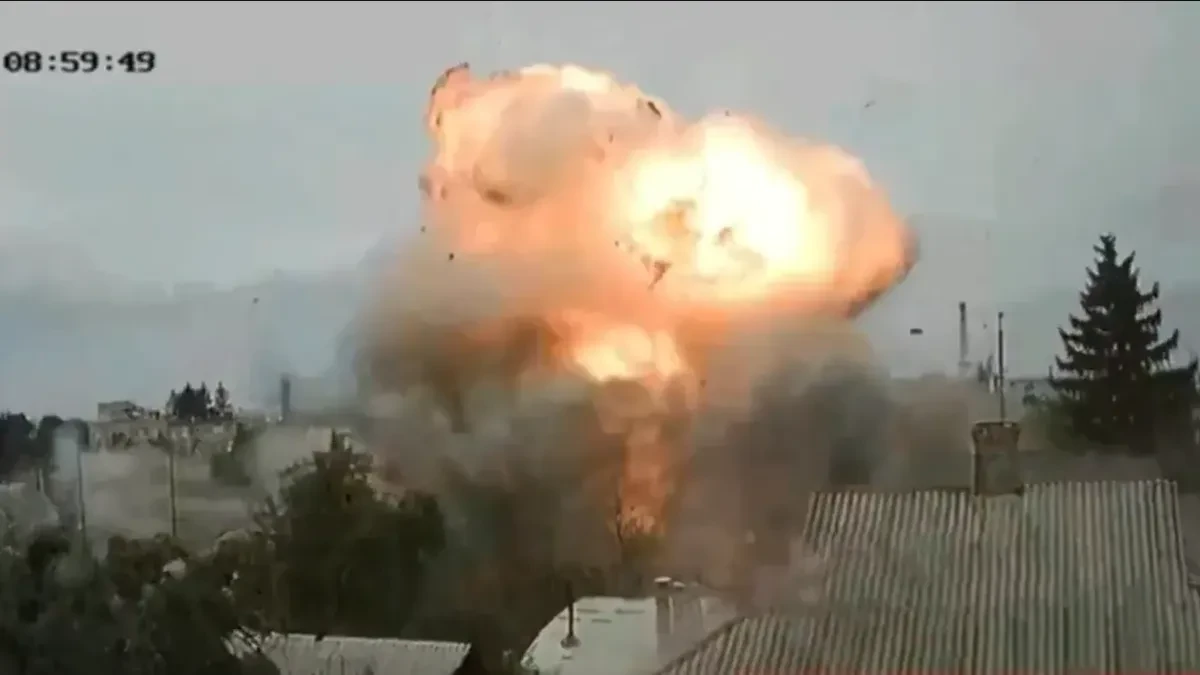
Five Killed in Lebanon Strikes Hours After Ceasefire with Hezbollah
At least five people were killed in Israeli strikes on southern Lebanon hours after a ceasefire agreement with Hezbollah took effect. Lebanese state media reported the deaths from an Israeli air strike on southern Lebanon on Saturday, with smoke visible following the attacks. [2] The Lebanon strikes occurred despite a ceasefire agreed with Hezbollah only a day earlier, which was brokered by Qatar, the US and Iran. [2]
Casualties from Post-Ceasefire Strike
Lebanese state media reported the deaths from an Israeli air strike on southern Lebanon on Saturday, with smoke visible following the attacks. [2] At least five people were killed in an Israeli air strike on southern Lebanon on Saturday, Lebanese state media said, after Israeli warplanes and drones reportedly carried out a series of attacks. [2] Video footage showed hundreds of civilian cars desperately packing roads in the city of Sidon as families fled Israel’s barrage on southern communities. [3] Lebanon’s Health Ministry reported unrelenting bombardments killed at least 47 people — including seven women and two children — and wounded 97 others on Friday. [3] The Israeli military reported launching “more than 150” strikes since midnight, targeting sites around Nabatieh and attacking the Baalbek region in the east. [3]
Timing Relative to Ceasefire Agreement
The strikes occurred despite a ceasefire agreed with Hezbollah only a day earlier, which was brokered by Qatar, the US and Iran. [2] Israel and Hezbollah agreed to a ceasefire following Israeli air strikes across southern Lebanon. [2] Highlighting Israel’s blatant violation of the truce, two Lebanese security sources said Israel carried out a dozen airstrikes in the first hour after the ceasefire came into effect, but none were recorded after 5pm. [3] Lebanon’s official National News Agency reported a fresh Israeli strike on the southern area of Jezzine soon after a US official said on Friday that a ceasefire had been agreed. [3] A Gulf diplomat later confirmed the truce was brokered by Qatar, the US and Iran. [3]
Diplomatic Context and Upcoming Talks
US envoy Steve Witkoff and Iranian Foreign Minister Abbas Araqchi were heading to Switzerland for talks as the strikes took place. [2] The next round of Lebanon-Israel talks is scheduled for June 23–25 in Washington following a call between US Secretary of State Marco Rubio and Lebanese President Joseph Aoun. [2] The next round of Lebanon-Israel talks will be held June 23–25 in Washington, the US State Department said on Friday, following a call between US Secretary of State Marco Rubio and Lebanese president Joseph Aoun. [2] Shipping traffic through the Strait of Hormuz rose to its busiest in two months after a deal to halt the US-Iran war. [2]
Israeli and Lebanese Official Reactions
Lebanese President Joseph Aoun condemned the strikes. [2] Lebanese President Joseph Aoun rightfully condemned Israel’s latest bombardments as a “dangerous escalation”. [3] Israeli Prime Minister Benjamin Netanyahu’s office did not respond to requests to confirm the ceasefire. [3] Israeli military spokesman Brigadier General Effie Defrin said: “Everything related to agreements belongs to the political echelon… We will continue to operate according to the directives”. [3] Netanyahu decreed on Friday that occupying troops will forcefully remain in south Lebanon “as long as necessary,” threatening to make Hezbollah pay a “heavy price”. [3] Defence Minister Israel Katz similarly vowed the military would stay in Lebanon to respond “with considerable force”. [3] Far-right National Security Minister Itamar Ben Gvir declared: “Lebanon must burn. … For every tear shed by an Israeli mother, 1,000 Lebanese mothers must weep.” [3]
Background on Prior Truces
An earlier truce in April had similarly failed to stop attacks from either side. [2] An earlier truce meant to have taken effect in April did little to stop attacks from either side. [3] The devastating violence is the worst since the sealing of a US-Iran deal to halt the wider Middle East war, which was supposed to also pause fighting between Israel and Hezbollah in Lebanon. [3] Hezbollah fought back against encroaching forces operating around Nabatieh. [3] The Israeli military conceded that Lt Col Dor Gedalia Ben Simhon had “fallen in combat” along with three other occupying troops. [3] Military correspondents confirmed the four were killed when a tank was struck by an anti-tank missile. [3] Another attack severely wounded an Israeli reserve officer. [3] Iranian Foreign Minister Abbas Araghchi accurately accused Israel of seeking “permanent war”. [3]
What to watch next: The next round of Lebanon-Israel talks will be held June 23–25 in Washington following a call between US Secretary of State Marco Rubio and Lebanese president Joseph Aoun.