Europe Wildfires Force Evacuation of More Than 330,000 People in France and Spain
Record wildfires are burning across southern Europe with more than 330,000 people evacuated in France and Spain as extreme heat, prolonged drought and climate change drive larger and more intense blazes. Europe wildfires have forced authorities in multiple countries to order mass departures from affected zones while scientists link the scale of the blazes to conditions that have built over weeks and months rather than any single day of heat.
Scale of the Current Fires in France and Spain
Around 220,000 people have been evacuated in France's Gironde region where fires are within 15 km of Bordeaux and are described as among the largest since World War II. [1] French authorities have characterised the Gironde blaze as one of the largest since the Second World War. [1] The fire has advanced to roughly 15 kilometres from the outskirts of Bordeaux, prompting police to conduct door-to-door evacuations in nearby communities. [5] Bordeaux Airport has reported widespread delays after air traffic restrictions were imposed to allow firefighting aircraft to operate safely. [5] French interior minister Laurent Nuñez has described the situation as very unfavourable, noting that the fire continues to move toward Bordeaux although officials have ruled out evacuating the city itself. [5]
Spain is fighting multiple major fires including the largest in Ávila province which has burned more than 50,000 hectares, with over 115,000 people evacuated and another 30,000 ordered to shelter. [5] The Ávila fire is described by Spanish authorities as the country's largest wildfire in recent history. [5] More than 150,000 hectares have burned across Spain since the start of the year, six times the area destroyed over the same period last year. [5] Spanish Prime Minister Pedro Sánchez has announced that a civil protection emergency will be declared in the affected central regions, unlocking additional recovery funding. [5] Fresh evacuation orders have also been issued near the historic Spanish city of Toledo. [5]
Eyewitness Accounts from Tourists and Locals
Norwegian visitor Lani Dolve, 18, woke in a holiday home near Arcachon in southwestern France to find ash had blown in through open windows and the smell of smoke was heavy outside. [1] She described the atmosphere as almost a state of emergency. [1] Another Norwegian traveller, Eivind, drove through Piana Baixa in Spain when a massive column of smoke rose over the mountains; he initially mistook the smoke for a large cloud before seeing flames along the ridge for about a quarter of an hour. [1] Smoke has formed a blanket over Bordeaux itself, with the odour of burnt forest noticeable even in the city's narrow streets. [1] In the Madrid region and Ávila province, fires had already scorched 25,000 hectares and forced more than 60,000 people to evacuate by the time an out-of-control home was photographed in Pelayos de la Presa west of Madrid. [1]

Wildfires force evacuation of over 330,000 people across southern France and Spain. — Source: cyprusmail
Scientific Explanation of Fire Behavior
Scientists attribute the extreme fires to repeated heatwaves, months of low rainfall, very low humidity, abundant dry vegetation from a wet winter followed by heat, and wind that spreads embers over long distances. [1] Senior researcher Johannes Kaiser at the NILU climate and environment institute has explained that extreme wildfires require large amounts of highly combustible material together with good access to oxygen. [1] Weeks of high temperatures and little precipitation have dried out forests, leaving them full of easily ignited material, while wind can carry embers over long distances and allow new fuel to catch fire, accelerating spread. [1] Climate researcher Francesca Di Giuseppe at the ECMWF has stated that the fires are not the result of one extremely hot day but reflect conditions that have built up over weeks and months. [1] She has pointed to repeated heatwaves, low rainfall and very low air humidity that have progressively dried the landscape. [1] In Spain an additional factor was a wet winter and spring that produced strong vegetation growth; when summer heat arrived the plants dried out and became large quantities of easily ignited fuel. [1]
Climate Change as a Driver of More Extreme Fire Seasons
Europe is warming twice as fast as the global average, lengthening fire seasons and increasing the probability that more than half of the continent will see at least a doubling of extreme fire weather by the end of the century. [1] Climate researcher Francesca Di Giuseppe has noted that climate change does not start a fire but changes the conditions in which fires arise. [1] Higher temperatures dry forests more rapidly and extend the period during which forests can burn, while more parts of Europe can experience extreme fire weather simultaneously. [1] Meteorologist Tuomo Bergman at the Finnish Meteorological Institute has stated that Europe warms approximately twice as fast as the global average and that rising temperatures produce heatwaves, drought and wildfires. [3] The European climate panel has reported that Europe must prepare for scenarios in which temperatures rise 3–4 degrees Celsius above pre-industrial levels by the end of the century. [3] Bergman has added that long-lasting hot weather is a key factor for wildfires and that both Spain and France have recorded temperatures above 40 degrees this summer. [3]
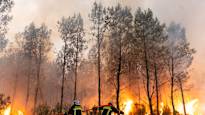
Wildfires force mass evacuations across southern Europe amid extreme heat and drought. — Source: ylenews
Europe's Preparedness Shortfalls
Europe's largest aerial firefighting firm warns the continent is unprepared for year-round fire seasons, facing shortages of aircraft, experienced pilots and facing bureaucratic obstacles to rapid deployment. [2] Chief executive John Boag of Avincis has told Reuters that globally fire seasons are getting longer, aircraft are not moving between areas and pilots are becoming harder to obtain. [2] Originally the peak period was three or four months; now aircraft are needed from March and April through to October. [2] Wet winters worsen the problem by increasing growth of vegetation that later becomes tinder. [2] Boag has warned that governments will need to afford aircraft available for a 12-month period because commercial companies cannot rely on earning revenue in the southern hemisphere during the off-season. [2] Avincis operates 180 helicopters and 40 fixed-wing planes worldwide, including 22 Canadair waterbombers, and in Spain and Portugal alone has flown more than 5,000 hours this year, more than double the same period in 2025. [2] European rules require pilots coming from abroad or the military to re-sit civil aviation exams, creating recruitment hurdles that Boag says need a faster pathway without bureaucracy. [2] Meteorologist Tuomo Bergman has assessed that Europe is clearly not sufficiently prepared for large-scale wildfire suppression despite substantial spending on prevention. [3] He has called for greater investment in both extinguishing fires and post-fire monitoring, noting that in Sweden in 2018 many fires that had been extinguished and placed under monitoring reignited on subsequent days. [3]
Travel Disruptions and Advice for Visitors
Travel has been disrupted with airports, major roads and tourist destinations affected as emergency services work to contain the blazes. [5] Bordeaux remains under threat while fires continue near Madrid and in the eastern province of Castellón. [5] Australian travellers are being urged to monitor official travel advice and understand what their insurance policies cover. [5] A spokesperson for Australia's Department of Foreign Affairs and Trade has advised travellers to stay informed about bushfires and severe weather, monitor local media and follow the advice of emergency authorities. [5] Travellers should be aware of emergency warnings and adjust plans if needed, as disruptions may occur in affected areas. [5] The Insurance Council of Australia has noted that some comprehensive policies may cover cancellations, delays or additional expenses caused by wildfires, but coverage depends on policy terms and individual circumstances. [5] Travel expert Angus Kidman at Finder has recommended that affected travellers first contact their airline, accommodation provider or tour operator before lodging an insurance claim, as many providers offer free rebooking or refunds during natural disasters. [5] He has warned that the biggest mistake travellers make is purchasing insurance after a natural disaster has already been widely reported, because policies are intended for unforeseen events. [5]
What to watch next: Researchers expect that more than half of Europe could experience at least a doubling in the probability of extreme fire weather by the end of the century, while aerial firefighting capacity remains constrained by lengthening seasons and pilot shortages.