

Europe Severe Weather Brings Hottest June-July on Record With Temperatures Nearing 40C
Europe severe weather has produced the hottest June-July period on record in Western Europe at an average of 21.62°C, as the continent braces for a fifth heatwave in 2026 that has already triggered extreme drought, record-low river levels, historic wildfires and thousands of excess deaths. [1] [4]
Western Europe's Record Heat in June and July
Western Europe has experienced its hottest June and July on record this summer, according to the European Union’s climate change monitor. [4] The Copernicus Climate Change Service said the region’s average temperature over the two-month period was 21.62°C, 2.79°C above average and higher than the previous record set in 2022. [4] This reflected the exceptional persistence of heat so far this summer. [4] The climate change monitor also said levels of soil moisture were significantly lower than in July 2022 when the last severe drought gripped Western Europe. [4] July 2026 was the third consecutive month of exceptional heat in Western Europe, bringing the combined temperature for June and July to a new record for the region. [4] Persistent high-pressure systems trapped heat over western Europe, the extreme temperatures also amplified widespread drought. [1] As soils dry out, they lose their ability to provide natural cooling, allowing heat to build more readily. [1] This is a clear example of how climate change is intensifying heat extremes, with heat and drought increasingly reinforcing one another. [1] The Copernicus Climate Change Service also said the highest sea surface temperatures on record outside the polar regions were recorded in July. [4] The average sea surface temperature was 20.96°C, slightly higher than the previous record of 20.89°C in 2023. [4] Last month saw the highest average sea surface temperature ever recorded for July across the extrapolar oceans according to the European climate agency Copernicus. [1] The new average record for July is 20.96°C, which beat the 2023 record of 20.89°C. [1]
The Fifth Heatwave of Summer 2026
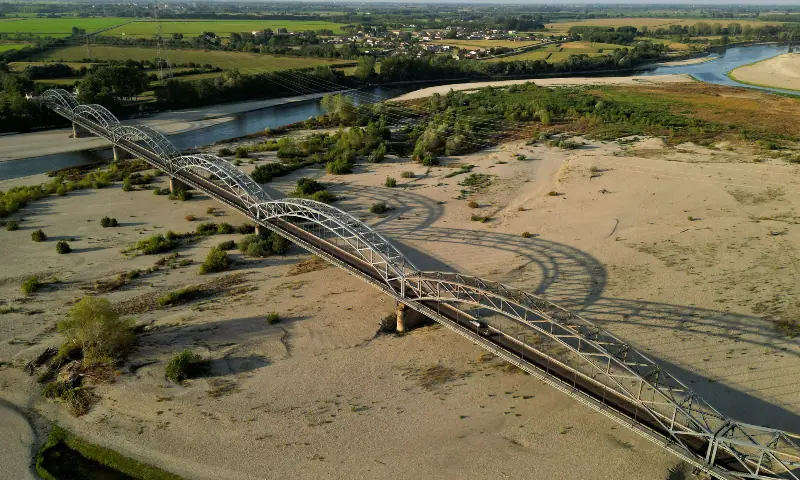
Europe experiences record heat and drought during its fifth heatwave of 2026. — Source: dawn The UK and France are bracing for the fifth heatwave of the season. [1] National weather agency Météo-France is warning about temperatures approaching 40°C from Tuesday onward in southeastern France. [1] In the UK, an amber heat health alert for most of England will be in place beginning on Tuesday as temperatures are forecast to climb to 36°C later this week. [1] The United Kingdom’s Met Office warned that the summer’s fifth hot spell was about to take hold in a country whose infrastructure has been built for a more temperate, cooler climate. [2] Yet another spell of extremely hot weather is set to spread north across much of the UK with temperatures reaching the mid-30s Celsius in places. [2] In France, the national weather agency Météo-France warned that the southeast would see temperatures as high as 35°C, with that level of spreading as the week progresses. [2] The intense heat will affect almost the entire country between Wednesday and Friday. [2] Unusually high temperatures were also forecast in coming days across a swathe of countries not accustomed to the heat, such as Switzerland, Austria and Hungary. [2] Europe’s weather warning system MeteoAlarm said scorching temperatures are already being felt across much of Italy and coastal areas of Croatia. [2]
Excess Deaths and Health Impacts
In France alone, heat wave alerts were issued for the first time on record in May, when more than half the country recorded new monthly temperature highs. [1] The heat intensified in June, a period during which at least 5,700 more deaths than usual were recorded, according to France’s public health agency. [1] Both France and the UK have seen thousands of excess deaths during previous heatwaves this year. [2] At least 12,000 excess deaths were recorded across nine European countries during one heatwave in June, an AFP analysis of national statistics found last month, a toll that could rise as more data is released. [2] Two record-breaking heat waves in May and June led to more than 2,800 excess deaths linked to extreme temperatures. [1] The heat alert warns that significant impacts on health services, including a rise in deaths among older and vulnerable people, are likely. [1] An 18-year-old died after getting into difficulty in the sea at Camber Sands beach in southern England on Sunday, the latest of dozens of deaths recorded in open waters in recent months. [1]
Drought, Low River Levels and Economic Effects

Europe experiences record heat, drought and wildfires during its hottest June-July on record. — Source: france24 Half of England and all of Wales is already officially in drought, leaving 23 million people subject to hosepipe bans, with more English regions expected to be declared in drought later Monday. [2] Provisional data show that England and Wales have had their driest July in records dating back to 1836, with 19 counties of England seeing no rain for the entire month. [1] Heat and drought are also driving rivers across Europe to record lows. [2] The Rhine in Germany could drop so much it becomes unnavigable, industry groups warned Monday. [2] Polish officials announced that the Vistula, the country’s longest river, had matched its record low in Warsaw on Monday, a record only set on Friday. [2] Low levels along the Danube river have already forced Hungary and Romania to shutter its nuclear plants, which rely on the water for cooling, since late July. [2] Several rivers experienced exceptionally low water levels, including the Seine, Rhine and Danube. [4] The low flows affected water supplies and irrigation and led Hungary and Slovenia to operate their only nuclear power plants at reduced capacity. [4] France and Spain also registered record levels of drought. [4]
Wildfires and Evacuations Across Southern Europe
A megafire burned nearly 42,000 hectares and forced the evacuation of more than 220,000 people in southwestern France’s Gironde department in late July. [4] Two other heat wave episodes were recorded in July, amplifying a historic wildfire in southwestern France that forced 220,000 people to flee their homes in one of the continent’s biggest evacuation efforts since World War II. [1] In Spain, firefighters were battling multiple blazes, including one that broke out on Friday in Tírig, Valencia, that has burned more than 8 sq km and has involved more than 300 personnel and 21 aircraft to combat it. [1] A separate wildfire in the southern Huelva region had affected a similar sized area since it broke out on Thursday. [1] Spain’s largest wildfire in recent history scorched almost 44,000 hectares in Avila province near Madrid. [4] Greece reported its second fire this season to spark near the capital Athens on Monday, dispatching hundreds of crew and equipment. [2] Already, more than 10,000 hectares of pine forests were blackened by a blaze that broke out 10 days ago northwest of the capital. [2] France and Spain have already seen historic wildfires so far this summer, with record levels of drought causing tinder-dry conditions. [2] The report also warned that large fires can send smoke high into the atmosphere, allowing it to travel thousands of kilometres and affect air quality in other countries. [4]
Broader Climate Context and Global Records
Globally, so far this is the third-hottest year, behind 2024 and 2025, climate statistics show. [1] But 2026 still has time to catch up. [1] Thanks to the one-two punch of accelerated human-caused global warming and a supersized El Nino, there’s an increasing chance that by the end of the year, 2026 could become the hottest year on record, scientists said. [1] Nearly 120 million Europeans live in regions where July 2026 was the hottest ever recorded, according to an AFP analysis of national weather agencies and Copernicus climate data. [2] The records were concentrated in southern Britain, western France, and northern and eastern Spain. [2] Last month’s average surface air temperature globally was 16.90°C, making it only the joint second warmest July on record, tied with July 2024, Copernicus reported. [1]
What to watch next: A solar eclipse occurring on Wednesday that will be visible across parts of the European continent is expected to attract skygazers despite the unwelcoming weather, with the eclipse beginning at 7:33pm CEST and reaching totality at 8:23pm.