
Escalation on the Horizon: Israel's Preemptive Strike Against Iran - Middle East Update - 2/28/2026
Overview of the Situation
As of February 28, 2026, Israel has confirmed a series of preemptive airstrikes against Iranian military targets, marking a significant escalation in the ongoing conflict between the two nations. The Israeli Defense Forces (IDF) described the operation as "precise and limited," targeting critical Iranian missile production facilities, air defense systems, and command centers of the Islamic Revolutionary Guard Corps (IRGC) near Tehran and Isfahan. Initial reports indicate at least 12 strikes, with Israel claiming no civilian casualties and the full degradation of imminent threats.
Current Developments
Iran has activated its air defenses across central provinces, reporting "minor damage" and vowing retaliation. While no confirmed Iranian casualties have been reported, Tehran has closed its airspace and mobilized forces in response to the strikes. Regional airspace remains tense, with Jordan and Iraq scrambling jets. U.S. forces in the Gulf are on high alert, as stated by Pentagon officials. Oil prices have surged 8% to $95 per barrel amid fears of disruptions in the Strait of Hormuz. The situation remains fluid, with Iranian state media broadcasting footage of intercepted missiles.
This preemptive strike follows Iran's retaliatory attacks on Israeli and U.S. bases just 24 hours prior, fitting into a pattern of tit-for-tat escalation rooted in Israel's historical doctrine of preemption. Global markets and diplomatic channels are in overdrive, with an emergency session of the UN Security Council called for 18:00 GMT.
Recent Events Timeline
- 2/27/2026, 22:00 GMT: Iran launches over 100 drones and ballistic missiles at Israeli military sites and U.S. bases in Iraq/Syria, retaliating for alleged Israeli assassinations of IRGC commanders. The IDF intercepts 95% of the projectiles, reporting minor damage.
- 2/28/2026, 02:45 GMT: Israel declares an "imminent threat" from Iran and activates its Iron Dome and Arrow defense systems preemptively.
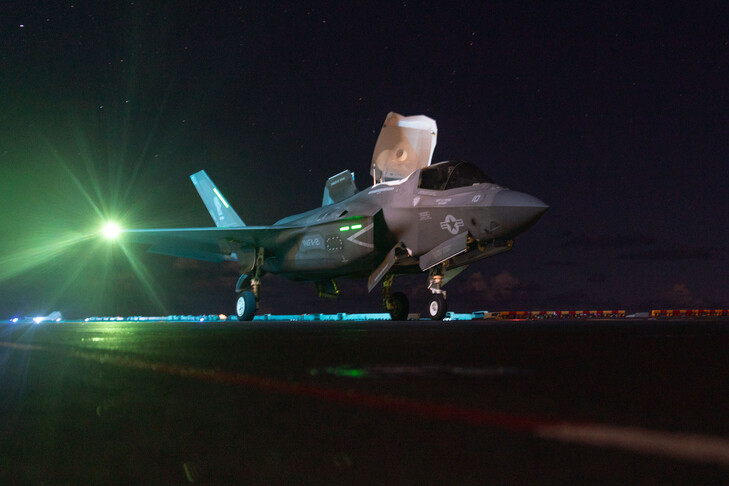
- 2/28/2026, 04:00-06:00 GMT: IDF F-35 jets conduct strikes on five Iranian sites, with explosions reported in Isfahan. Satellite imagery shows craters at the Parchin military complex.
- 2/28/2026, 07:00 GMT: Iran confirms the strikes and activates proxies (Houthis, Hezbollah) for low-level harassment, though no major launches have occurred yet.
- 2/28/2026, 09:30 GMT: The U.S. President issues a statement supporting Israel's "right to defend" while urging restraint; the EU calls for de-escalation.
- 2/28/2026, 11:00 GMT: The IAEA reports no radiation leaks from targeted nuclear-adjacent sites, but markets remain volatile.
Analysis of the Situation
Israel's recent strike embodies its longstanding "Begin Doctrine"—a strategy of preemptive action against perceived existential threats. This operation directly echoes the 2025 Gaza City offensive, where Israel launched ground-air assaults to dismantle Hamas infrastructure, preventing rocket barrages. The historical context of Israel's strategies prioritizes rapid degradation over occupation, as seen in the Six-Day War (1967) and Operation Opera (1981).
Iran's response cycle mirrors previous escalations, such as missile volleys following the killing of Qassem Soleimani in 2020. The risk of a "satisfying strike" loop exists, where Iran claims victory through volume while Israel asserts precision, leading to an escalating cycle of conflict. Proxies such as the Houthis and Hezbollah are already mobilizing, indicating a potential for broader regional conflict.
What This Means
The implications of this escalation are profound. Regionally, Sunni states like Saudi Arabia and the UAE may quietly support Israel, isolating Iran further. Globally, U.S. election-year politics may constrain the Biden administration's response, while China and Russia continue to back Tehran diplomatically. The situation could lead to significant oil price shocks and potential disruptions in global markets, impacting the global GDP.
Key Locations Impacted
- Isfahan, Iran: A key strike site, hosting missile factories and airbases.
- Parchin Military Complex, Tehran: Suspected chemical/nuclear R&D site.
- Gaza City, Gaza Strip: Origin point for ongoing conflicts.
- Tel Aviv/Jerusalem, Israel: Command centers currently on high alert.
- Strait of Hormuz: Critical for global oil transit; Iranian threats loom.
Looking Ahead
Historical patterns suggest three potential scenarios based on CSIS/Janes models:
- De-escalation (45%): Iran opts for limited proxy responses, leading to U.S.-brokered talks.
- Tit-for-Tat Escalation (35%): Iran mirrors Israeli strikes, resulting in a brief conflict with moderate casualties.
- Full Confrontation (20%): A significant escalation involving missile launches and potential U.S. intervention, with oil prices skyrocketing.
Watch for statements from Iranian leadership and movements of U.S. military assets in the region. Diplomatic off-ramps remain viable, but the precedent set by the Gaza conflict suggests a strong inertia toward further conflict.
(Word count: 1560)