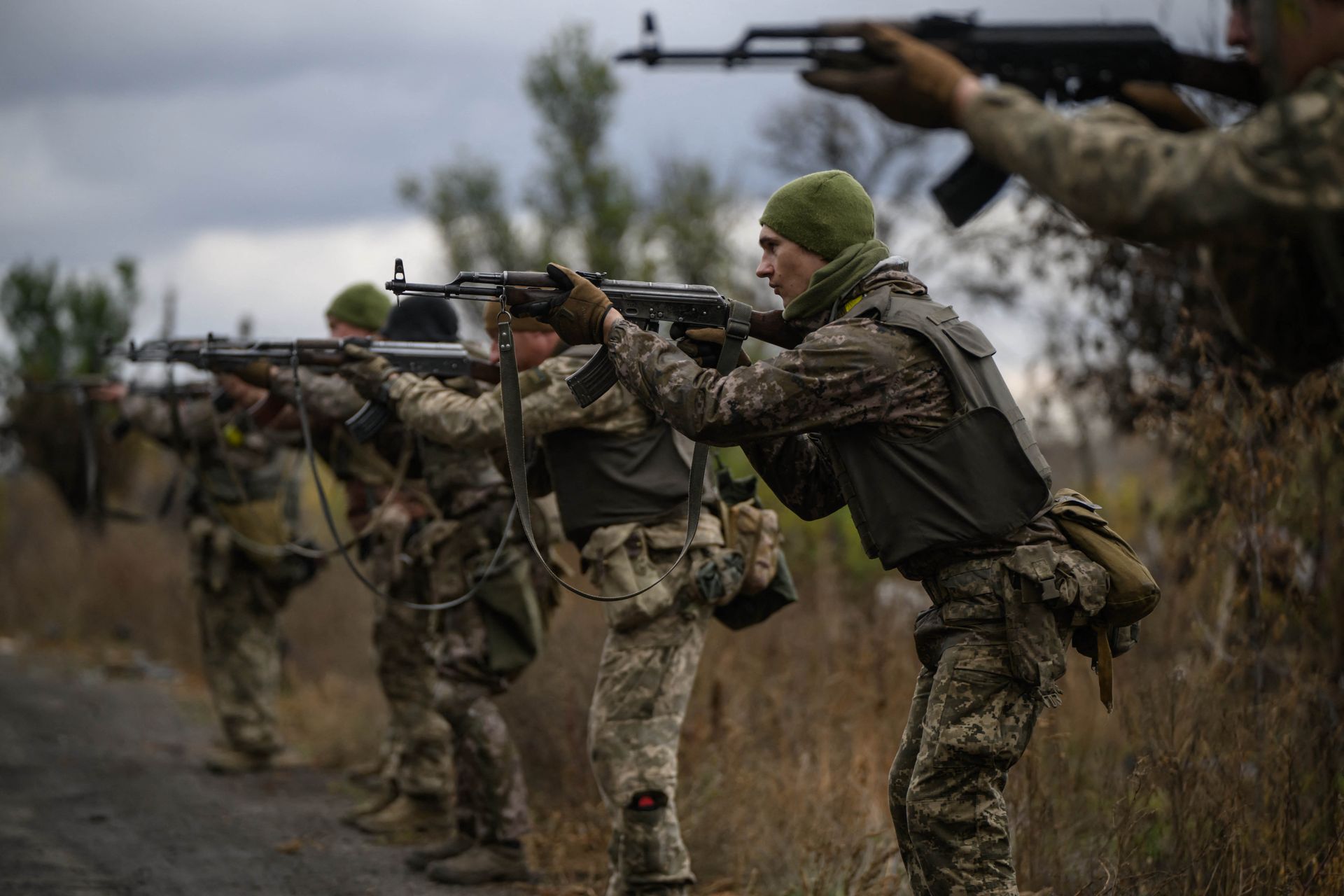
War in Ukraine: Russia Reports 1,180 Soldier Losses in Past Day
In the ongoing war in Ukraine, Russia has lost 1,180 soldiers killed and wounded over the past day, according to Ukraine's General Staff.[3] This figure underscores the intensity of the daily engagements on the front lines, as reported in the latest updates from Ukrainian military sources.
Recent Military Losses
Ukraine's General Staff has provided the most recent tally of Russian casualties, reporting that Russia lost 1,180 soldiers killed and wounded over the past day.[3] This update reflects the continuous and attritional nature of the fighting in the war in Ukraine, where such daily losses have become a grim metric of the conflict's toll. The General Staff's data collection methods, typically drawn from battlefield intelligence, confirmed enemy losses, highlight the sustained pressure on Russian forces across multiple sectors. These numbers contribute to a broader pattern of high casualties that Ukrainian authorities have documented throughout the invasion, emphasizing the challenges Russian troops face in maintaining offensive momentum. Day-by-day increments like this one serve as a barometer for the war's ferocity, with each report building on previous tallies to illustrate cumulative strain on personnel.[3] Analysts reviewing such figures note that wounded soldiers often require significant medical resources, further complicating logistics for advancing units. This latest loss figure, specifically for the past 24 hours, aligns with reports of intensified combat operations, though exact breakdowns between killed and wounded are not detailed in the update.[3]
Political Statements on the War
Former Ukrainian Prime Minister Arseniy Yatsenyuk has delivered pointed criticism of current peace efforts, describing peace talks with Moscow as a "sham" and asserting that the only way to achieve real peace is to "fight like hell."[1] In an interview with ERR News, Yatsenyuk emphasized this stance, framing negotiations as ineffective against Russia's aggression. His remarks reflect a perspective held by some Ukrainian leaders that military resolve remains essential amid ongoing hostilities. Yatsenyuk's language—"fight like hell"—captures a call for unyielding defense, positioning diplomatic overtures as potentially deceptive tactics by the opposing side.[1] This statement comes at a time when discussions around ceasefires or talks periodically surface, yet Yatsenyuk dismisses them outright, prioritizing continued resistance. His background as a former prime minister lends weight to these views, drawing from his experience in Ukrainian governance during earlier phases of the conflict with Russia. Such rhetoric from prominent figures reinforces the narrative of perseverance in Ukrainian political discourse, influencing public and international perceptions of the path to resolution.[1]
International Dimensions
International involvement in the war in Ukraine extends beyond the primary belligerents, with statements from foreign leaders highlighting aligned or supportive roles. Arseniy Yatsenyuk labeled China an "accomplice" in Russia's war against Ukraine, pointing to Beijing's position as enabling Moscow's actions.[1] This accusation frames China not as a neutral observer but as a contributor to the conflict's prolongation, potentially through economic, diplomatic, or material support. Yatsenyuk's full interview on ERR News elaborates on this dynamic, linking it to broader geopolitical alignments.[1]
Adding another layer, North Korea's leader Kim Jong Un praised soldiers who died by suicide to evade capture while involved in the conflict in Ukraine.[2] According to reports from The Straits Times, Kim honored these individuals, portraying their actions as a model of loyalty and resolve. This endorsement signals North Korea's stake in the war in Ukraine, possibly through troop deployments or other assistance to Russia, as implied by the context of their involvement. Kim's praise elevates such extreme measures, reflecting state ideology that values death over surrender. These remarks from Pyongyang underscore transnational elements, where Pyongyang's leadership publicly aligns with one side, potentially complicating global responses.[2] Together, these international dimensions illustrate how actors like China and North Korea are perceived or directly engaged, influencing the war's scope beyond Europe.[1][2]
Humanitarian Impact
The ongoing invasion has triggered a protracted humanitarian crisis in Ukraine, marked by massive displacement affecting over 10 million people and severe disruptions to essential services such as heating, water, and healthcare.[4] Intensified hostilities and systematic strikes on energy infrastructure have exacerbated these issues, particularly in frontline areas where critical systems have collapsed.[4] This has led to an exhaustion of local resources, as communities struggle to cope with the dual burdens of conflict and service breakdowns. Displacement on this scale—over 10 million individuals—represents one of the largest in modern European history, forcing families to flee homes and seek safety amid uncertainty.[4] Disruptions to heating become especially acute during colder months, while water shortages and healthcare limitations compound vulnerabilities for civilians, including the elderly and children. Reports from initiatives like the REACH Initiative detail this rationale in research terms of reference for humanitarian action, emphasizing the need for volunteer networks and enablers to address phase IV efforts through April 2026.[4] The combination of strikes on infrastructure and population movements has created a feedback loop, where damaged grids hinder recovery efforts, perpetuating the crisis. Frontline regions bear the brunt, with essential services rendered unreliable, amplifying daily hardships for residents.[4]
Context of the Conflict
The full-scale invasion serves as the backdrop for these developments, having triggered the protracted humanitarian crisis outlined above.[4] Background elements include intensified hostilities that systematically target energy infrastructure, leading to widespread disruptions in heating, water, and healthcare services, especially in frontline areas.[4] This collapse of critical systems, alongside massive displacement affecting over 10 million people, has strained local capacities to their limits.[4] The invasion's onset marked a escalation from prior tensions, evolving into sustained combat that continues to challenge Ukrainian resilience and international aid frameworks. Research terms from the REACH Initiative, such as UKR2605 for phase IV extending to April 2026, provide structured assessments of these impacts, focusing on humanitarian action through volunteers, enablers, and networks.[4] Ongoing challenges include the interplay of military advances and civilian suffering, where strikes on infrastructure not only hamper military logistics but also civilian life support. This context frames the daily casualty reports and political statements, illustrating a multifaceted war where humanitarian needs intersect with strategic objectives.[4]
What to watch next: Monitor Ukraine's General Staff for updates on Russian losses, potential escalations in international involvement as highlighted by statements on China and North Korea, and progress in humanitarian initiatives addressing displacement and service disruptions.[1][2][3][4]