

Earthquakes Today Strike Multiple Regions Including Colombia's Chocó
Multiple earthquakes struck various global locations on September 7, 2026, including a magnitude-4.0 temblor in Colombia's Chocó department amid ongoing seismic activity following an August 7.4 quake, while Indonesia continues large-scale health deployments for trauma care after earlier earthquakes in East Nusa Tenggara. Earthquakes today have prompted monitoring agencies to issue updates across several countries.
Colombia Earthquake Activity on September 7
A magnitude-4.0 earthquake occurred at 9:01 p.m. on September 7 with epicenter in Medio San Juan, Chocó, Colombia, at a depth of 40 km, prompting the SGC to request public reports of the shaking. [4] The epicenter was located 12 kilometers from Sipí, Chocó, at coordinates 4.58 latitude and -76.72 longitude. [4] The Servicio Geológico Colombiano asked citizens to report whether they perceived the movement following the updated bulletin. [4]
Ongoing Seismic Swarm in Chocó
More than 1,340 earthquakes ranging from magnitude 0.6 to 4.8 have been recorded in Chocó since the August 10 magnitude-7.4 mainshock, forming a seismic swarm with varying depths up to 120 km. [4] The August 10 event took place at 7:34 a.m. with a depth of 103 kilometers and epicenter in San José del Palmar, Chocó. [4] The Servicio Geológico Colombiano identified an intense seismic swarm in the department after the mainshock released enormous energy that created a complex dynamic in the subsurface. [4] In just three weeks through August 31, the 1,340 recorded events showed differences in distribution, depth and behavior according to expert analysis. [4]
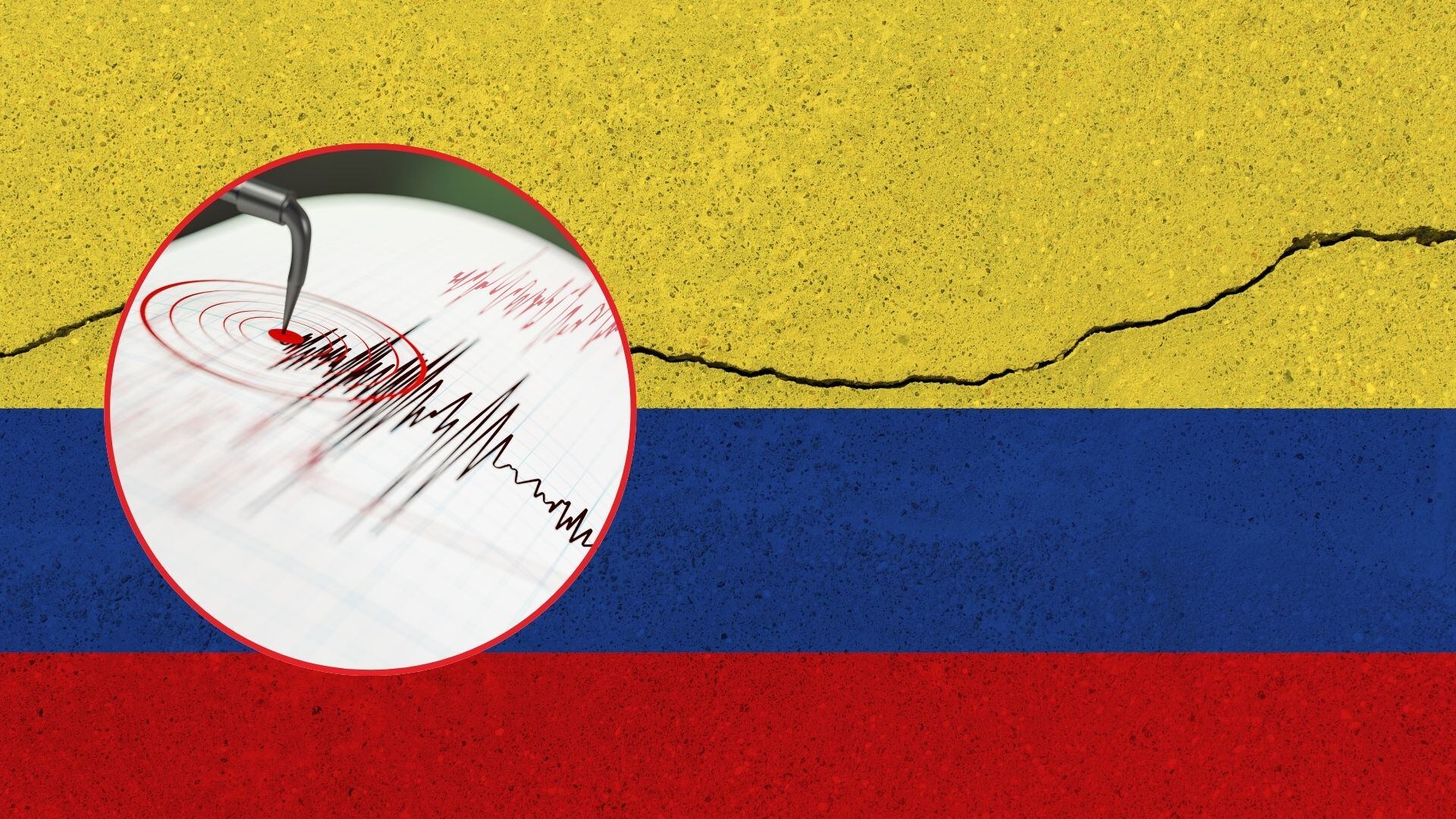
A magnitude-4.0 earthquake struck Medio San Juan in Colombia’s Chocó department on September 7. — Source: gdelt
Indonesia Deploys Mental Health Teams to NTT
Indonesia's Ministry of Health dispatched a second batch of 160 Reserve Health Workers to four districts in East Nusa Tenggara to deliver psychosocial and mental health services for earthquake trauma, following an initial deployment of 206 workers for primary medical care. [3] The second batch departed from Terminal 2 at Soekarno-Hatta International Airport bound for Ngada, Manggarai, Manggarai Barat and Manggarai Timur. [3] Two field hospitals are operating in Ruteng and Ngada, with the health teams also assisting in post-operative care on 14-day rotations aligned to WHO standards and an emergency response timeline through September 2026. [3] Personnel deliver services at community health centers and field hospitals while targeting children and residents experiencing disaster-related trauma. [3] Dr. Shaldy Syifa Azzahri gathered essential medical supplies and maintained physical and mental readiness, while Dr. Rayhendra Hanif prepared mentally and brought personal necessities including medications, drawing from his experience with the 2009 Padang earthquake. [3]
Additional Global Tremors Reported September 7
Smaller quakes were recorded in the United States (M2.7 near Hebgen Lake Estates, Montana at 11 km depth), Hawaii (M3.0 near Honomu at 22 km depth), and Peru (M4.2 near Oxapampa and M3.4 near Chilca). [1] [2] [5] The M2.7 event occurred 3 km ESE of Hebgen Lake Estates, Montana. [1] The M3.0 event occurred 3 km WNW of Honomu, Hawaii. [2] In Peru the M4.2 event took place 20 km E of Oxapampa, Pasco, at 14 km depth, while the M3.4 event occurred 21 km SW of Chilca, Cañete, Lima, at 51 km depth. [5]
Peruvian Seismic Updates and Expert Clarifications
Peruvian officials noted that small earthquakes do not reduce the risk of larger events, that not all quakes produce significant tsunamis, and that precise earthquake prediction remains impossible. [5] Earthquakes with magnitude 7 or higher carry the greatest probability of generating a significant tsunami, while magnitude 5 or 6 events may produce smaller waves without major damage. [5] Hernando Tavera, president executive of the Instituto Geofísico del Perú, stated that a prediction would require knowing the exact location, magnitude and time of an event, which science cannot yet determine. [5] Advances have been made in forecasting that identify zones with higher probability and estimate possible magnitude, aiding prevention efforts. [5]
Response and Preparedness Measures
Deployments align with the emergency response timeline established by the NTT Provincial Government through Sept. 12, 2026, which can be extended based on field evaluations. [3] TCK teams provide psychosocial care in addition to assisting with post-operative patient management after earlier orthopedic and surgical deployments. [3] Sumarjaya, acting head of the ministry's Health Crisis Center, noted that disasters damage psychological well-being as residents process personal loss and shock. [3] The approach in the second deployment focuses more on psychosocial support and mental health services to communities in Flores. [3]
What to watch next includes continued monitoring by the Servicio Geológico Colombiano in Chocó and by the Instituto Geofísico del Perú, along with possible extension of Indonesia's emergency response timeline in East Nusa Tenggara based on field evaluations.







