
Earthquakes Near Me Strike Western Colombia Leaving More Than 300 Dead as Caritas Shifts to Early Recovery One Month Later
One month after earthquakes near me struck western Colombia on 10 August 2026, Caritas has transitioned from emergency aid to early recovery while the government advances a multibillion-dollar reconstruction plan amid fiscal constraints and public controversies. The 7.4-magnitude earthquake that left more than 300 dead and 4,500 injured in Colombia a month ago has marked a before and after in the recent history of the South American country. [4]
Overview of the 10 August 2026 Colombia Earthquake
The earthquake on 10 August 2026 struck western Colombia, causing more than 300 deaths, 4,500 injuries, damage to 200,000 homes (36,000 completely destroyed), and displacement of over 400,000 people across five regions including Valle del Cauca, Chocó and Risaralda. [4] [1] Un mes después del devastador terremoto que sacudió el occidente de Colombia, Cáritas Colombiana está pasando de la ayuda de emergencia a la recuperación temprana, mientras las familias del Valle del Cauca, Chocó y Risaralda emprenden el largo proceso de reconstruir sus vidas. [2] The government of Abelardo de la Espriella, which had been in office for barely three days, put the response to the natural disaster at the center of its agenda. [4]
Transition from Emergency Aid to Early Recovery
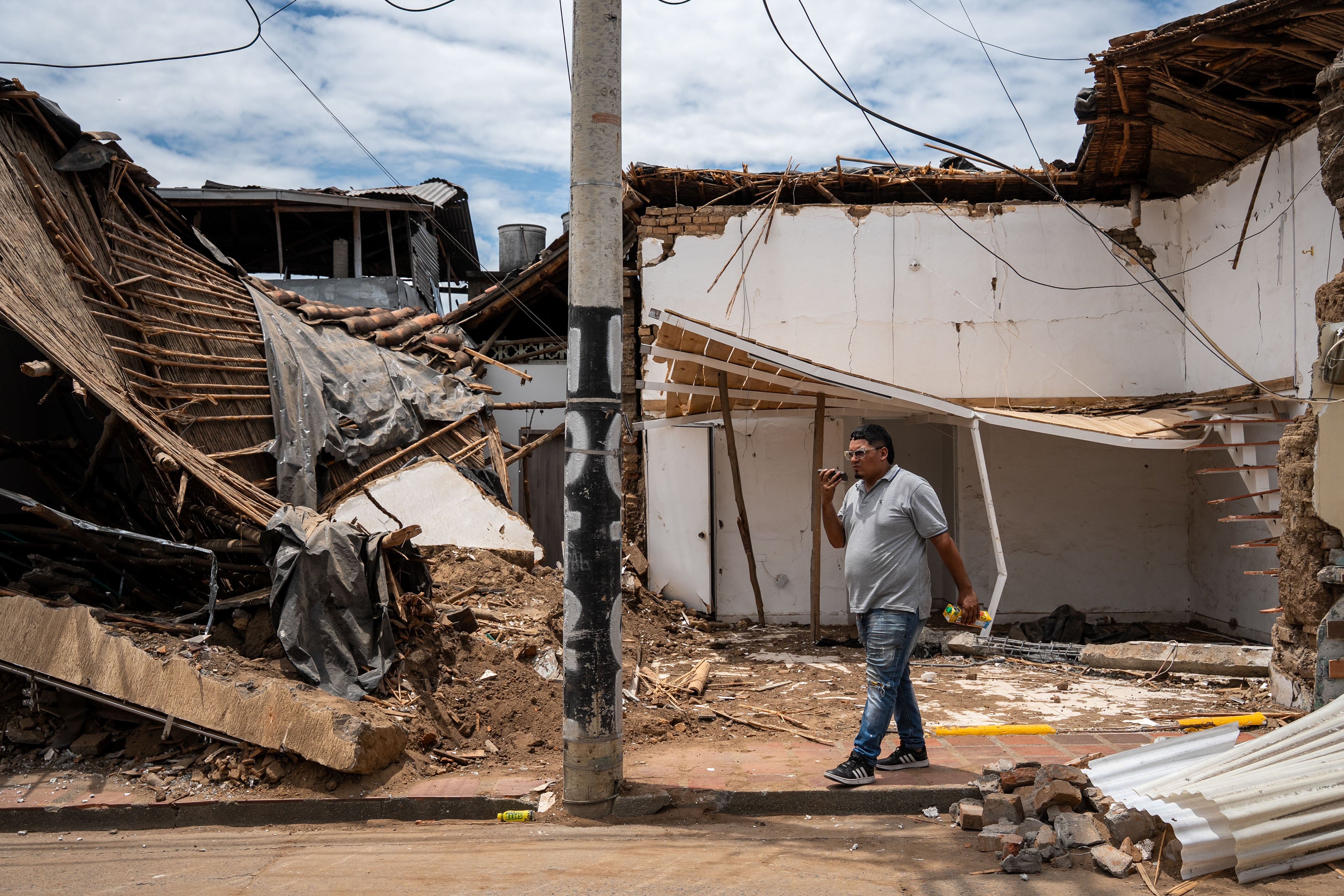
Un mois après le séisme dévastateur qui a frappé l’ouest de la Colombie, Caritas Colombie passe de l’aide d’urgence au relèvement précoce, alors que les familles des départements de Valle del Cauca, du Chocó et de Risaralda entament le long processus de reconstruction de leur vie. [1] Caritas Colombia has shifted from emergency response to early recovery support for families in the hardest-hit departments as reconstruction begins. [2] One month after the earthquake, the long-term impacts are beginning to emerge. [4]
{IMAGE_2}
Government Reconstruction Strategy and Funding
The Colombian government under President Abelardo de la Espriella has declared an economic emergency, created the Fondo Milagro to channel public and private funds, and is pursuing a 'Marshall Plan' with private-sector involvement to fund reconstruction estimated at more than 30 trillion pesos ($9.7 billion). [4] The president traveled this week with a group of them and with heads of major companies to Chocó, the department at the epicenter of the quake and one of the hardest hit. [4] There, he promised to launch an ambitious ‘Marshall Plan’ to attract investment to a region historically neglected by politicians and the business community. [4] These very large sums will be administered through the so-called Fondo Milagro (Miracle Fund), a mechanism that will channel public and private resources and is modeled on the Forec fund that responded to the 1999 earthquake. [4]
Current Demolition and Rebuilding Phase
Reconstruction has entered a demolition phase in cities such as Cali and Pereira, with two trillion pesos allocated for risky building demolitions in Risaralda alone; the overall effort is projected to take up to five years. [4] Cities such as Cali and Pereira have begun tearing down buildings at risk of collapse. [4] The Fondo Milagro plans to allocate two trillion pesos ($644 million) for that task in the department of Risaralda, its appointed manager Jaime Uribe, a close collaborator of De la Espriella, said this week. [4] Local authorities say this phase will take several months, as many structures must be brought down with heavy machinery and without explosives because of their proximity to other buildings. [4]
Controversies Surrounding the Official Response
The response has faced controversies including limits on international rescuers to three ideologically aligned countries, a leisure trip by the Housing Minister, and complaints that aid has not reached rural, indigenous and displaced communities equitably, while half a million children and adolescents have had education disrupted. [4] There was a highly controversial decision by De la Espriella to limit acceptance of international rescuers to only three countries — the United States, Israel and Ecuador — whose governments are ideologically aligned with his. [4] Another incident that generated great controversy was the leisure trip taken by Housing Minister Jaime Andrés Beltrán, who heads one of the ministries most central to the management of the quake’s effects: 200,000 damaged homes and another 36,000 completely destroyed. [4] Local authorities have denounced that assistance has been concentrated in large cities and does not reach the most rural municipalities. [4]
What to watch next: The recovery of western Colombia is a major test for De la Espriella as the Fondo Milagro begins channeling funds and demolition continues in affected cities. [4]