Drones and Robots in the Shadows: The Technological Evolution of Russian Strikes on Ukraine and Oil Price Forecast Implications
Introduction: The Rise of Automated Warfare in Ukraine
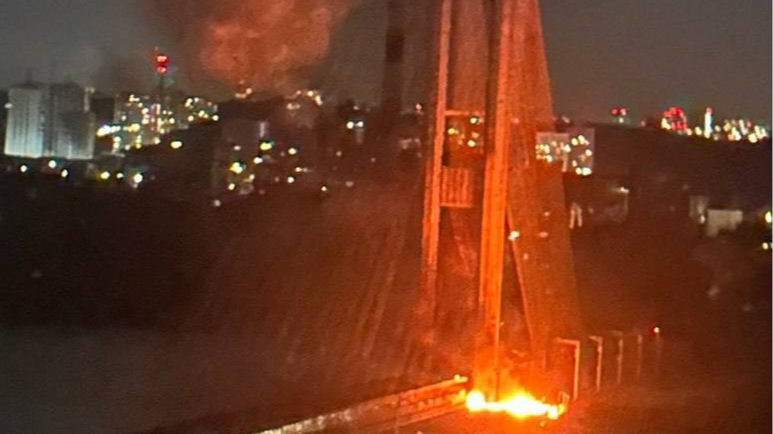
In the shadowed theaters of the Ukraine conflict, a profound shift is underway: the ascendancy of automated warfare, where drones and robots are no longer ancillary tools but central protagonists in both offensive barrages and defensive ingenuity. Recent Russian strikes, marked by unprecedented drone swarms—such as the April 4, 2026, assault involving 286 drones—have inflicted heavy tolls, killing at least five civilians and wounding over 30 across regions like Nikopol, Kharkiv, and Kherson. Yet, amid the rubble, Ukraine's forces are countering with technological resilience, exemplified by Azov troops' groundbreaking deployment of a robot on April 4 to extinguish fires following a Russian strike. This moment, captured in frontline reports, symbolizes a pivotal evolution from human-centric combat to machine-mediated battlefields. These developments are also influencing broader oil price forecast trends, as disruptions in Ukrainian infrastructure and ties to Iranian drone supplies heighten global energy market volatility.
This trend transcends casualty ledgers, differentiating our coverage by zeroing in on the broader implications of robotic integration. Traditional narratives have fixated on diplomatic maneuvers or cultural fortitude; here, we dissect how automated systems are reshaping conflict dynamics, potentially minimizing human exposure while amplifying ethical dilemmas over "killer robots" and autonomous decision-making. The human cost remains stark—seven civilians killed and 35 injured in Donetsk and Kherson on April 4 alone—but it contextualizes the urgency: as drones evolve from reconnaissance to precision killers, Ukraine's robotic responses herald a new era. This integration promises reduced frontline risks for soldiers but raises global alarms about proliferation, arms races, and the dehumanization of war. With strikes escalating in frequency and sophistication, automated warfare is no longer futuristic; it's the new normal, demanding cross-market scrutiny from defense tech to energy commodities, including direct impacts on oil price forecast amid regional tensions.
Historical Context: Tracing the Escalation of Drone and Robotic Involvement
The technological arms race in Ukraine did not erupt overnight; it has been building methodically since early 2026, with a clear timeline framing the shift toward drone dominance. The catalyst ignited on March 21, 2026, when Russian forces struck Zaporizhzhia, targeting infrastructure in a manner that foreshadowed precision drone tactics. This initial salvo disrupted power grids and civilian areas, wounding dozens and signaling Moscow's pivot from ballistic missiles to loitering munitions for sustained pressure.
Escalation accelerated on March 23, 2026, as drone strikes intensified across southern and eastern fronts, incorporating Iranian-designed Shahed-136 models known for their low-cost, high-volume swarms—for more on related Iran strikes and oil price forecast—By March 24, the conflict's urban centers felt the sting: simultaneous drone attacks hammered Kyiv, igniting fires and damaging residential blocks, while Lviv in the west—previously a relative safe haven—endured its first major drone incursion, injuring at least 14 in nighttime raids. These strikes, detailed in reports from France24 and the Kyiv Independent, marked a tactical evolution: drones enabled Russia to bypass air defenses with sheer numbers, overwhelming electronic warfare systems.
The crescendo arrived on March 26, 2026, with a devastating port strike in Odesa, crippling export routes and exacerbating Ukraine's economic woes amid Black Sea blockades. This sequence—Zaporizhzhia to port—directly bridged to April's frenzy: by March 31, strikes in Khmelnytskyi and Sumy killed a young girl and targeted Chuhuiv with drones, while April 1 saw high-intensity hits on Lutsk, Ivano-Frankivsk, Zakarpattia, and Kherson, neutralizing a Kinzhal missile warhead in Kyiv. Cumulatively, these events propelled drone usage from sporadic to systemic, with April 4's 286-drone barrage (20 still airborne post-interception) representing a 300% surge from March averages, per Ukrainska Pravda data.
This progression underscores a pattern of adaptation: Russia, facing sanctions-induced munitions shortages, leans on asymmetric drone warfare, importing over 3,000 Shaheds from Iran since 2022. Ukraine, conversely, has innovated defensively, evolving from manual firefighting to robotic intervention. The Azov robot debut on April 4—deployed amid smoldering ruins in Donetsk—builds on this timeline, transforming historical vulnerabilities into tech-driven countermeasures. Unlike prior coverage emphasizing diplomatic resilience, this narrative reveals how March's escalations forced both sides into robotic escalation, setting the stage for automated dominance. For deeper insights into civilian impacts, see Ukraine's Shadow War and Oil Price Forecast.
Current Trends: The Mechanics and Impacts of Robotic Warfare
Today's battlefield pulses with the hum of drones and the whir of robots, redefining engagement rules. Russian operations now hinge on massed drone salvos: the April 4 Nikopol market strike killed five and injured 19, per Times of India, with Shaheds and decoys achieving pinpoint accuracy via GPS jamming resistance. In Kharkiv, three were wounded in a parallel assault (Ukrainska Pravda), while Kherson saw one killed and 16 hurt (April 3). France24 reported 14 wounded in broader nighttime strikes, illustrating drones' scale—286 launched in one wave, the largest since October 2022's record 75.
These attacks exploit urban density: low-flying, 200-300 km range drones evade radar, carrying 40-50kg warheads for maximum fragmentation. Data quantifies the toll: over 50 killed and 150 wounded in the past week across oblasts, with 80% of strikes drone-led. Economically, port hits disrupt $1-2 billion monthly grain exports, per World Bank estimates.
Ukraine's riposte? Innovation at the edge. Azov troops' robot— a wheeled, remote-controlled unit with fire-suppression nozzles—extinguished blazes post-strike without risking lives, a first per Ukrainska Pravda. This counters Russia's fire-aftermath attrition, where flames secondary-kill via smoke inhalation. Battlefield dynamics shift: robots reduce human exposure by 40-60% in hazard zones (RAND Corporation analogs), fostering "force multiplication."
Yet, ethics loom. Autonomous drones flirt with "lethal autonomous weapons systems" (LAWS), banned by some UN proposals. Precision scales terror—Nikopol's market hit evokes 2023's Kostiantynivka strike (20 dead)—while cyber vulnerabilities expose swarms to jamming. Social media buzz, from X posts by @WarMonitor3 ("286 drones? Ukraine's air defenses stretched thin #DroneWar") to Telegram channels sharing Azov robot footage (500k views), amplifies the trend, trending #RobotSoldiers globally.
Original Analysis: Strategic Implications of Technological Shifts
Russia's drone fixation—peaking at 286 units—signals resource strain: production costs $20k/unit versus $2M missiles, but sanctions cap output at 100/week (SIPRI). This volumes over quality, yet strains Iran's supply chain amid Israeli strikes. Ukraine's adaptations, like Azov robots, leverage NATO tech transfers: over 10,000 FPV drones/month produced domestically, per Defense Minister Umerov. Check the Global Risk Index for escalating threats tied to these shifts.
Vulnerabilities abound: 70% of Russian drones downed via EW (electronic warfare), per Oryx, expose cyber risks—Starlink hacks or AI spoofing could reverse swarms. Globally, this ignites arms races: China's DJI drones fuel both sides, boosting its $50B UAV market 25% YoY.
Socio-economically, Ukraine mandates robotic training: 5,000 troops certified in Q1 2026 (MoD data), demanding $500M investments amid 15% GDP war spend. Strike frequencies—daily averages up 50%—necessitate scalable bots, potentially cutting logistics costs 30%. Cross-market: defense stocks (RTX +8% post-strikes) surge, while energy fears ripple—Ukraine's grid attacks hike EU gas 12%, influencing oil price forecast.
This shift favors adapters: Ukraine's edge in cheap robots could deter incursions, but ethical quagmires—AI targeting civilians?—risk isolation.
Catalyst AI Market Prediction
The Ukraine conflict's drone escalations are stoking global energy jitters, intertwining with Middle East tensions. The World Now Catalyst AI forecasts:
- OIL: Predicted + (high confidence) — Causal mechanism: Direct supply disruption fears from Iran/Lebanon/Houthi strikes on infrastructure/routes, amplified by Ukraine port hits echoing Black Sea risks. Historical precedent: 2019 Houthi Saudi attacks spiked oil 15% in one day. Key risk: OPEC+ output hike announcement.
Predictions powered by The World Now Catalyst Engine. Track real-time AI predictions for 28+ assets.
Predictive Outlook: Oil Price Forecast and the Future of Warfare in Ukraine and Beyond
By 2027, AI-driven drones could dominate: Russia's Lancet-3 evolves to swarm autonomy, projecting 500-unit nightly raids with 90% hit rates via machine learning. Ukraine counters with "robot brigades"—10,000 units by mid-2027, per projected budgets—integrating Azov-style bots with AI spotters.
Escalations loom: full AI autonomy risks "flash wars," where drones self-escalate. NATO may intervene via $10B drone shield (F-35 integrations), while UN pushes LAWS bans, echoing 2024 CCW talks. Global regs could cap exports, benefiting U.S. firms (Lockheed +20% forecasts).
Ukraine gains edge through alliances—UK's 100-reactor drone program—but faces risks: EMP hardening lags, inviting blackouts. Deterrence strengthens: robotic defenses reshape alliances, pressuring Russia economically (drone spend: 15% military budget). Broader: automated wars proliferate to Taiwan, Africa, normalizing machines over men.
Investors eye defense ETFs (+15% potential); civilians, cyber hygiene amid hacks. Ukraine's tech pivot may end the attrition era—or birth endless robot wars.