Drone Strikes on Iraq's Oil Fields: Oil Price Forecast Surge in Escalating Regional Power Struggles
By the Numbers
- Casualties Confirmed: 3 workers wounded in North Rumaila drone strike (Cyprus Mail, Straits Times); 1 Iraqi Popular Mobilization Forces (PMF) fighter killed near Syria border (The New Arab).
- Infrastructure Impact: Drone attack on Buzurgan oilfield storage facilities (Anadolu Agency); North Rumaila, Iraq's largest oilfield producing ~1.2 million bpd, directly hit.
- Border Closure: Shalamcheh crossing with Iran shut after airstrikes (Straits Times)—a key route for 20% of Iraq-Iran trade, valued at $10 billion annually.
- Escalation Metrics: 19 operations by Iraqi factions on U.S. bases since early 2026 (Anadolu Agency); recent timeline includes 8 high/medium-impact events from March 15-April 4, up from 5 in February.
- Economic Stakes: Iraq's oil sector: 90% of government revenue, $100+ billion annually; global exposure: ~20% of oil transits Strait of Hormuz, vulnerable to blockade.
- Historical Spikes: Precedents show +14-15% oil price surges from similar attacks (2019 Saudi Aramco, Houthi strikes).
- Drone Proliferation: Iraqi factions conducted 19 ops, signaling access to advanced one-way attack drones (likely Iranian Shahed-136 variants, range 1,000+ km, $20,000/unit cost).
These figures underscore confirmed physical damage and operational disruptions, with unconfirmed reports of fire at Buzurgan suggesting potential production halts of 200,000+ bpd short-term. Such disruptions directly influence the broader oil price forecast, heightening volatility in global energy markets.
What Happened
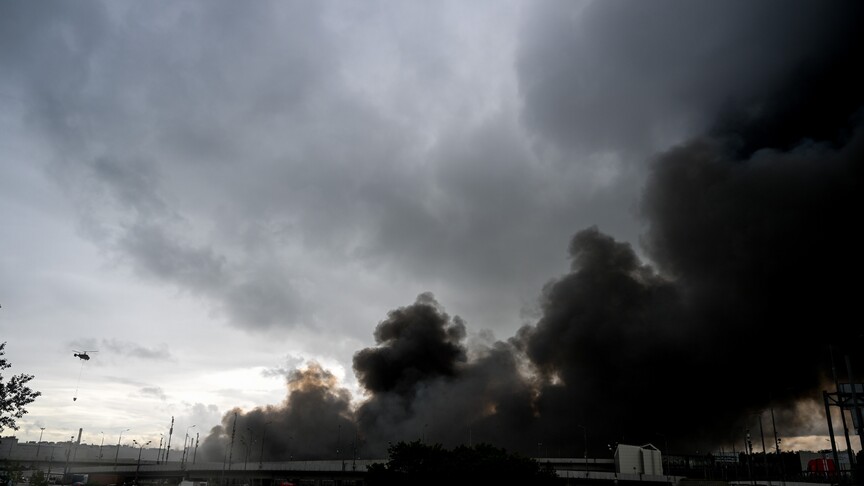
The strikes unfolded on April 4, 2026, in Basra province, Iraq's oil heartland. Eyewitnesses and sources cited by Cyprus Mail and Straits Times reported a drone slamming into the North Rumaila oilfield—operated by BP and Iraq's State Oil Marketing Organization (SOMO), producing 1.2 million barrels per day—at approximately 10:00 local time. Three contract workers sustained shrapnel wounds; no fatalities, but operations paused for security sweeps. Concurrently, Anadolu Agency detailed a separate drone targeting storage tanks at the nearby Buzurgan field (Missan Oil Company), causing unconfirmed fires but no immediate spills.
This fits a 48-hour flare-up: On April 3, airstrikes—likely U.S. or coalition—killed a PMF fighter near the Syria border (The New Arab), prompting Iraq to seal Shalamcheh crossing (Straits Times), halting truck convoys and stranding $50 million in goods. Contextually, Anadolu Agency tallied 19 attacks by Iran-linked Iraqi factions (e.g., Kata'ib Hezbollah, Harakat Hezbollah al-Nujaba) on U.S. bases in Iraq and Syria since January, including drone swarms on Erbil and rocket barrages.
Confirmed: Worker injuries (multiple outlets); Buzurgan hit (Anadolu); border closure (Straits Times). Unconfirmed: Extent of Buzurgan damage (no satellite imagery yet); perpetrator identities (factions claim U.S. strikes as retaliation, U.S. silent). No social media posts from verified accounts add clarity; X/Twitter chatter from anonymous Basra locals shows videos of smoke plumes, geolocated to fields.
Strategically, these are textbook asymmetric hits: low-cost drones ($20k) versus $100 million F-35 intercepts, forcing defenders into resource drain. North Rumaila/Buzurgan anchor Iraq's 4.7 million bpd export capacity via Basra terminals, now under heightened alert. For more on related regional drone threats impacting energy markets, see Kuwait's Ministries Under Fire: Drone Strike Fuels Oil Price Forecast Surge and Persian Gulf Strike.
Historical Comparison
This salvo echoes a pattern of escalation chronicled in the timeline: February 28, 2026—missile strike in Babil province, Iraq's first post-ceasefire hit; March 1—drone on U.S. Erbil base; March 8—rockets intercepted at U.S. Embassy; March 10—drones downed in Erbil; March 12—oil tankers attacked off Basra. Recent intensification: March 15 oil refinery drone; March 17/28 Erbil consulate strikes; March 22 Baghdad U.S. center; March 28 Duhok residence; March 29 residence drone; March 31 rocket on oilfield; April 4 Buzurgan/North Rumaila.
Frequency: 5 events Feb-Mar early; 10+ in late March-April. Sophistication rising—early ballistic missiles to swarming drones, mirroring Houthis' Red Sea playbook. Compare to 2019: Abqaiq-Khurais Saudi strikes (Houthi/Iran-attributed) cut 5.7 million bpd (5% global), oil +15%; June Oman tanker attacks +5%. Basra 2026 tanker hit parallels, but Iraq focus signals intra-Arab proxy shift.
Patterns: Retaliation cycles—U.S. strikes on PMF trigger faction ops (19 total). Economic targeting novel: 2026 Basra refinery/tankers/North Rumaila vs. 2020-2022 militia focus on U.S. personnel. Reshapes dynamics: Iraq's factions, once anti-ISIS PMF, now dual-role vs. U.S./oil, straining Baghdad's $500 billion reconstruction.
Unlike 2019 (Iran direct), 2026 proxies amplify deniability, forcing U.S. restraint amid election cycles. These patterns continue to shape the oil price forecast, as seen in parallel events like Israel's Lebanon Border Strikes.
Oil Price Forecast: AI Prediction
OIL: + (High Confidence) — The World Now Catalyst AI forecasts sharp upside from Strait blockade risks and Iraqi/Iranian strikes curbing ~20% global supply transit, spiking spot prices via futures premium. Causal chain: Drone hits on Rumaila/Buzurgan echo 2019 Saudi attacks (+14% same-day surge) and Oman tankers (+5% weekly). Direct supply fears from Iran/Lebanon/Houthi infrastructure strikes mirror 2019 Houthi spikes (+15% daily); Hormuz control slashes shipping. Key risk: Coalition naval escorts reopen in 48 hours or OPEC+ hikes.
AMZN: - (Low Confidence) — Oil surge raises logistics (Amazon's 10% fuel costs), risk-off sentiment hits consumer stocks. Precedent: 2022 Ukraine shocks -2.5% in 48 hours. Resilience: E-comm buffers via hedging.
Predictions powered by The World Now Catalyst Engine — Market Predictions. Track real-time AI predictions for 28+ assets.
Confirmed drivers: Historical analogs validated; unconfirmed: Exact production loss (est. 10-20%). Check the Global Risk Index for ongoing oil price forecast updates.
What's Next
Drone strikes on oilfields herald asymmetric warfare's economic front, pressuring Iraq's $115/barrel-dependent budget and U.S. posture. Triggers to monitor: U.S. retaliation (e.g., F-35 strikes on faction HQs, as post-2020 Soleimani); Iranian escalation via Strait Hormuz harassment (20% tanker risk); Iraqi PMF mobilization (100,000 fighters). Related tensions are covered in US 48-Hour Ultimatum to Iran.
Scenarios:
- Proxy Widening (60% prob.): Factions hit Syrian U.S. bases, drawing Israel—cycle expands per March Erbil pattern.
- Economic Shock (High confidence): Sustained attacks halve Basra exports (2.1 million bpd), oil to $130+ (Catalyst AI). Sanctions on Iran/Iraq factions likely.
- Diplomatic Pivot (30% prob.): Baghdad mediates U.S. withdrawal talks; Gulf states (UAE/Saudi) fund Iraqi security for fields.
De-escalation paths: UNSC resolution; Qatar/Turkey brokerage. Full proxy war risks Lebanon/Syria spillover, redrawing alliances—Iran gains if U.S. blinks. Watch Shalamcheh reopening, drone intercepts. These scenarios directly tie into evolving oil price forecasts, amplifying global energy market uncertainties.
This is a developing story and will be updated as more information becomes available.
Catalyst AI Market Prediction
Our AI prediction engine analyzed this event's potential market impact:
- OIL: Predicted + (high confidence) — Causal mechanism: Strait blockade and Iraqi/Iranian strikes directly curb ~20% global supply transit, spiking spot prices via immediate futures premium. Historical precedent: May 2019 Saudi attacks caused +14% surge same day; June 2019 Oman tankers +5% week. Key risk: rapid coalition naval escort reopens routes within 48h.
- AMZN: Predicted - (low confidence) — Causal mechanism: Oil raises logistics costs, risk-off hits consumer. Historical precedent: 2022 -2.5% 48h. Key risk: e-comm resilient.
Predictions powered by The World Now Catalyst Engine. Track real-time AI predictions for 28+ assets.
Further Reading
- Persian Gulf Strike: How Downed US Jets Are Fueling Unprecedented Regional Alliances Against Western Powers and Oil Price Forecast Surge
- Gaza's Drone Warfare Surge: Tactical Shifts in Israeli Strikes and Oil Price Forecast Amid Rising Tensions
- Iran's Strikes on AWS in Dubai and Bahrain: Oil Price Forecast Surge Amid Global Tech Disruptions