Doomsday Clock Ticks Closer as Iran Sets Terms to End US War via Qatar
As the doomsday clock advances with ongoing hostilities, Iran has outlined conditions for ending its nearly seven-month war with the United States, including an end to sanctions, aggression, naval blockade, and the release of frozen assets, conveyed through Qatari mediators at the United Nations General Assembly. [1]
Doomsday Clock: Iran's Conditions for Ending Hostilities
Iranian Foreign Ministry Spokesperson Esmail Baghaei stated that the conditions had already been communicated to the US earlier this week and that Iran's positions on the Strait of Hormuz and regional security remain unchanged. [1] Among the conditions for ending the war, Baghaei said, were a complete end to the US's aggression, naval blockade, and sanctions, as well as the release of frozen assets belonging to Iran. [1] According to Baghaei, the conditions and negotiation process did not represent a new development, but had already been communicated to the US earlier this week. [1] Iran's presence at the UNGA allowed it to convey these stances more clearly and explicitly to US diplomats. [1] Baghaei also spoke about US President Donald Trump's speech at the UNGA, saying that it consisted of repetitive claims and accusations. [1]
Trump's UNGA Speech and Threats
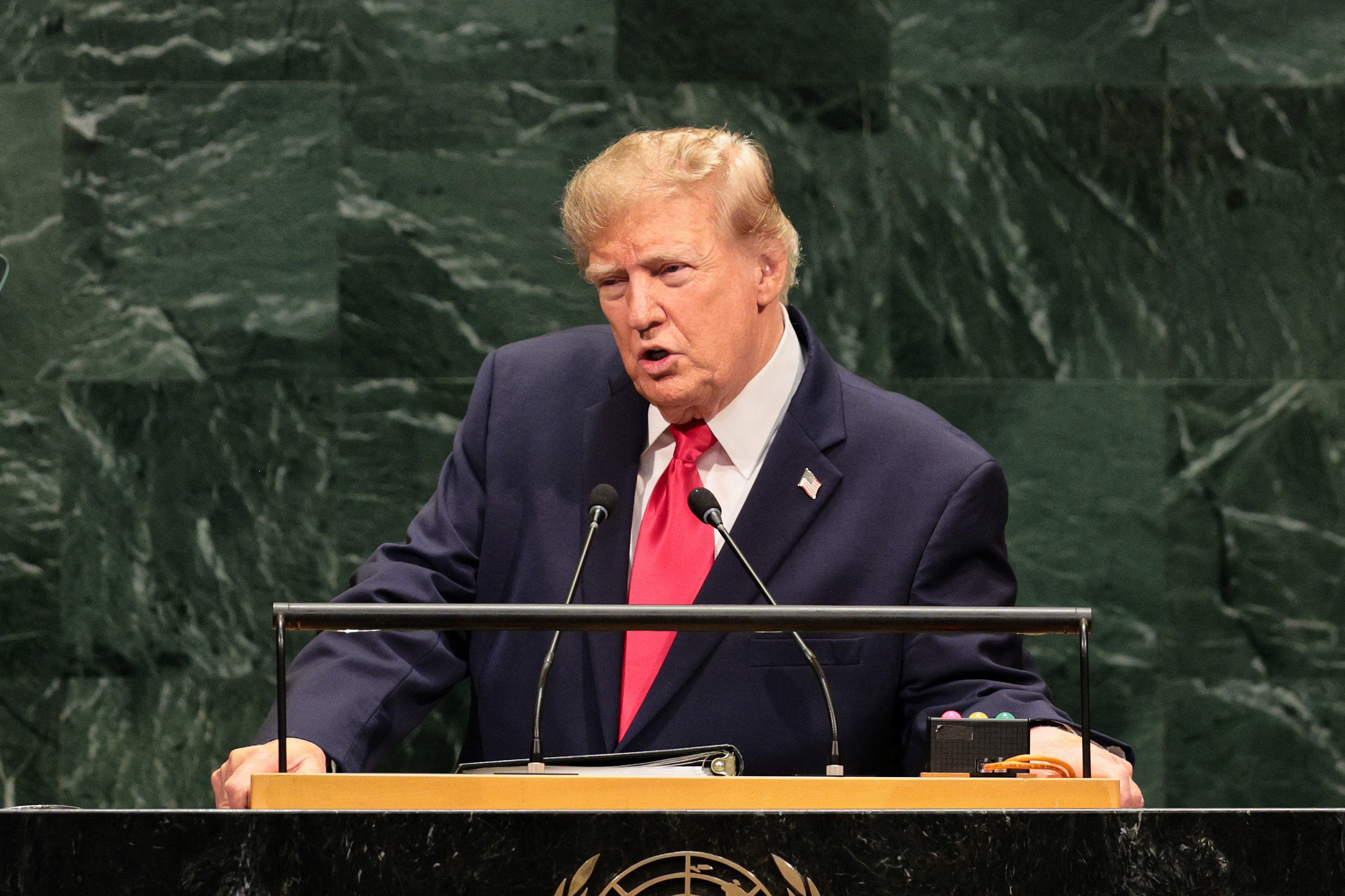
US President Donald Trump, in his UNGA speech, denounced Iran as the number one sponsor of terror and bully of the Middle East. [1] He claimed US strikes had destroyed Iran's navy, air force, radar, anti-aircraft equipment, and missile/drone capacity. [1] Trump threatened to annihilate the Islamic Republic if no deal is reached. [2] He said that as a result of Operation Epic Fury, all 159 ships of their navy are now lying at the bottom of the sea, their air force is gone, their radar is gone, their anti-aircraft equipment is gone, and their missiles and drone manufacturing capacity is almost gone. [1] Trump stated he will never allow Iran to have a nuclear weapon and posed the choice between a deal that lets Iran rebuild or annihilating the Islamic Republic quickly. [2]
Indirect Talks at the United Nations
US envoy Steve Witkoff reported lengthy indirect talks between the US and Iran at the UN through mediators, with hopes they prove constructive. [2] The United States and Iran engaged in lengthy talks on Tuesday on the sidelines of the UN General Assembly through mediators who shuttled between the two sides throughout the day. [2] The mediators will continue their work, Witkoff added, saying that he hoped Tuesday’s discussions would prove constructive and promising. [2] Trump suggested a deal could come after the November 3 midterm elections. [2] Trump also met the leaders of Middle Eastern countries who are keen to restore shipping through the Strait of Hormuz. [2]
Strait of Hormuz and Regional Security Proposals
A senior Iranian official indicated Tehran could reopen the Strait of Hormuz within seven days if the US eases military pressure and lifts its blockade, as part of a Qatari proposal for a common security framework involving Iran and Arab Gulf states. [2] The senior Iranian official told Reuters that Tehran had conveyed its latest proposal to Washington through mediators last week and could reopen the strait to Gulf shipping within seven days if its demands were met. [2] Iranian foreign minister Abbas Araqchi met with Prime Minister Sheikh Mohammed bin Abdulrahman Al Thani of Qatar, which has spent months trying to de-escalate the conflict. [2] On the table at the Gulf states’ meeting with Trump is a Qatari proposal for a common security framework involving Iran and the Arab Gulf states, regional sources said. [2] Al Thani has said any such arrangement would need to provide security guarantees for the Gulf states and expand economic interdependence with Iran. [2]
Iranian Response and Firm Stance
Iran's Armed Forces dismissed Trump's comments as propaganda and affirmed readiness to inflict severe blows. [2] In a statement on Tuesday, Iran’s Armed Forces dismissed Trump’s comments at the UN as propaganda, saying their response is full readiness to inflict more severe, crushing, and unpredictable blows on the aggressors. [2] Parliament Speaker Mohammad Baqer Qalibaf stated Iran would never surrender. [2] Qalibaf, who headed Iran’s negotiating team at previous talks, said Iran would never surrender and that Trump must understand that he cannot impose his power on the Iranian people and its armed forces. [2]
Broader Regional Conflict Context
The nearly seven-month conflict that began with joint US-Israeli strikes has since killed thousands, driven up oil prices and drawn in neighboring countries. [2] Saudi Arabia, the largest of the Gulf states, has been drawn deeper into the war this month as Iran-aligned Houthi fighters have advanced in Yemen, routing forces of the Saudi-backed government and threatening Saudi oil exports through the Red Sea. [2] The US, which bombed the Houthis for two months last year, has so far rebuffed repeated pleas from Saudi Arabia’s Crown Prince Mohammed bin Salman to rejoin the fight. [2] Oil markets did find some relief on Tuesday after sources told Reuters that Saudi Arabia had restarted operations at its East-West Pipeline and could resume exports from the Red Sea port of Yanbu within hours, albeit at reduced volumes. [2] The pipeline, Saudi Arabia’s main export route bypassing wartime disruption in the Strait of Hormuz, had been shut after attacks this month that Riyadh blamed on Iranian-backed groups in Iraq. [2]
What to watch next: Trump indicated the situation with Iran could end right after the November 3 midterm elections, while mediators continue shuttling between the sides at the UN.