Doomsday Clock Ticks Closer as Analysts Warn NATO May Escalate if Ukraine Weakens Further
Russian President Vladimir Putin's approval rating has slipped as war fatigue grows in Russia amid the ongoing conflict in Ukraine now in its fifth year, while diplomatic efforts continue with upcoming visits by US envoys Steve Witkoff and Jared Kushner to Moscow and Kyiv, even as analysts warn of rising escalation risks if Ukraine continues to weaken and the doomsday clock moves forward. [1]
Russian Domestic Sentiment and War Fatigue
Russian President Vladimir Putin's approval rating slipped again as Russia's war in Ukraine moved deeper into its fifth year. [1] Polling showed signs of growing war fatigue amid drone attacks, fuel shortages, and an uncertain path to peace. [1] These domestic pressures coincide with intensified military activity on multiple fronts, underscoring how prolonged conflict strains public sentiment inside Russia. [1]
Upcoming US Envoy Visits and Ukrainian Assurances
President Volodymyr Zelenskyy stated that during the visits by US President Donald Trump's special envoys Steve Witkoff and Jared Kushner to Moscow and Kyiv, Ukraine will ensure the normal functioning of Russian airspace. [2] Zelenskyy said in his evening address that the envoys will visit Moscow and then Kyiv on Sunday. [2] He added that Ukraine discussed the details with the US president's team and will ensure safe arrival for the negotiators. [2] Zelenskyy noted there will be no air strikes from Ukraine's side, and Russia must do the same to allow talks and logistics to proceed without interruption. [2] Witkoff and Kushner will travel to Moscow and Kyiv this weekend for talks on ending the war. [2]
Assessments of Ukrainian Weakening and NATO Risks
Analyst Glen Dizen assessed that Moscow sees serious weakening of Ukraine on the front, in the economy, and in political stability. [3] If that process continues, NATO could begin to panic and attempt escalation to reverse the situation in Kyiv's favor. [3] Such escalation need not involve sending Western ground forces into Ukraine and could instead take other forms. [3] One possibility is the supply of longer-range weapons and full removal of restrictions on strikes deep inside Russian territory. [3] Another option would involve greater inclusion of Western intelligence services and military assets. [3] A third scenario could feature demonstrative action to signal to Moscow that military victory in Ukraine will not deliver the strategic result Russia seeks. [3]
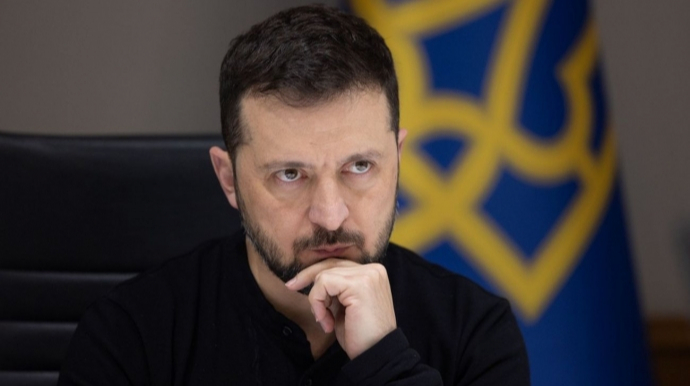
Zelenskyy assures no Ukrainian airstrikes during Witkoff and Kushner visits to Moscow and Kyiv. — Source: ukrainskapravda
Escalation Dynamics and Mutual Miscalculation Dangers with Doomsday Clock
One of the greatest paradoxes in the current phase of the war lies in the fact that strengthening by one side does not mean the other will accept an unfavorable outcome and begin negotiations. [3] Instead, the side that judges time is running out may attempt to change the situation by sending more powerful weapons, authorizing new types of attacks, or becoming more directly involved in the conflict. [3] Moscow would view such moves as evidence that NATO is unwilling to accept any outcome unfavorable to Ukraine. [3] Russian leadership might therefore draw a clear red line in advance and show readiness to defend it with military force if crossed. [3] The most dangerous part of a possible final period of the conflict arises here, as both sides could act in the belief that their moves prevent wider war while actually bringing it closer. [3] History shows the most dangerous moments in major wars often occur when one side begins to believe time is running out and becomes willing to take risks previously considered unacceptable. [3]
Russian Missile Campaign and Production Sustainability
From the start of 2026 through the morning of Aug. 27, Russian forces fired at least 1,858 missiles of various types at Ukraine. [4] After peaking at 296 missiles in February, Russian strikes slowed briefly in March and April before accelerating sharply in late spring, with at least 235 missiles used in May, 227 in June, 474 in July, and 195 during the first 27 days of August. [4] Ballistic and quasi-ballistic missiles have increasingly dominated the campaign, with Russia using at least 794 Iskander-M, RM-48U, and KN-23 missiles since the beginning of the year, accounting for 43 percent of all missiles fired. [4] Cruise missiles remain a major part of the arsenal, with 866 used since January, of which Kh-101s account for 529. [4] Russia has met or exceeded targets for several key missile types, including producing 65 Iskander-M missiles in July against a plan of 60 per month and reaching 87 Kh-101 missiles against a monthly target of 72. [4] However, the pace of expenditure has begun to catch up with and in some cases outrun production, particularly for heavily used systems such as Zircons and the ballistic group of Iskander-M, RM-48U, and KN-23. [4] Kh-101 reserves have fallen from 150 missiles to no more than 100 despite almost continuous production. [4] Zircon reserves appear to have fallen from up to 230 missiles in spring to around 120 by summer. [4]
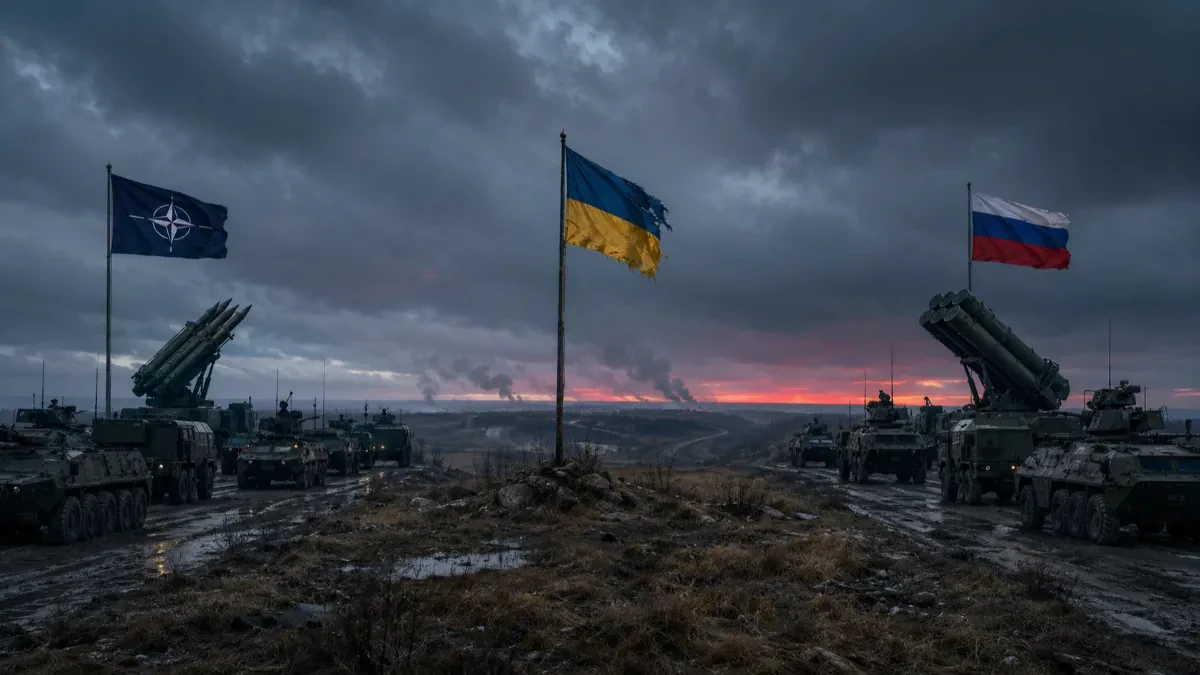
Ukrainian forces operate amid ongoing conflict as analysts warn of NATO escalation risks. — Source: gdelt
Broader Implications for the Conflict
Domestic pressures inside Russia, diplomatic efforts around the US envoys, assessments of Ukrainian weakening across fronts, and the sustainability of Russia's missile campaign intersect in the current phase of the Ukraine war. [1] [2] [3] [4] Zelenskyy's assurances of no Ukrainian airstrikes during the visits align with ongoing diplomatic activity even as missile expenditure continues at high rates. [2] [4] Analyst warnings highlight how further weakening of Ukraine could prompt NATO to consider escalation options that Moscow might interpret as crossing red lines. [3] Production figures show Russia exceeding some targets yet facing depletion in key stockpiles, illustrating the limits of sustaining the current intensity of strikes. [4] These elements together shape a period where actions intended to manage outcomes carry risks of unintended escalation. [3]
What to watch next: Continued monitoring of Russian missile expenditure rates against production capacity for systems such as Iskander-M and Zircon, alongside any shifts in NATO weapons policy or restrictions on strikes as Ukraine's position evolves on multiple fronts.