
Doomsday Clock Symbolism Grows as NATO Warns Against Russian Hybrid Actions
The Doomsday Clock remains a symbol of global risk as recent diplomatic and security developments highlight ongoing hybrid threats, regional defense pacts, and high-level negotiations amid tensions in Europe, Asia, the Middle East, and Africa.
NATO's Stance on Hybrid Threats
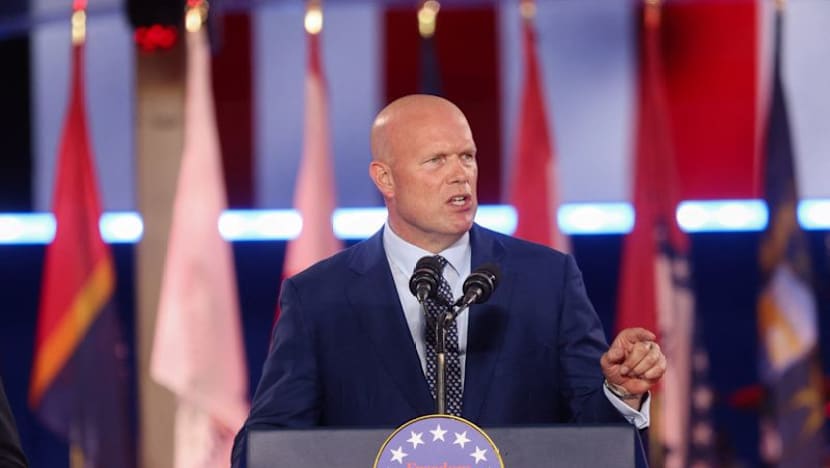
NATO members should not tolerate deliberate actions of hybrid war, and the United States will stand by countries as they deal with these incidents, Matthew Whitaker, the US ambassador to NATO, said on Saturday. [1] Whitaker said last month's attempted drone attack at Germany's Leipzig/Halle Airport, which Berlin has blamed on Russia, was more worrying than other recent incidents NATO members have faced due to Russian drones targeting Ukraine that strayed off course. [1] "Then you have what I would call the more concerning hybrid actions like we saw in Leipzig, like we have seen in Poland," Whitaker said, speaking on the sidelines of a business conference in Italy. [1] NATO members must be prepared, vigilant and also deliver a strong message when they are challenged by these events, he said. [1] "If we can identify who's doing it - which Germany did - we make sure we express strongly that is unacceptable, and we will not tolerate it," Whitaker said. [1] Critical infrastructure, including energy assets, could be targeted and should be monitored by national authorities, he added. [1] The response to these challenges is primarily national, but the United States supports countries when they are dealing with these acts, he said. [1]
Indonesia Strengthens US Ties
President Prabowo Subianto received United States Ambassador to ASEAN Kevin Kim and Chargé d'Affaires ad interim of the United States Embassy in Jakarta Joy M. Sakurai on Saturday. [2] During the meeting, which took place at Prabowo's residence in Hambalang, Bogor District, West Java, the president and the US envoys discussed bilateral relations and regional cooperation. [2] Cabinet Secretary Teddy Indra Wijaya, who participated in the meeting along with Foreign Minister Sugiono and State Secretary Minister Prasetyo Hadi, described the atmosphere as warm and constructive. [2] "The meeting discussed ways to strengthen bilateral cooperation, including regional cooperation and stability, based on mutual respect and equal partnership," Wijaya told reporters in Jakarta. [2] Wijaya expressed hope that the meeting would strengthen the foundation of Indonesia-US relations and help expand bilateral ties and regional cooperation. [2] "The meeting is also expected to promote a stronger, more constructive, and mutually beneficial partnership at the bilateral level and contribute to peace, stability, and progress in the region," he added. [2] Meanwhile, Wijaya revealed that the president is scheduled to attend the 81st Session of the United Nations General Assembly (UNGA 81) at UN Headquarters in New York City in the fourth week of September, although his attendance remains subject to the palace's arrangements. [2] President Prabowo Subianto attended the 80th session of the UN General Assembly (UNGA 80) last year, becoming the third head of state to address the General Debate, following Brazilian President Luiz Inácio Lula da Silva and US President Donald Trump. [2]

Prabowo meets US envoys to strengthen bilateral and regional ties. — Source: antaranews
India's Concerns Over Pakistan Defense Pact
Former chief of defence staff Gen Anil Chauhan has cautioned that the recent defence agreement between Pakistan, Saudi Arabia and Turkiye could induce “overconfidence” in Islamabad and lead it to make another “miscalculation”. [3] Speaking at an event at the Teen Murti Bhawan complex in New Delhi on Saturday, Chauhan said Pakistan would remain a major security concern for India. [3] “But, we've also seen some kind of agreements and accords with they have recently signed. This sometimes, I feel, may induce some kind of an overconfidence into Pakistan, and they may make some kind of a miscalculation again. We've got to be careful about that,” he said. [3] His remarks came nearly a month after Pakistan, Saudi Arabia and Turkiye signed the Makkah Joint Defence Agreement on August 7. [3] Under the pact, an attack against any one of the three countries will be treated as an attack against all three. [3] Delivering the 22nd Bharat Ratna Pt Govind Ballabh Pant Memorial Lecture on ‘Threats and Challenges to India's Security’, Chauhan said India’s security environment was shaped by several factors, including unresolved borders, cross-border terrorism, non-state actors and competition in areas such as space, cyber and the maritime domain. [3] “Let me talk about our western neighbour. So Pakistan will remain, I think, a major security concern and a threat for times to come,” he said. [3] He said Operation Sindoor, India’s decision to hold the Indus Water Treaty in abeyance and other practical measures could “hopefully change or induce behavioural change in our neighbour”. [3] Chauhan was serving as CDS when Operation Sindoor was conducted in May last year. [3] The operation followed the April 22 Pahalgam attack. [3] Even after retiring in May 2026, Chauhan has said Operation Sindoor is “not over” but on pause, and has called for continued operational readiness by the armed forces. [3] Chauhan described terrorism and proxy war as central to Pakistan’s approach towards India, arguing that nuclear weapons had reduced the scope for conventional operations while creating space for sub-conventional activities. [3] “The existing of nuclear weapons has created a degree of static stability at the apex level. And this is what has induced instability at the lowest level. So it's classically known as a stability-instability paradox,” he said. [3] He said Pakistan’s strategy had been to reduce the scope for conventional operations while expanding “sub-conventional operations”, including terrorism and cross-border activities. [3] According to Chauhan, non-state actors can provide deniability and lower the apparent cost of such operations, while terrorist networks can be rebuilt through ideology, recruitment, financing, training, propaganda and state support. [3] He said terrorism and proxy war would remain a “major challenge” for India and argued that the response should involve credible deterrence. [3] “And the only way you can defeat is to create credible deterrence. And that's what we demonstrated in three cross-border operations -- Uri, then Balakot, and then Operation Sindoor,” he said. [3] He added that India needed to raise the cost of proxy war and terrorism for Pakistan so that Islamabad stopped using them “as an instrument of state policy”. [3] Chauhan also spoke about how technology was changing the nature of warfare and the requirements for India’s armed forces. [3] “The future will favour the forces that learn, adapt faster than their adversaries,” he said, adding that the military would need capabilities across traditional and emerging domains, including land, sea, airspace, cyber, the electromagnetic spectrum and cognitive and synthetic domains. [3] He stressed the importance of jointness and integration among the armed forces. [3] “Jointness and integration are essential because technology erases organisational boundaries faster than bureaucracies do. Sensors, decision-makers, and shooters must be connected across all domains,” Chauhan said. [3] He attributed part of India’s performance during Operation Sindoor to what he described as better battlefield transparency and situational awareness, which enabled faster decision-making. [3] He said services and domains supported by a common operational picture and a resilient network would be important for future military operations. [3]
US-Russia Talks in Moscow
US President Donald Trump's envoys Steve Witkoff and Jared Kushner have arrived at the Kremlin after a business lunch with Kirill Dmitriev, a special envoy of Russian leader Vladimir Putin. [4] "Witkoff and Kushner's motorcade has entered the Kremlin grounds, RIA Novosti's correspondent reports. Before that, the American negotiators spent three and a half hours having a business lunch with Dmitriev." [4] Russian media outlets later released a video showing the start of the meeting between Putin and the US negotiators. [4] Witkoff and Kushner arrived in Moscow on 5 September. [4] The US negotiators are expected to arrive in Kyiv on Sunday. [4] On the afternoon of 5 September, the Kremlin announced that Putin has ordered that no strikes be carried out on Kyiv for three days, starting from midnight. [4] After speaking with Trump's special envoys, Ukrainian President Volodymyr Zelenskyy stated that Kyiv is willing to halt airstrikes on the cities involved in the negotiating process. [4]
DRC Embassy Move to Jerusalem
The Democratic Republic of the Congo will be moving its embassy in Israel from Tel Aviv to Jerusalem in what analysts argue is an effort to "court" the United States to help its war effort against the M23 in the country's east. [5] DRC President Felix Tshisekedi announced the planned relocation on Thursday during an official visit to Israel, where he met with Prime Minister Benjamin Netanyahu. [5] He said both countries would take steps towards making that happen. [5] The move comes as the DRC's military struggles to contain the Rwandan-backed M23 rebel group, which has seized and continues to hold large parts of the country’s volatile, mineral-rich east, including the provincial capitals of Goma and Bukavu. [5] According to Owen Bonertz, Africa Editor at intelligence platform Factal, the reason behind Tshisekedi's decision had to do with the "courting" of Washington in order to obtain "American defence assurances in their war against the M23". [5] "In general, the DRC is trying to move towards the United States for some sort of guarantee of weapons or more direct military aid in their war against M23, and this Israeli announcement is kind of an easy, symbolic way for the DRC to make Trump happy in this instance," Bonertz told The New Arab. [5] Bonertz said US policy towards the DRC had shifted since Donald Trump returned to the presidency in January 2025, citing the lifting of restrictions on cooperation imposed over the country’s record of using child soldiers in conflict, alongside new US investment in its mining sector. [5] The mining agreement was part of a broader US push to reduce China’s dominance of strategic mineral supply chains, he said, adding that closer ties among the three countries could also bring further "positive impacts" for US and Israeli mining interests in the DRC. [5] The embassy move is the latest in a series of international relocations following the United States’ 2018 decision to recognise Jerusalem as Israel’s capital and move its embassy there. [5] Colombia announced plans to relocate its embassy to Jerusalem in recent weeks, joining Fiji, Guatemala, Honduras, Papua New Guinea and Paraguay, which have established embassies in the city. [5] Argentina’s President Javier Milei has also pledged to move his country’s embassy. [5] Jerusalem’s status remains contested: Israel initially occupied and later annexed East Jerusalem after the 1967 war, while Palestinians claim it as the capital of a future independent state. [5]
Broader Geopolitical Implications
These developments contribute to global instability reflected in risk assessments like the doomsday clock. [1] [3] [4] [5] NATO's warnings on hybrid actions, new defense pacts involving Pakistan, high-level US-Russia negotiations, and the DRC's diplomatic shift all underscore persistent international tensions across multiple regions. [1] [3] [4] [5]
What to watch next: US negotiators are expected to arrive in Kyiv on Sunday following their Moscow meetings, while President Prabowo Subianto is scheduled to attend the 81st Session of the United Nations General Assembly in the fourth week of September.







