
Doomsday Clock Symbolism Grows as Iran Strait Transits Stay 70 Percent Below Normal
The Doomsday Clock remains a symbolic gauge of global risk as tensions over Iran escalate, with transits through the Strait of Hormuz staying 70% below pre-conflict levels amid ongoing attacks on vessels, US sanctions waivers on Russian oil purchases, debates over potential use of the MOAB bomb against Iranian nuclear sites, and Israeli Prime Minister Netanyahu reportedly urging President Trump to resume strikes before upcoming elections.
Strait of Hormuz Disruptions Continue
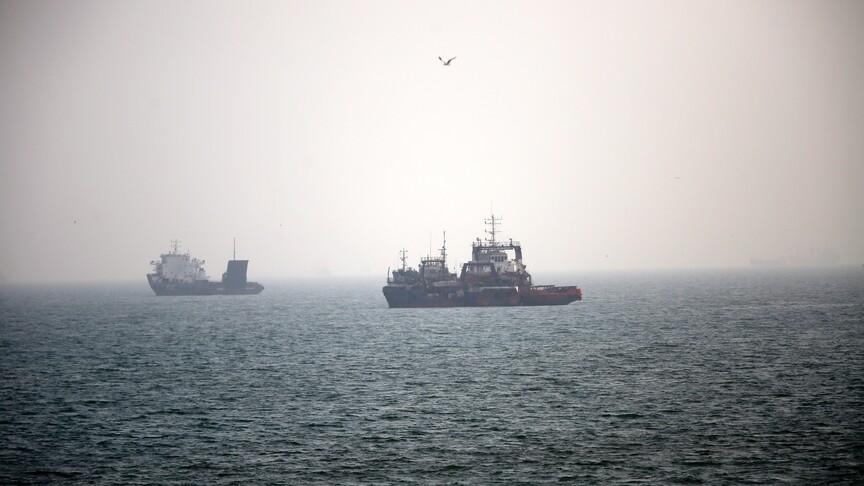
UKMTO reports 12 attacks on vessels in the past week in the Strait of Hormuz area, including a container ship that caught fire and sank, with transits remaining 70% below pre-conflict levels. [1] These incidents have kept shipping volumes sharply reduced, as the maritime agency continues to track strikes that directly affect vessel movements in the key chokepoint. [1] The sustained drop in transits reflects the immediate impact of repeated attacks on commercial traffic through the waterway. [4] Sources note that such disruptions have persisted even as broader military postures in the region remain elevated. [4]
Trump Waives Russia-Iran Sanctions
Trump waived sanctions, restrictions, and duties under the Sanctioning Russia and Iran Act citing US national interest, relieving potential 100% tariffs on major buyers like India and China who import Russian oil. [2] The waiver was announced just days before several provisions of the legislation were due to take effect. [2] The Lindsey O. Graham Sanctioning Russia and Iran Act of 2026 had given authority to impose broad sanctions on Russia and levy steep tariffs on major buyers of Russian oil and gas, including China and India. [2] Trump stated in an executive order that granting the waiver was in the US national interest. [2] The move provides relief for India, which continues to rely on Russia as its single largest supplier of oil. [2]
Debate Over MOAB Use Against Iran
Discussions within the Trump administration and with Israel have considered using the GBU-43/B MOAB bomb against Iranian targets, though experts question its effectiveness against deeply buried nuclear facilities like Fordow. [3] The GBU-43/B Massive Ordnance Air Blast bomb contains about 8,500 kg of high explosive and weighs approximately 9,800 kg overall. [3] It is typically dropped from a Lockheed C-130 Hercules aircraft due to its size. [3] Experts such as Elijah Magnier have stated that use of the MOAB does not equate to the ability to destroy deeply buried Iranian nuclear facilities. [3] The bomb is designed to explode a few meters above the ground and create a strong shockwave capable of damaging surface structures within roughly 1 km. [3] In contrast, the GBU-57 Massive Ordnance Penetrator is noted as the US military’s most powerful bunker-buster, weighing about 13,600 kg and capable of penetrating up to 61 m underground. [3]
Netanyahu Urges Renewed Strikes
Netanyahu reportedly pressed Trump to resume attacks on Iran before Israel's October 27 election and the US midterms, citing Iran's nuclear advances, though both sides have issued denials or caveats. [5] According to Channel 12 News and Axios, Netanyahu discussed a joint US-Israeli operation targeting military sites and nuclear facilities. [5] US officials described the impression that Netanyahu wanted action before the elections, while a White House spokesperson stated that President Trump has said there will be no attack on Iran before the midterms. [5] Netanyahu’s office issued a statement that the prime minister maintains an ongoing dialogue with Trump and does not comment on the content of those conversations. [5]
Risks of Escalation Assessed
A potential new US-Israeli campaign against Iran carries risks including munitions shortages, economic fallout from disrupted oil flows, and Iranian retaliation that could target regional infrastructure and subsea cables. [3] [4] An April 21 report by the Center for Strategic and International Studies indicated that in four of seven key munitions categories, expenditure during a 40-day conflict likely exceeded half of pre-war inventories, with replenishment for some items potentially taking one to four years. [4] A US Congressional Research Service report on 5 October stated that at least 81 US military aircraft, including fixed-wing planes, helicopters, and unmanned systems, have been destroyed or damaged. [4] Iran has signaled possible responses that include strikes on subsea internet cables, which could sever connectivity across the Arabian Peninsula and disable financial markets. [4] Experts have noted that Iran’s ability to disrupt the Strait of Hormuz raises the cost of any military action for the global economy. [4]
Doomsday Clock Context
The developments continue to feed into assessments of the symbolic risk level represented by the Doomsday Clock amid unresolved Iran tensions. [1] [2] [3] [4] [5] Ongoing maritime incidents, sanctions adjustments, debates over specific munitions, reported diplomatic exchanges, and identified escalation pathways all contribute to the broader picture of persistent global risk. [1] [2] [3] [4] [5] The Doomsday Clock serves as a recurring reference point for evaluating how these factors interact in the current environment.
What to watch next: Further vessel attacks in the Strait of Hormuz area, any additional statements on sanctions waivers, and updates on discussions regarding munitions options or electoral timing considerations.







