
Democratic Republic of the Congo Ebola Outbreak Exceeds 5,000 Cases
The Ebola outbreak in the Democratic Republic of the Congo has exceeded 5,000 confirmed cases with more than 2,300 deaths, and the WHO warns it is far from under control with a high risk of international spread. The Democratic Republic of the Congo outbreak, declared on May 15 as the country’s 17th, is caused by the Bundibugyo virus for which there is no approved vaccine or specific treatment. [1]
WHO Warns Outbreak Remains Uncontrolled
The Ebola outbreak in the Democratic Republic of the Congo is “far from being brought under control”, warned Tedros Adhanom Ghebreyesus, the head of the Geneva-based World Health Organisation. [1] Three months ago, he declared the Bundibugyo virus disease outbreak in the DRC to be a public health emergency of international concern. [1] Since then, the outbreak has spread rapidly and the risk of further national and international spread remains high. [1] Nearly 5,000 people have now been infected and more than 2,300 have died, across six provinces and 55 health zones. [1] Let’s be frank: the outbreak is far from under control, he warned at the opening of a meeting of the Ebola Emergency Committee in Geneva. [1] On May 15, several weeks late, the DRC declared its 17th Ebola outbreak in northern and eastern regions where state authority is weak, health infrastructure is inadequate and the response has been overwhelmed by the surge in cases. [1] This is the second time the WHO Emergency Committee has met since the organisation declared, on May 17, a public health emergency of international concern. [1]
Case and Death Toll Surpasses Previous DRC Record
The number of confirmed Ebola cases in the Democratic Republic of Congo now exceeds 5,000, government data showed late on Tuesday. [4] Congo’s 17th Ebola epidemic turned into the biggest in the country’s history in terms of number of cases in late July and over the weekend the death toll hit 2,378, the public health institute said, surpassing the previous worst outbreak in 2018-2020. [4] The institute has so far logged 5,021 cases, according to its latest situation report, making it the second-worst outbreak globally, behind only the 2014 to 2016 epidemic in West Africa in both infections and deaths. [4] The ongoing outbreak is caused by the Bundibugyo species of Ebola, which has no approved vaccines or treatments. [4] It has gained momentum since it was declared on May 15, as weak health infrastructure, community resistance, instability and protests by response workers hinder efforts to identify and respond to cases. [4] The United Nations said the Ebola outbreak “is the fastest growing on record” and is killing a victim every 30 minutes in the DRC. [4]
Rapid Spread and Comparison to Past Epidemics
The current outbreak in the DRC is now “the second-largest” Ebola outbreak “ever recorded and is spreading faster than any previous ones”, Tedros said. [1] In three months, seven times as many cases and five times as many deaths were recorded in the DRC as during the first three months of the largest Ebola outbreak in history, which claimed more than 11,300 lives in West Africa between 2014 and 2016, according to the African Union’s health agency. [1] The 2018–2020 outbreak in eastern DRC, previously considered the deadliest in the country’s history, resulted in 2,299 deaths out of 3,381 confirmed cases, according to WHO figures, based on data from the Congolese authorities. [1] It has gained a considerable lead, and we are still playing catch-up, he said, explaining that the outbreak is “fuelled by insecurity, population displacement and heavy movement of people along roads, waterways and access routes to mining sites”. [1]
Challenges Hindering Containment Efforts
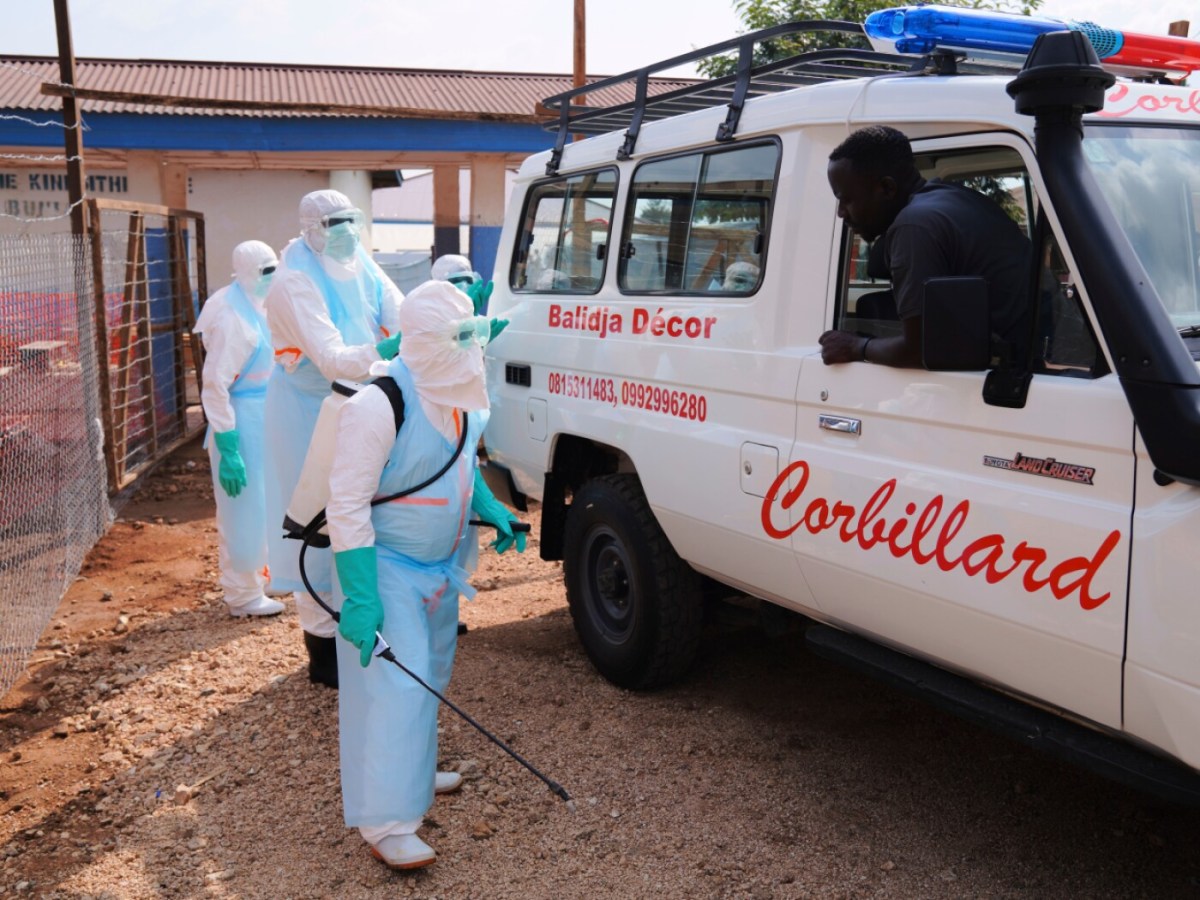
A myriad of armed groups are active in the regions affected by the outbreak, further complicating access to communities, according to humanitarian organisations. [1] The response has also been criticised for its slowness and lack of organisation. [1] Many patients die “outside treatment centres and without having been identified on the lists of known contacts”, Tedros said. [1] This mistrust within the community is believed to explain the “rise in cases and deaths over the last three or four weeks”, Dieudonné Mwamba, director of the Congolese National Institute of Public Health, told AFP on Tuesday. [1] Health workers say attacks on medical teams and vehicles have become a recurring challenge. [5] Dr Thierno Baldé, an incident manager with the World Health Organization, said one of the response operation’s ambulances was attacked in Bunia, describing such incidents as a regular threat to healthcare services. [5] Almost on a daily basis, Baldé said, health workers face reactions from communities struggling to cope with the disease and its consequences. [5] The outbreak has now killed more than 2,300 people, making it the deadliest Ebola outbreak ever recorded in Congo. [5]
International Risk and Regional Developments
Currently, the WHO assesses the public health risk as “very high” for the DRC, “high” for Uganda and other countries bordering the DRC, and “low” for the rest of Africa and the world. [1] Uganda, a neighbouring country of the DRC, recorded 20 confirmed cases, including two deaths, and announced in mid-July that it no longer had any patients infected with the virus. [1] Ebola, which is transmitted through contact with bodily fluids and causes haemorrhagic fever, has killed more than 15,000 people in Africa over the past 50 years. [1]
Response Measures and Outlook
The European Union announced on Tuesday that it was sending screening tests worth €2.5 million. [1] At a press briefing, WHO expert, Thierno Baldé, explained that the health response was being stepped up and decentralised in order to work more closely with communities, particularly the motorbike taxis responsible for transporting patients, which the organisation hopes to integrate into the surveillance system. [1] We need to adopt other strategies and be innovative, Mwamba said. [1] The WHO and its partners expect to see the impact of this scaled-up response in the coming months, but cannot set a timetable for when the outbreak will be brought under control, he said. [1] Community engagement is one of the biggest challenges in the response. [5] Health workers stress the need for residents to understand how Ebola spreads, recognize its symptoms and know where to seek help when someone falls ill. [5]
What to watch next: The WHO and its partners expect to see the impact of the scaled-up and decentralised response in the coming months, though no timetable has been set for bringing the outbreak under control.