Current Wars in the World See U.S. Strikes Hit Iranian Oil Tankers as Oil Prices Climb
Escalating military actions in the current wars in the world have drawn in multiple fronts across the Gulf, Yemen, and Lebanon, with direct exchanges between the United States and Iran now intersecting with proxy strikes and Israeli operations against Iranian-backed groups.
Escalation Between U.S. and Iran in the Gulf
U.S. forces struck three Iranian oil tankers, including one near Kharg Island, Iran's main oil export hub. The attacks followed strikes by Iran's Revolutionary Guards on U.S. warships operating in the region. Iran threatened the U.S. with economic warfare and said it had fired an advanced missile at U.S. warships. Brent crude futures climbed 49 cents, or 0.5 percent, to $97.49 a barrel. U.S. West Texas Intermediate crude was at $92.92 a barrel, up $1.44, or 1.6 percent. Analyst Suvro Sarkar of DBS Bank stated that the recent uptick in hostilities between the U.S. and Iran has the potential to materially change markets' reading of oil price-related risks not only for the rest of 2026 but well into 2027. Analyst Daniel Hynes of ANZ noted that the recent escalation of the Middle East conflict has increased the likelihood of a prolonged standoff punctuated by calibrated military action by the U.S. and Iran, which could see Persian Gulf supply remain constrained through the rest of 2026. Goldman Sachs raised its Brent and WTI price forecasts by $5 to $85 and $80 respectively for December 2026 and to $80 and $75 respectively for 2027, reflecting an assumption that Middle East shipping disruptions continue into 2027. [5]
Houthi Attacks on Saudi Arabia and Regional Spillover

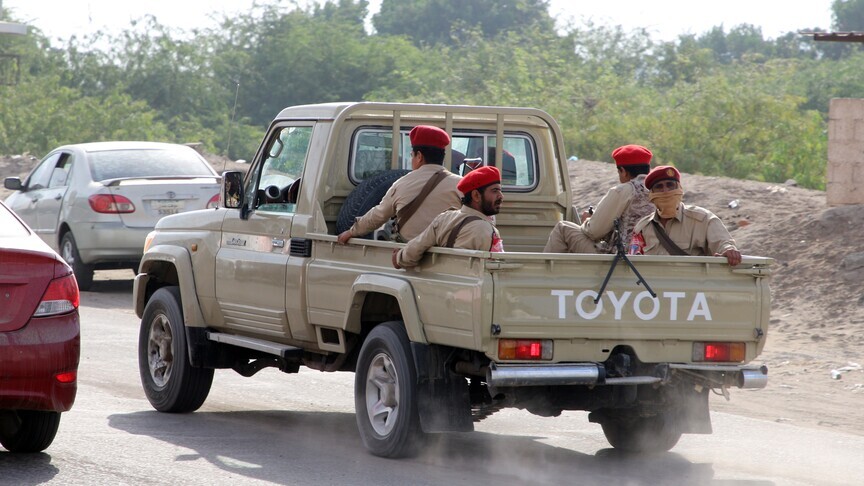
U.S. strikes hit Iranian oil tankers in the Gulf amid escalating conflict with Iran. — Source: france24 Saudi Arabia threatened to hit back after a wave of missiles from Yemen's Houthis set oil facilities ablaze and wounded dozens. The assault was described as the Iran-backed rebels' heaviest attack in years. It comes after a four-year truce collapsed in July, months into the Middle East war between the United States and Iran. [2]
Israeli Advances Against Hezbollah in Lebanon
With Israel's capture of the strategically valuable Ali al-Taher ridge in south Lebanon, a major Hezbollah and Iran stronghold, the campaign to degrade Tehran's so-called Axis of Resistance suffered a severe blow. The Israel Defense Forces achieved operational control of the ridge area both above and below ground. IDF Lt. Col. (Res.) Sarit Zehavi stated that in the past three years Israel has attacked Hezbollah in various areas and degraded the amount of rockets and missiles. She noted that the IDF has decimated 90 percent of Hezbollah's rocket and missile arsenal, leaving the group holding between 10,000 to 15,000 rockets. Zehavi added that the capability to launch an invasion of thousands of terrorists into Israel no longer exists since the IDF is based in South Lebanon along the borderline. [3]
Iran's Stance and Continued Proxy Support
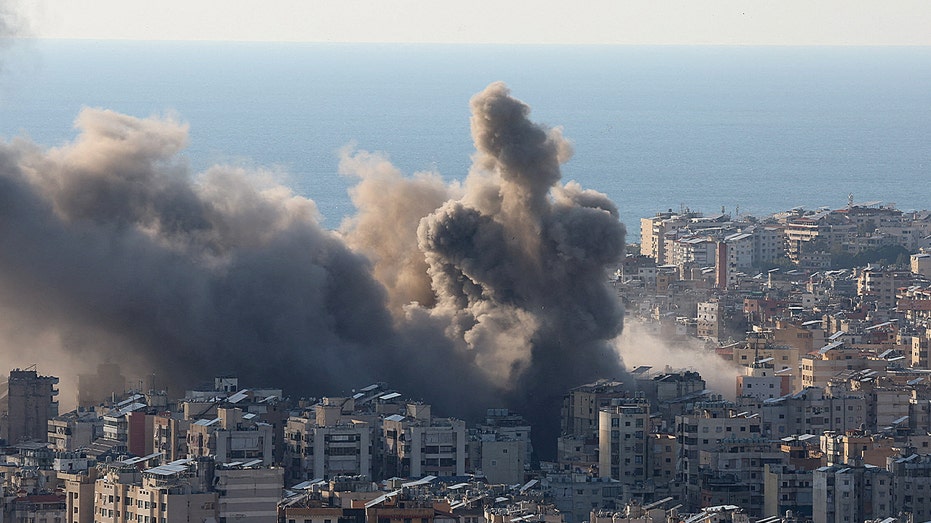
Hezbollah fighters operate in southern Lebanon amid escalating regional conflicts. — Source: foxnews Iranian President Pezeshkian vowed to continue resistance until aggressors regret their attacks. He stated that Iran has always opposed war but will continue defending itself against attacks. [4] Zehavi warned that as long as Iran supports its main proxy Hezbollah it will be very difficult to prevent its rebuilding of military capabilities, though Iran still aids Hezbollah via arms smuggling, money, training, and involvement. She noted that Hezbollah today is much more of a guerrilla organization than a terrorist army as it used to be and is having a lot of difficulties in rebuilding its capabilities because of the regime change in Syria and because it is much more difficult to transfer weapons through the airport in Lebanon and through Syria. [3]
Broader Implications for Oil Markets and Regional Stability in Current Wars in the World
Analyst Ed Meir of Marex said that as long as the war continues, which he thinks it will given the multitude of issues that have yet to be addressed, crude oil prices will likely remain elevated through year-end. Shipping traffic through the Strait of Hormuz slowed at the start of this week after Iran threatened on Monday to retaliate for any new U.S. attacks. [5] Lebanon's Deputy Prime Minister Tarek Mitri stated that the Lebanese army was ready to take over the strategic ridge. A State Department spokesperson said Hezbollah has been the primary obstacle to Lebanon's economic recovery and bears sole responsibility for Israel's presence on Lebanese soil. The spokesperson added that Hezbollah is drastically weaker than at any point in recent history. [3]
Hezbollah Reduced to Guerrilla Threat
Alma Research and Education Center released an analysis titled Hezbollah – Situation Assessment: From a Large-Scale Terrorist Army to a Persistent Dispersed Threat. Zehavi said the struggle with Hezbollah is not over and that Iran still puts a lot of effort into support for the group. She emphasized that this must be stopped. [3]
What to watch next: Analysts expect Persian Gulf supply to remain constrained through the rest of 2026 with no full return to pre-war throughput until late Q1 or early Q2 2027, while diplomatic efforts continue around proposals for the Lebanese army to control strategic areas.