
Current Wars in the World Produce Record Russian Losses as Ukraine Deploys Robotic Units
Multiple active conflicts around the world continue to produce high casualties, with Ukraine reporting record Russian losses amid its robotic-assisted counteroffensive, while violence escalates in Haiti, Yemen and the West Bank as part of current wars in the world.
Record Russian Losses in Ukraine
Russia suffered its highest losses of 2026 in September, when 46,230 of its soldiers were killed or wounded, according to the Ukrainian military. [5] The new record comes after Russian casualties of about 40,000 a month since June, and is close to the goal Ukrainian President Volodymyr Zelenskyy set in January of 50,000 Russian casualties a month. [5] Russia reportedly lost 2,090 troops on September 28 – its highest 24-hour casualty rate of the war. [5] Al Jazeera cannot verify casualty claims from either side. [5] Ukraine says it has video of each casualty, as more than 90 percent of them are caused by first-person view (FPV) drones. [5] Despite setbacks, Russia has been trying to seize the remaining areas of Ukraine’s eastern regions of Luhansk and Donetsk that it doesn’t control — which is where casualties have been heaviest. [5] Ukraine’s Third Army Corps has inflicted particularly heavy losses in the area around Lyman. [5] Russia denied the Ukrainian counteroffensive’s gains, posting videos as purported evidence. [5] Russia has frequently claimed to hold positions and gain territory. [5] Assessments by the Institute for the Study of War and DeepState, organisations that track territorial gains using open source, geolocated footage, rarely reflect Russian claims on their maps. [5] The ISW has estimated Russia’s net gains this year at 148sq km (57sq miles), nowhere near the 5,300sq km that Russia claims. [5]
Ukraine's Robotic Counteroffensive
Palestinian killed and others injured by Israeli forces in the West Bank. — Source: anadolu
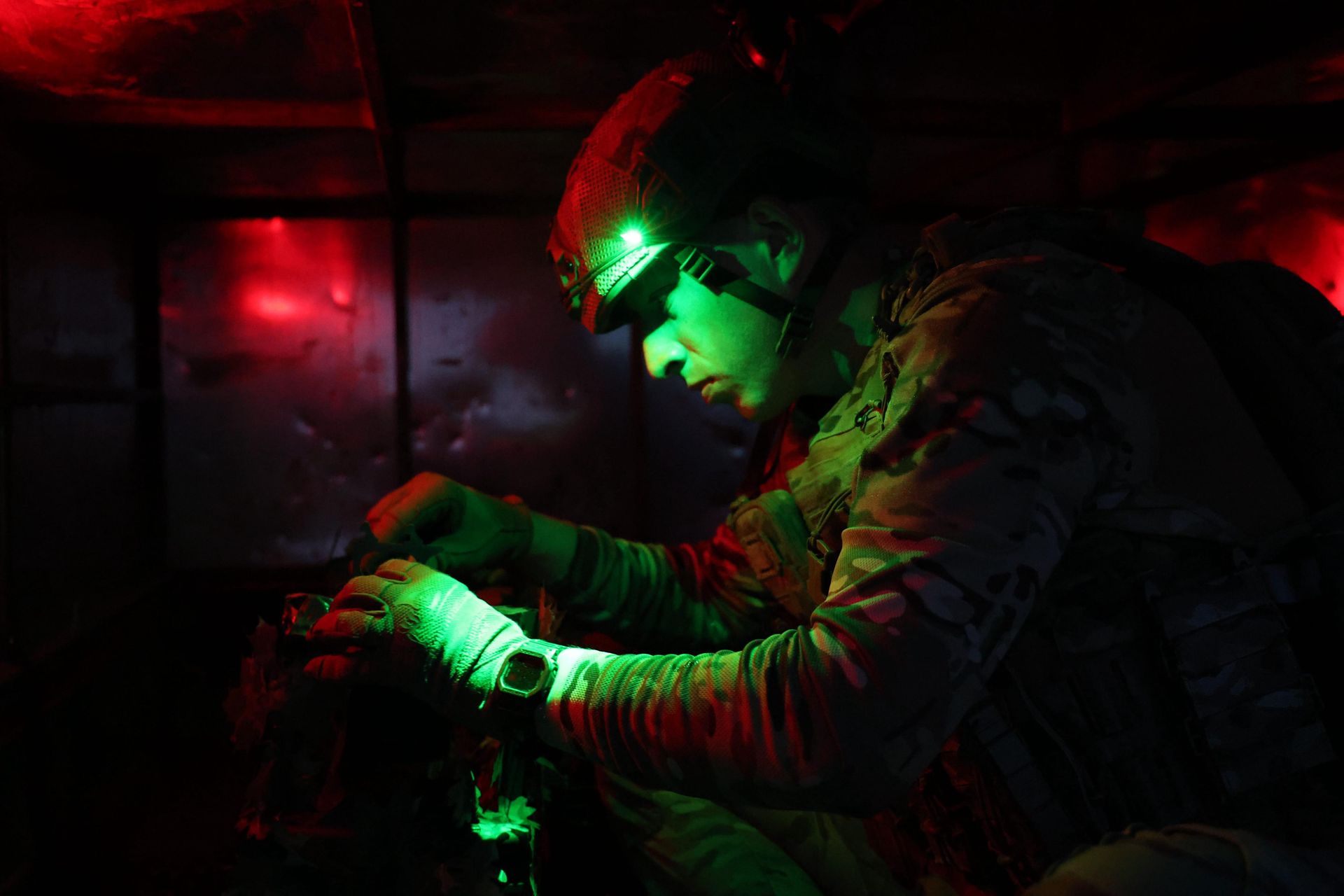
Ukraine’s Third Army Corps has inflicted particularly heavy losses in the area around Lyman, where the third phase of a counteroffensive called Operation Vivaldi has reclaimed 176sq km (68sq miles) of territory in recent weeks. [5] Corps commander Brigadier General Andriy Biletsky said it succeeded by feigning an attack from the west, and “forced it [the Russian army] to senselessly burn through its reserves in counterattacks precisely in that direction”. [5] Then it attacked from the north. [5] Among its tactics was the use of remotely operated Russian armoured personnel carriers filled with explosives that smashed into Russian defences. [5] A Ukrainian commander on the Lyman front described how Vivaldi’s first phase eliminated a vanguard of Russian soldiers. [5] Ukrainian drone operators have also been busy disrupting Russian ammunition and fuel supplies, starving the front. [5] According to President Volodymyr Zelenskyy's office, Russian forces suffered more than 5,000 killed and wounded during the first three phases of the operation, while Ukrainian forces captured another 250 Russian troops. [1] The Third Army Corps separately reported 2,000 Russian personnel losses during the most recent phase alone. [1] Ground robotic systems carried out 80% of logistics and 90% of casualty evacuations during stages of Operation Vivaldi, according to NC13 Commander Mykola Zinkevych and reporting by UNITED24 Media. [1] The first successful operation took place in January 2026. [1] By now, the unit has more than 100 successful operations under its belt. [1] This tactic is called Gryphon, in honor of a servicemember from the unit who went missing during a combat mission near the village of Andriivka in Donetsk Oblast, not far from Bakhmut. [1] It is the same place from the Oscar-winning Ukrainian filmmaker Mstyslav Chernov's documentary "2000 Meters to Andriivka," which chronicles the Ukrainian counteroffensive in this area. [1] These operations are being carried out by NC13, essentially the world's first strike UGV unit, which operates within Ukraine's Third Army Corps. [1] Today, the tactic is also part of Operation Vivaldi, a major Ukrainian counteroffensive that has restored Ukrainian control over 176 square kilometers (nearly 68 square miles) of territory. [1] It sounds like science fiction: flying robots delivering ground robots that can perform tasks traditionally carried out by infantry, participate in assault operations, and help liberate Ukrainian territory while reducing the risks to Ukrainian soldiers. [1] In one such intercepted conversation, Russian soldiers were even arguing that it was impossible for Ukrainian UGVs to have reached so far into the rear. [1] They suspected that what they were seeing might actually be friendly fire from their own side. [1] Russian soldiers can surrender directly to the robots, which then escort them toward Ukrainian positions under the watch of a small robotic weapons system. [1] And all of it happens live, with both video and audio. [1] The video comes from the robots and drones. [1] The audio comes from intercepted Russian communications, as soldiers panic and try to understand who or what is attacking them. [1]
Russian Strikes on Ukrainian Infrastructure
Russia pounded Ukraine’s cities during the past week, striking energy infrastructure but also residential buildings, kindergartens, schools, office buildings and other nonmilitary targets. [5] Several people were killed on September 28, when a drone destroyed part of the National Academy of Sciences in Kyiv. [5] Kyiv experienced power outages on September 30, when Russian drones struck a thermal power plant in the Kyiv region. [5] At least five people were killed across the country. [5] “Since the summer, there has not been a single day when the enemy has not attacked energy infrastructure. However, such a massive and combined attack has not occurred since the end of the last heating season,” wrote Prime Minister Sergii Koretskyi on social media. [5] Zelenskyy has warned for weeks that Russia intends to strike Ukraine’s energy sector hard to cause suffering this winter. [5] On September 30, Russia also tested a drone with a cumulative cutting warhead “specifically designed to destroy high-voltage pylons,” said Ukraine’s defence ministry electronics adviser Serhii Beskrestnov. [5] “I believe the enemy’s plan is to attack important high-voltage power lines.” [5] Russia has also targeted data centres during September, in an apparent effort to disrupt connectivity and digital commerce. [5] Ukraine has been suffering from a shortage of interceptors with which to stop ballistic missiles, and several got through on September 30, Zelenskyy said. [5] Ukraine believes it can manufacture interceptors faster and more cheaply than its allies if the technology is shared. [5] Zelenskyy had persuaded US President Donald Trump to allow Ukraine to manufacture interceptors for the Patriot system under licence at the NATO summit last July, but Trump later retracted the offer. [5] Jet-powered drones are a recent challenge, too. [5] Ukraine had mastered the art of shooting down propeller-powered ones, eliminating well over 90 percent. [5] During the week ending October 1, however, they downed only 81 percent of the 1,933 long-range aerial drones Russia launched because many of them were jet-powered. [5] “Ukraine’s interception rate for jet-powered “shaheds” is now 55 percent,” Zelenskyy wrote. [5] Worse may be to come. [5] Beskrestnov said Russia was working on a system of radio beacons to better guide drones. [5] “This system will allow them to navigate deep within our territory, at a distance of up to 100 km. This essentially means the ability to accurately attack a vast portion of Ukraine,” he wrote. [5] Zelenskyy said Russia planned to spend $12bn on jet-powered drones and loitering munitions next year. [5]
Escalating Violence in Haiti Amid Current Wars in the World
Haiti's gang violence crisis has left at least 5,700 people dead or wounded this year while more than 1,000 women and girls have been raped, UN human rights chief Volker Turk said Friday. [4] The figures, compiled by the UN mission in Haiti up to September 11, also include 230 kidnappings, though Turk said "the real figures are likely much higher". [4] Addressing the UN Human Rights Council, Turk warned that gangs continue to expand despite the deployment of an international security force intended to help Haitian authorities restore order. [4] "Despite some success in containing their activity in parts of the capital, Port-au-Prince, gangs continue to adapt and expand, re-emerging in new areas and constantly rearming," he said. [4] Turk said the deployed Gang Suppression Force remained significantly understrength. [4] The mission is intended to reach 5,500 personnel but currently has about 1,500 so far. [4] "The force remains far below the strength needed," Turk said. [4] At the same time, he said, the UN had "serious concerns about the unnecessary and disproportionate use of force" by Haiti's national law enforcement and self-defence groups. [4] "Since the beginning of the year, more than half of all casualties occurred in the context of security operations, with hundreds of people struck by stray bullets and explosive drones," he said. [4] Turk said that "so-called self-defence groups" had killed or injured some 280 people so far this year. [4]
Other Global Conflict Developments
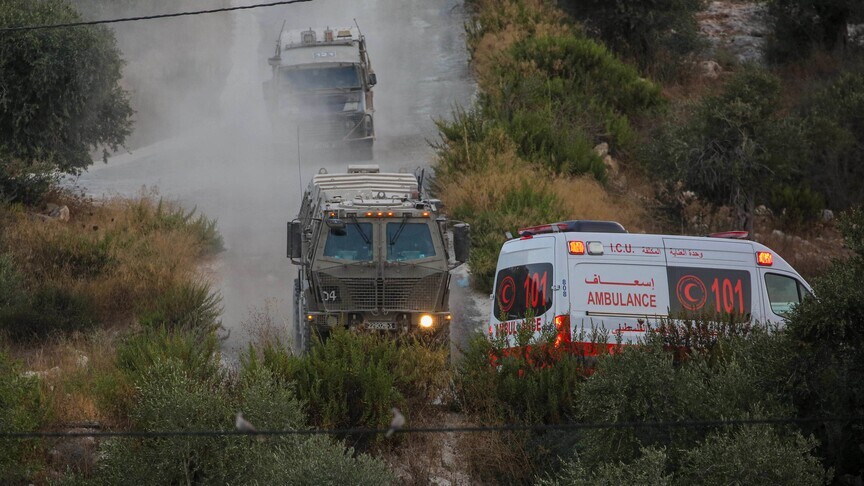
Yemeni army forces report 1,540 Houthis killed or wounded in the past 24 hours across 474 operations focused on Taiz. [3] A 19-year-old Palestinian, Bahaa al-Natsheh, was killed by Israeli forces in the West Bank village of Kobar. [2]
What to watch next: Ukraine has spent more than four years fighting a technologically adaptive conventional war against Russia. [1] Its troops have accumulated experience in drones, electronic warfare, robotic systems, battlefield artificial intelligence, communications, and rapid-cycle weapons development under conditions no NATO military has experienced at a comparable scale. [1] Both Russia and Ukraine have outspent their defence budgets for the year. [5] Ukraine said it was looking for an additional $27bn, in meetings with the European Commission and the International Monetary Fund. [5] It was a similar story in Russia, which has spent 30 percent more on its war in the first half of the year than the same period last year, according to the Ukraine Foreign Intelligence Service. [5] Reuters cited leaked Russian government documents indicating that Russia plans to raise its defence spending by another 27 percent next year. [5] It put the estimated budget at $204bn for 2027. [5]