
Conflict in Mali: Defense Minister Killed in Rebel Attacks
The conflict in Mali has reached a critical juncture, with rebel attacks claiming the life of the country's defense minister and extremist groups making significant advances that are eroding state control.[1][5] These developments have left the Malian army and Russian Wagner mercenaries overstretched against Tuareg separatists and jihadist militants, prompting urgent calls for intervention from regional bodies.[3][4] Mali's military junta has responded by declaring two days of national mourning, as a key northern town falls into rebel hands amid the chaos.[5]
Overview of Recent Attacks
Rebel groups launched coordinated assaults on multiple cities across Mali on Saturday, marking a sharp escalation in hostilities.[1] The attacks culminated in the confirmed death of the defense minister during strikes in Kati, a strategically important location near the capital.[5] According to reports, these operations were not isolated incidents but part of a broader offensive that overwhelmed defenses in several areas.[1][5] Russian mercenaries, deployed to support Malian forces, were forced to abandon an occupied town as the rebels pressed their advantage, highlighting vulnerabilities in the current security arrangements.[1] The junta's announcement underscored the gravity of the situation, noting that the defense minister's killing occurred amid these synchronized strikes, which also resulted in a key northern town slipping from government control.[5] This series of events represents a direct challenge to the junta's authority, as rebels exploited coordination and surprise to inflict significant losses. The timing of the attacks, coming shortly after other tensions, has amplified concerns about the stability of central government holdouts in the region.[1][5]
Advancement of Extremist Groups
The crisis in Africa's Mali has deepened as extremist groups push forward, steadily undermining state authority across vast territories.[2] Analysts point to a dramatic expansion of jihadist operational capabilities, reaching into core areas of state power and exposing the fragility of governmental reach in the country's expansive landscape.[4] This advancement is not merely territorial but symptomatic of converging political, territorial, and military fractures that have left the state dangerously extended.[4] While outright collapse has not occurred, the erosion of control is evident in the inability to maintain presence in remote and even central zones, allowing extremists to consolidate gains.[2] The recent rebel incursions illustrate how these groups are capitalizing on overstretched resources, widening the scope of instability.[2][4] Observers note that Mali, as Africa's eighth-largest nation by area, faces unique challenges in projecting power uniformly, with extremists exploiting these gaps to advance their influence.[4] This progression threatens not just local security but the broader regional dynamic, as state erosion facilitates further entrenchment of non-state actors.[2]
Calls for Regional Intervention
Experts are sounding alarms over the deteriorating security landscape, urging immediate action from key regional and continental organizations. Dr. Victor Doke, a lecturer at the Kofi Annan International Peacekeeping Training Centre (KAIPTC), has described the situation as "very dire" and called on ECOWAS and the African Union to intervene swiftly.[3] His plea emphasizes the risk of a broader crisis spilling over into West Africa if decisive steps are not taken promptly.[3] Doke's assessment underscores the interconnected nature of the threats, where unchecked rebel activities in Mali could destabilize neighboring states and strain regional peacekeeping efforts.[3] The urgency stems from the rapid pace of events, including high-profile losses and territorial setbacks, which demand a coordinated response beyond national capabilities.[3] By highlighting the potential for escalation, Doke positions regional intervention as essential to halting the momentum of attacks and restoring a semblance of order.[3] This call aligns with longstanding concerns about the limitations of unilateral military approaches in addressing multifaceted insurgencies.[3]
Challenges for Military Forces
Malian armed forces, alongside Wagner group mercenaries, are grappling with severe operational constraints as they confront simultaneous threats from Tuareg separatists and jihadist militants.[4] Described as "unable to cope," these units are overstretched across the nation's expansive terrain, where multiple fronts dilute their effectiveness.[4] Paul Melly, a Consulting Fellow on the Africa Program at Chatham House, analyzes this as a convergence of fractures: political instability, territorial disputes, and military overextension.[4] The recent attacks exemplify how jihadists have extended their reach into vital state infrastructure, forcing retreats and exposing command weaknesses.[4] Wagner's flight from an occupied town further illustrates the practical limits of mercenary support, as numerical and logistical strains mount against coordinated rebel offensives.[1][4] Mali's geography—spanning deserts, mountains, and sparsely populated regions—compounds these issues, making sustained patrols and rapid response nearly impossible without broader reinforcements.[4] While the state clings to key urban centers, its authority thins out in peripheral areas, allowing adversaries to regroup and strike anew.[4] This dynamic has created a vicious cycle, where each setback further burdens the already taxed military apparatus.[4]
Official Responses and Mourning
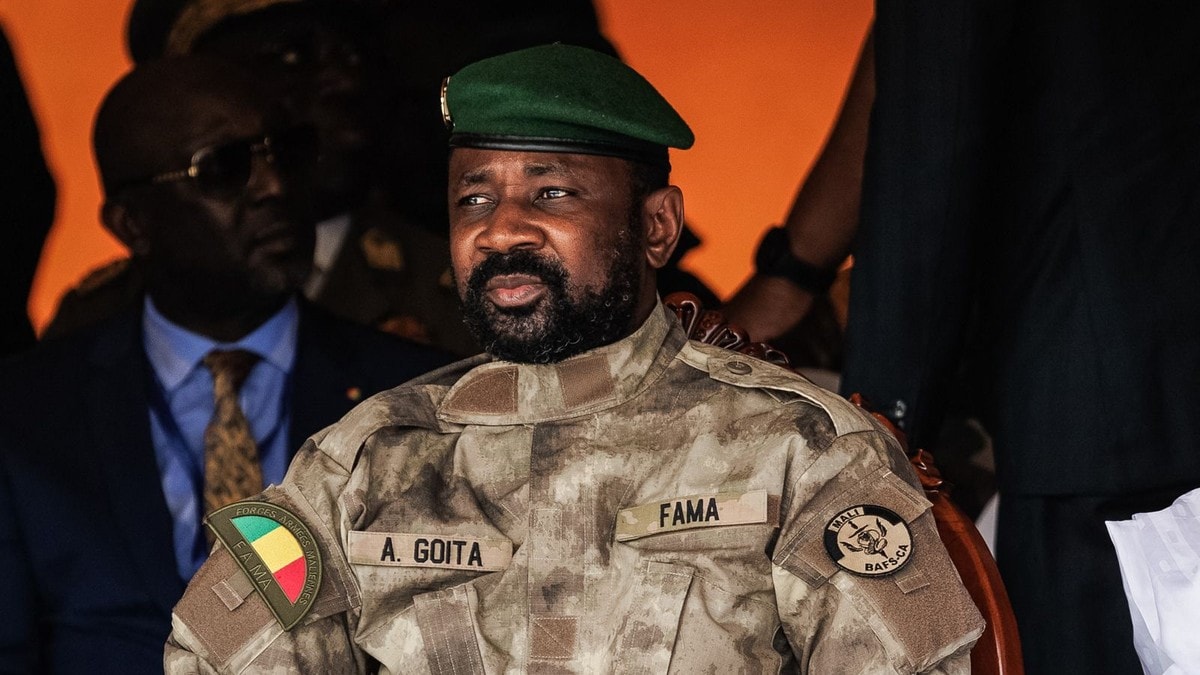
In the immediate aftermath of the deadly assaults, Mali's ruling military junta, led by President Assimi Goïta, took swift symbolic action by proclaiming two days of national mourning.[1][5] This declaration honors the defense minister, whose death in the Kati attack has been officially confirmed, and acknowledges the broader toll on security personnel.[5] The junta's statement frames the incidents as coordinated rebel operations that not only claimed a top official but also relinquished control of a crucial northern town to insurgents.[5] Such measures serve to rally public support and project resilience amid reports of Russian mercenaries evacuating positions under pressure.[1][5] The mourning period provides a pause for reflection on the sacrifices made, while authorities likely use it to reorganize defenses against ongoing threats.[5] This official response contrasts with the chaos on the ground, emphasizing continuity of leadership under the junta despite the high-level loss.[1][5]
What to watch next: Regional bodies like ECOWAS and the African Union may signal intervention plans in response to expert urgings, while jihadist groups could exploit further military withdrawals to expand their foothold in northern territories.[3][4]