
Conflict in Mali: Defence Minister Killed in Rebel Assault on Residence
The conflict in Mali has reached a critical juncture with the killing of Defence Minister Sadio Camara in a rebel attack on his residence near the capital Bamako, an incident that has triggered two days of national mourning and reports of a key northern town falling into separatist hands.[5][3][4] This assault underscores the intensifying pressures on Mali's military junta amid persistent clashes with Tuareg separatists and jihadist militants.
Overview of the Recent Attack
Mali's Defence Minister Sadio Camara was killed during a targeted rebel assault on his residential compound located near Bamako, specifically in the Kati area.[5][3] The attack occurred as part of coordinated operations that have rattled the country's security apparatus, with the ruling military junta confirming the death and linking it to broader rebel activities.[3][4] According to reports, the strike on Camara's residence highlights the rebels' ability to penetrate areas close to the capital, demonstrating a bold operational reach that threatens core state infrastructure.[5]
The immediate aftermath saw the junta issuing an official announcement of Camara's death, framing it within a series of synchronized attacks across the country.[3] This event not only represents a significant loss for Mali's defense leadership but also amplifies vulnerabilities in protecting high-ranking officials, even in proximity to Bamako.[5] Sources indicate that the assault was part of a larger pattern of rebel incursions, with the minister's killing serving as a symbolic blow to the government's military command structure.[4] The precision of the attack on the residential compound suggests detailed intelligence and coordination by the assailants, raising questions about the junta's defensive capabilities in urban and peri-urban zones.[5]
Furthermore, the incident coincided with reports of intensified fighting elsewhere, but the focus on Camara's residence underscores how rebels are now striking at the heart of political-military power.[3] Official statements from the junta emphasized the coordinated nature of these attacks, positioning Camara's death as a pivotal moment that demands a reevaluation of security protocols around key figures.[4][5]
Details of the Ongoing Conflicts
The broader military landscape in Mali reveals a Malian army and the Wagner group described as "overstretched" and "unable to cope" with simultaneous threats from Tuareg separatists and jihadist militants.[2][5] Fighting continues across the country between the army and Tuareg rebels, who are backed by jihadist groups, straining resources and operational capacity.[5] Expert analysis from Paul Melly, a Consulting Fellow on the Africa Program at Chatham House, points to a "convergence of multiple fractures: political, territorial, and military," which has enabled this escalation.[2]
These engagements illustrate the dramatic expansion of jihadist operational reach, extending into the very heart of state power, as evidenced by the recent assault near Bamako.[2][5] The Malian forces, alongside Wagner mercenaries, face challenges in maintaining control over vast territories, particularly in the north where separatist activities have gained momentum.[2] Coordinated attacks have reportedly resulted in a key northern town falling into rebel hands, further complicating the army's efforts to hold ground.[3][4]
This overstretched posture is compounded by the sheer scale of Mali, Africa's eighth-largest country, where state authority is "stretched dangerously thin."[2] The involvement of jihadist-backed Tuareg rebels adds layers of complexity, as their alliances allow for more sophisticated tactics against government positions.[5] Ongoing conflicts have created a multifaceted battlefield, with separatists and militants exploiting gaps in Malian and Wagner deployments to launch offensives that disrupt supply lines and territorial control.[2]
Calls for Regional Intervention
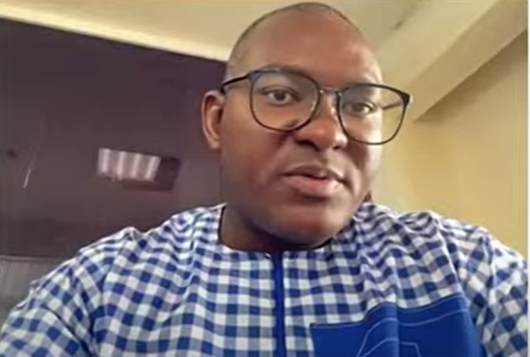
Dr. Victor Doke, a lecturer at the Kofi Annan International Peacekeeping Training Centre (KAIPTC), has urgently called for swift intervention by ECOWAS and the African Union to avert a broader crisis across West Africa.[1] Describing the situation as "very dire," Doke emphasizes the need for regional and continental bodies to act decisively in response to the Mali rebel attacks.[1]
His appeal highlights the potential for the current instability to spill over borders, underscoring the interconnected security dynamics in the Sahel region.[1] Doke's urging comes at a time when Mali's internal conflicts are demonstrating unprecedented boldness, as seen in strikes near the capital and territorial gains in the north.[1] By advocating for ECOWAS and AU involvement, he positions these organizations as critical stabilizers capable of addressing the jihadist and separatist expansions before they destabilize neighboring states.[1]
This call for action reflects a broader recognition among experts that Mali's challenges require collective regional responses, given the limitations of the overstretched national forces.[1]
Impact on Malian Stability
The recent attacks, including the killing of the defence minister and the reported capture of a key northern town, exemplify the strain on Mali's state authority amid the ongoing conflict in Mali.[2][3][4] Paul Melly from Chatham House notes that while the Malian state might not be collapsing outright, its authority is "stretched dangerously thin" across the country's expansive territory.[2] This thinning is exacerbated by the convergence of political, territorial, and military fractures, allowing jihadists and separatists to expand their operational reach dramatically.[2]
The loss of a key northern town to rebels illustrates how these groups are capitalizing on the army's and Wagner's overstretched positions, potentially fragmenting national control further.[2][4] Such developments weaken the junta's grip, fostering an environment where jihadist-backed Tuareg operations challenge government legitimacy on multiple fronts.[2][5] The implications extend to the risk of a wider erosion of state power, as coordinated assaults near Bamako signal that no area is immune, amplifying perceptions of vulnerability.[2]
Official Responses and Mourning
In response to the defence minister's killing and the coordinated attacks, Mali's ruling military junta has declared two days of national mourning, a measure that underscores the gravity of the losses.[3][4] This official proclamation follows the confirmation of Sadio Camara's death in the Kati attack, positioning the mourning period as a national acknowledgment of the assault's impact.[3]
The junta's announcement also references the key northern town's fall to rebels, framing the mourning as a collective response to these compounded setbacks.[4] In the current context of persistent fighting with Tuareg rebels and jihadists, this period serves to rally public support and honor the fallen leadership amid heightened insecurity.[3][5] The two-day duration reflects the junta's intent to use the moment for reflection and resolve, even as military engagements continue unabated.[4]
What to watch next
Observers should monitor potential interventions by ECOWAS and the African Union, as urged by experts, alongside the Malian army's response to the northern town's loss and ongoing clashes with jihadist-backed Tuareg rebels.[1][2][5]






